A working framework for fast dinners — the four rules that make a meal genuinely “easy,” five repeatable cooking templates, and twelve complete recipes built on them, with exact times, temperatures, and ratios.
An easy dinner is not a shortcut recipe — it’s a meal built on four constraints: seven ingredients or fewer (excluding salt, oil, and pepper), one cooking vessel plus one cutting board, a sauce constructed from fat + acid + something savory, and 30 minutes or less from fridge to plate. Master five templates — skillet sear-and-deglaze, high-heat sheet pan, emulsified pantry pasta, no-cook assembly, and skillet-to-oven — and you can build unlimited dinners without a recipe. Cook poultry to 165°F, ground meat to 160°F, and whole cuts to 145°F with a 3-minute rest.[1]
What Actually Makes a Dinner “Easy”: The 4 Rules
The 30-minute-meal genre is roughly three decades old, and in that time it has quietly split into two categories: recipes that are short because they are stripped down, and recipes that are short because they are engineered. Only the second kind survives a Tuesday. The difference is structural, not aspirational, and it comes down to four constraints you can apply before you ever open a cookbook.
Rule 1 — Cap the ingredient count
Every additional distinct ingredient adds a shopping decision, a prep step, and a leftover container. Seven is the practical ceiling for a weeknight. Restaurants get complexity from technique, not from volume — a properly browned piece of protein with lemon and good olive oil tastes like three ingredients doing the work of eight.
Rule 2 — Cap the vessel count
Dinner feels hard when the sink is full. One skillet, one sheet pan, one pot, or one mixing bowl. If a recipe’s method requires a blender and a sauté pan and a pot of boiling water, it belongs on a weekend.
Rule 3 — Engineer the sauce in
Dry food is what makes fast cooking feel like a compromise. The fix is mechanical: build acid, fat, and a savory element into the pan itself. A deglaze with ¾ cup of stock plus 2 tablespoons of butter and a squeeze of lemon turns pan drippings into a sauce in 90 seconds, with zero extra vessels.
Rule 4 — Respect heat transfer, not the clock
Fast cooking works only when the pan is hot enough and the food is dry enough to brown before it steams. Browning — the Maillard reaction between amino acids and reducing sugars — begins in earnest above roughly 280–300°F (140–150°C) surface temperature.[4] A crowded pan drops below that threshold and you get grey, watery protein instead. Pat everything dry, preheat the pan 2–3 minutes, and cook in batches if you have to.
“Fast cooking is not about cutting corners. It’s about removing water, adding surface area, and never letting the pan drop below browning temperature.”
— WorldDishly test kitchen notes
The Weeknight Flavor Formula
Balanced dinners register as complete because they hit five taste and texture notes. Miss one and the plate reads as flat, which is the real reason people reach for takeout. Use this as a checklist at plating, not as a rulebook at the stove.
For any seared protein: 3 parts stock (¾ cup) + 2 parts fat (2 tbsp cold butter or 3 tbsp olive oil) + 1 part acid (1 tbsp lemon juice or vinegar). Deglaze the hot pan with the stock, scrape the fond, reduce by half for 60–90 seconds off the heat, then whisk in the cold butter and acid. Salt at the end — reduction concentrates whatever salt was already in the stock.
Active time: 12–18 min, hands-on throughout.
Strength: Fond development and a real pan sauce. Fastest route to restaurant-style flavor.
Weakness: You must stand there. Crowding risk on large batches.
Active time: 8–10 min, then hands-off.
Strength: Zero monitoring. Even browning from dry oven heat.
Weakness: No fond, so sauces must be built separately or spooned on raw.
Pantry Setup: The 15-Minute Head Start
Speed comes from what’s already in the kitchen. These twelve items convert a random assortment of groceries into a dinner on any given night, and none of them spoil quickly. Keep them stocked and you are never more than one protein and one vegetable away from a meal.
Extra-virgin olive oil has a smoke point around 380–410°F depending on grade and polyphenol content — fine for a 375°F sauté, less ideal for a screaming-hot cast-iron sear. For sheet-pan roasting at 425°F, use refined olive oil, avocado oil, or a thin coat of neutral oil. Burnt fat tastes bitter and will flatten every other flavor on the plate.
The 5 Master Templates
Learn these as shapes rather than recipes. Each one is a container you can drop different proteins, vegetables, and sauces into, and each has a fixed timing logic that keeps you from hovering over the stove reading a page.
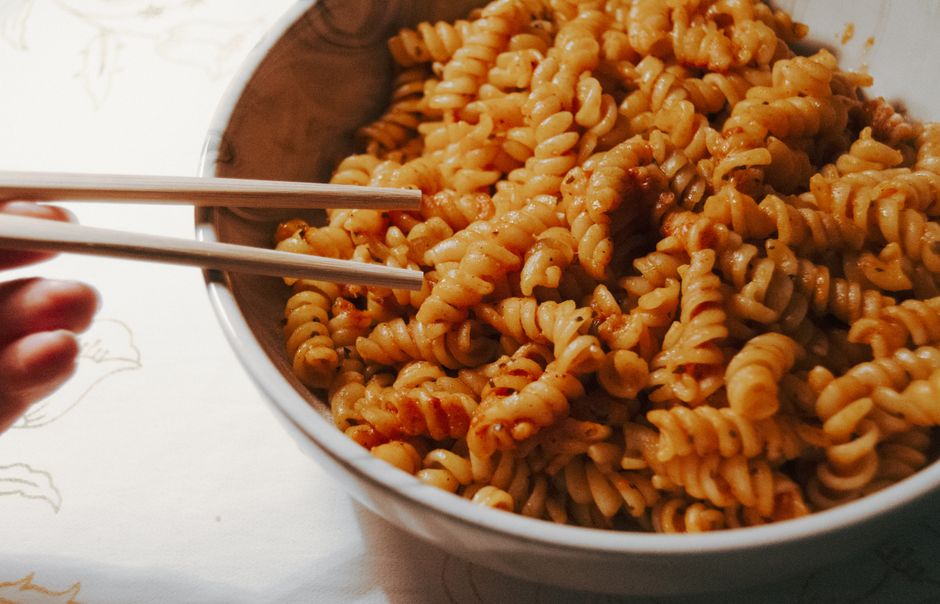
The water pasta cooks in contains suspended starch granules that gelatinize during boiling. When you add that water to a fat-based sauce and toss vigorously, the starch acts as an emulsifier, physically holding droplets of fat in the water phase so the sauce clings instead of pooling. This is why the same ingredients taste thin when you skip the pasta water and cloying when you add cream instead.
The 12 Easy Dinner Ideas (Full Recipes)
Every dinner below fits the four rules and one of the five templates. Each serves 4 unless noted, and each lists active time separately from total time, because passive oven time isn’t work.
| Dinner | Template | Active | Total |
|---|---|---|---|
| Garlic-Butter Shrimp & Orzo | Skillet + pasta | 15 min | 20 min |
| Crispy Chickpea Shakshuka | Skillet-to-oven | 15 min | 25 min |
| Gochujang Beef Bowls | Skillet | 18 min | 18 min |
| Lemon-Caper Chicken Cutlets | Sear & deglaze | 22 min | 22 min |
| Harissa Salmon & Broccoli | Sheet pan | 10 min | 25 min |
| Chicken Thighs with Grapes & Shallots | Sheet pan | 10 min | 40 min |
| Sausage, Peppers & White Beans | Sheet pan | 12 min | 30 min |
| Miso-Maple Tofu & Green Beans | Sheet pan | 12 min | 28 min |
| Tuna & White Bean Salad | No-cook | 12 min | 12 min |
| Greek Yogurt Chicken Salad Wraps | No-cook | 15 min | 15 min |
| Smashed Chickpea & Avocado Bowls | No-cook | 10 min | 10 min |
| Burrata, Tomato & White Bean Plates | No-cook | 10 min | 10 min |
1. Garlic-Butter Shrimp & Orzo (20 minutes)
You need: 450 g (1 lb) large shrimp, peeled; 225 g (8 oz) orzo; 4 garlic cloves, sliced thin; 3 tbsp cold butter; ¼ tsp red pepper flakes; 1 lemon; flat-leaf parsley; 2 tbsp olive oil.
Boil the orzo in well-salted water for 8 minutes, reserve ½ cup of the cooking water, drain. Pat the shrimp completely dry and salt them. Heat 1 tbsp oil in a wide skillet over medium-high until it shimmers, sear the shrimp 90 seconds per side, and remove — they should be opaque and just firm, targeting 145°F internally.[1] Lower the heat to medium, add the remaining oil and the garlic, and cook 30 seconds until fragrant but not colored. Add the orzo, the reserved water, and the butter, tossing until glossy. Return the shrimp, add the pepper flakes, lemon zest, and 1 tbsp lemon juice, and finish with parsley.
2. Crispy Chickpea Shakshuka (25 minutes)
You need: 2 tins (15 oz each) chickpeas, drained and dried; 1 jar (24 oz) crushed tomatoes; 1 tsp ground cumin; 1 tsp smoked paprika; 4 eggs; 100 g feta; olive oil; crusty bread.
Heat 3 tbsp olive oil in a 12-inch oven-safe skillet over medium-high and fry the chickpeas undisturbed for 6–7 minutes until blistered and crisp at the edges — resist stirring, or they’ll never brown. Push them to the sides, add the cumin and paprika to the oil for 20 seconds, then pour in the tomatoes. Simmer 12 minutes over medium-low until the sauce darkens and thickens. Make four wells with a spoon, crack in the eggs, and transfer to a 400°F oven for 6–8 minutes, until the whites are set and the yolks still wobble. Crumble the feta over the top and serve straight from the pan.
3. Gochujang Beef Bowls (18 minutes)
You need: 450 g (1 lb) ground beef, 80/20; 2 tbsp gochujang; 1 tbsp soy sauce; 1 tbsp honey; 1 tsp toasted sesame oil; 1 cucumber; 1 tbsp rice vinegar; ½ tsp sugar; cooked rice; scallions.
Thinly slice the cucumber, toss with the rice vinegar, sugar, and a pinch of salt, and set aside — it will pickle in the time the beef takes. Brown the beef in a dry hot skillet, breaking it up but leaving it alone for the first 2 minutes so it crusts rather than steams. Cook through to 160°F.[1] Spoon off excess fat if there’s more than 2 tbsp. Stir in the gochujang, soy, honey, and sesame oil, and cook 90 seconds until the sauce glazes the meat. Serve over rice with the cucumbers and sliced scallions.
4. Lemon-Caper Chicken Cutlets (22 minutes)
You need: 4 thin-cut chicken breasts (about 170 g / 6 oz each); ⅓ cup flour; 2 tbsp capers, drained; ¾ cup chicken stock; 2 tbsp cold butter; 1 lemon; 2 tbsp olive oil; parsley.
Pat the cutlets dry, season both sides, and dredge lightly in flour, shaking off the excess. Heat the oil in a large skillet over medium-high and cook the cutlets 3–4 minutes per side until golden and 165°F at the thickest point.[1] Work in two batches if your pan isn’t wide enough — crowding is the single most common cause of pale cutlets. Transfer to a plate. Add the capers and ⅓ cup stock to the hot pan, scrape up the browned bits, and reduce 2 minutes. Off the heat, whisk in the cold butter in three additions, then the lemon juice and remaining stock if the sauce tightens too far. Spoon over the cutlets.
5. Harissa Salmon & Broccoli (25 minutes)
You need: 4 salmon fillets (170 g / 6 oz each); 450 g (1 lb) broccoli florets; 2 tbsp harissa; 1 tbsp honey; 1 tbsp olive oil; 1 lemon.
Heat the oven to 425°F (220°C). Toss the broccoli with the olive oil and a good pinch of salt, spread it on a bare sheet pan, and roast 10 minutes. Meanwhile, stir the harissa and honey together and brush it over the salmon. Push the broccoli to the edges, nestle the salmon skin-side down in the center, and roast a further 12–14 minutes, until the salmon reaches 145°F at the thickest point.[1] Squeeze lemon over everything before serving; the acid balances the harissa’s heat.
6. Chicken Thighs with Grapes & Shallots (40 minutes, 10 active)
You need: 8 bone-in, skin-on chicken thighs; 2 cups seedless grapes; 3 shallots, halved; 2 tbsp olive oil; 1 tbsp balsamic vinegar; 4 thyme sprigs.
Heat the oven to 425°F. Pat the thighs very dry and salt the skin generously. Arrange skin-side up on a sheet pan with the grapes and shallots, drizzle everything with the oil and balsamic, and scatter the thyme. Roast 30–35 minutes without turning. Thighs are safe at 165°F, but they’re substantially more tender at 175–185°F, so pull them at the higher end of that range.[1] The grapes will collapse and their juices will mix with the rendered chicken fat into a sharp, glossy pan sauce — spoon it over at the table.
7. Sausage, Peppers & White Beans (30 minutes)
You need: 340 g (12 oz) smoked sausage, sliced ½ inch thick; 2 bell peppers, cut into 1-inch pieces; 1 tin (15 oz) cannellini beans, drained; 1 tsp dried oregano; 1 tbsp olive oil; red wine vinegar.
Heat the oven to 425°F. Toss the peppers and sausage with the oil and oregano and roast 18 minutes on a large sheet pan. Add the beans, toss once, and roast another 8–10 minutes until the beans split slightly and crisp at the edges. Finish with a splash of red wine vinegar — the beans need it more than the sausage does.
8. Miso-Maple Tofu & Green Beans (28 minutes)
You need: 400 g (14 oz) extra-firm tofu, pressed and cubed; 450 g (1 lb) green beans, trimmed; 2 tbsp white miso; 1 tbsp maple syrup; 1 tbsp rice vinegar; 1 tbsp sesame oil; 1 tbsp cornstarch.
Press the tofu for 15 minutes under a weighted plate — water is the enemy of browning. Toss the cubes with the cornstarch, which creates a thin starch shell that crisps in the oven. Whisk the miso, maple, vinegar, and sesame oil into a glaze. Heat the oven to 425°F, spread the tofu and green beans on a sheet pan, and roast 12 minutes. Pull the pan, toss everything with the glaze, and roast a final 8–10 minutes until the glaze caramelizes and the tofu edges are deep golden.
9. Tuna & White Bean Salad (12 minutes, no cooking)
You need: 2 tins (5 oz each) olive-oil-packed tuna; 1 tin (15 oz) cannellini beans, rinsed; ½ red onion, shaved thin; ¼ cup parsley; 3 tbsp olive oil; 2 tbsp lemon juice; 1 tsp Dijon mustard; flaky salt.
Soak the shaved onion in cold water for 5 minutes to blunt its bite, then drain. Whisk the oil, lemon, and mustard with a pinch of salt. Combine the beans, tuna (leave it in rough chunks), onion, and parsley in a bowl, dress, and let it sit 5 minutes so the beans absorb the vinaigrette. Finish with flaky salt and more lemon than feels reasonable.
10. Greek Yogurt Chicken Salad Wraps (15 minutes)
You need: 3 cups shredded rotisserie chicken; ¾ cup full-fat Greek yogurt; 1 tbsp Dijon; 1 tbsp lemon juice; 2 celery ribs, diced; 2 tbsp chopped dill; 4 large tortillas; lettuce.
Full-fat yogurt is essential here — low-fat versions separate and turn watery within an hour. Whisk the yogurt, Dijon, and lemon first, then fold in the chicken, celery, and dill. Season aggressively; cold mixtures need more salt than hot ones because low temperature suppresses perceived saltiness. Load into tortillas with lettuce and roll tightly.
11. Smashed Chickpea & Avocado Bowls (10 minutes)
You need: 2 tins (15 oz each) chickpeas, drained; 2 ripe avocados; juice of 1 lime; 1 tsp ground cumin; ¼ cup crumbled feta; 2 tbsp olive oil; flaky salt; toasted seeds.
Mash the chickpeas and avocado together with a fork, leaving at least a third of the chickpeas whole for texture. Fold in the lime juice, cumin, oil, and a generous pinch of salt. Divide between bowls and top with feta, toasted seeds, and more flaky salt. Add the avocado pit back into any leftovers to slow browning, and press plastic wrap directly onto the surface.
12. Burrata, Tomato & White Bean Plates (10 minutes)
You need: 2 balls burrata (about 8 oz total); 450 g (1 lb) ripe tomatoes, mixed sizes; 1 tin (15 oz) cannellini beans, rinsed; a handful of basil; 3 tbsp best olive oil; flaky salt; sourdough.
Cut the tomatoes into irregular chunks, salt them, and let them sit 5 minutes so they release their juice — that juice becomes the dressing. Toss the beans through the tomatoes with the oil. Tear the burrata over the top rather than cutting it, scatter basil, and finish with flaky salt. Serve with grilled or heavily toasted sourdough to absorb the tomato-bean liquid.
Ratios, Times & Temperatures Cheat Sheet
Print this or screenshot it. These are the numbers that make fast cooking repeatable rather than lucky.
| Item | Number to Remember | Why It Matters |
|---|---|---|
| Poultry (chicken, turkey, duck) | 165°F / 74°C internal[1] | Instant-read at the thickest part, avoiding bone |
| Ground meat (beef, pork, lamb) | 160°F / 71°C[1] | Grinding distributes surface bacteria throughout |
| Whole cuts: beef, pork, lamb, veal | 145°F / 63°C + 3 min rest[1] | Rest carries the temperature up another few degrees |
| Fish and shellfish | 145°F / 63°C[1] | Flesh turns opaque and separates into flakes |
| Leftovers, reheated | 165°F / 74°C[2] | Reheating is a safety step, not just a warming step |
| Refrigerator temperature | 40°F / 4°C or below[3] | Slows bacterial growth in cooked leftovers |
| Sheet-pan roasting (dense veg, proteins) | 425°F / 220°C | High enough for browning, low enough to cook through |
| Pan-searing surface | 400–450°F / 205–230°C | Above the Maillard threshold of ~280–300°F[4] |
| Vinaigrette ratio | 3 parts oil : 1 part acid | Emulsifies and coats without pooling |
| Pasta water salinity | 1 tbsp kosher salt per 4 quarts | Seasons the pasta itself, not just the sauce |
| Grains | Rice 1:1.75, quinoa 1:2, orzo 1:2.5 (by volume, to water) | Prevents the mushy-starch problem |
| Cooling leftovers before refrigerating | Within 2 hours | Limits time in the bacterial growth zone[2] |
Start the longest item first, not the most important one. On a sheet-pan night, vegetables go in before protein. On a pasta night, put the water on to boil before you chop anything. On a skillet night, do all your cutting before the pan goes on the heat — mise en place is not sophistication, it’s the only way a 15-minute sauté actually takes 15 minutes.
Common Mistakes & Troubleshooting
Nearly every disappointing fast dinner fails for one of six reasons. Each has a mechanical fix.
Watery pan sauce: remove the protein, boil the liquid hard for 2 minutes to reduce, then whisk in cold butter off the heat. Oversalted: add acid and fat, not water — lemon juice and unsalted butter dilute perceived salinity far more effectively. Bland despite seasoning: you’re probably missing acid or texture, not salt. Dry chicken: slice it and toss it back into the pan sauce for 60 seconds before serving; it will reabsorb some moisture.
Pairing, Storage & Reheating
Fast cooking creates leftovers, and leftovers are where food safety quietly stops being a formality. The rules are simple and non-negotiable.
Refrigerate cooked food within 2 hours of cooking (1 hour if the ambient temperature is above 90°F). Store leftovers in shallow containers so they cool quickly, keep the refrigerator at 40°F or below, and reheat leftovers to 165°F throughout.[2]
Keep the refrigerator at 40°F or below and the freezer at 0°F or below. Never thaw perishable food on the counter — thaw in the refrigerator, in cold water changed every 30 minutes, or in the microwave if cooking immediately.[3]
How long each dinner keeps
| Dinner Type | Fridge Life | Freezer | Best Reheat Method |
|---|---|---|---|
| Seared chicken or shrimp | 3–4 days | Not recommended for shrimp | Skillet over medium-low with a splash of stock, covered |
| Ground meat bowls | 3–4 days | 3 months | Skillet, uncovered, to refresh the glaze |
| Sheet-pan vegetables | 4 days | 3 months | 425°F oven 6–8 minutes to re-crisp |
| Pasta with sauce | 3 days | 2 months (sauce only) | Skillet with a splash of water, tossed |
| No-cook salads with dairy | 2 days | No | Serve cold; do not reheat |
| Beans and legumes | 4 days | 3 months | Skillet or oven |
What to drink with them
High-acid dinners — the lemon-caper chicken, the tuna and white bean salad, the tomato-burrata plates — want a crisp, unoaked white: Albariño, Muscadet, or Vermentino. The gochujang beef and harissa salmon both handle a slightly off-dry Riesling, which neutralizes capsaicin the way sugar always does. For the sheet-pan chicken with grapes, a light-bodied red like Gamay or Frappato mirrors the fruit without fighting the thyme. Nonalcoholic: strong iced tea with lemon does the same acid-and-tannin job in every one of these pairings.
Building a balanced plate
For weeknight purposes, aim for roughly half the plate in vegetables or fruit, a quarter in protein, and a quarter in a whole-grain or legume starch.[5] None of the twelve dinners above requires a separate side to hit that — but if you want one, a bag of frozen peas steamed in 4 minutes or a bowl of microwaved rice will do it.
FAQ
What can I cook in under 15 minutes with no planning?
Anything in the no-cook template. A tin of cannellini beans, a tin of olive-oil tuna, shaved red onion, lemon, olive oil, and Dijon make a complete dinner in 12 minutes with zero stove time. The same formula works with chickpeas and feta, or white beans and burrata. The only real requirement is that you keep one tin of beans and one tin of fish in the cupboard.
Is a sheet-pan dinner actually faster than a skillet dinner?
Not in total time — it’s faster in attention time. A skillet dinner might be 18 minutes start to finish with you standing at the stove the whole way. A sheet pan is 28 minutes with 10 minutes of work and 18 minutes of freedom. Judge them by which kind of currency you’re short on that night.
Do I really need to dry my protein before searing?
Yes, and it’s the highest-leverage 20 seconds in the entire process. Water on the surface must fully evaporate before the surface temperature can climb past roughly 280–300°F, the point at which browning begins.[4] Skip the drying step and you’re adding 2–4 minutes of steaming to every sear — which is exactly the difference between a 15-minute dinner and a 20-minute one.
Can I meal-prep these for the week?
Four of them hold up extremely well: the gochujang beef, the sausage and peppers, the shakshuka base (add eggs fresh), and the sheet-pan chicken thighs. Cooked seafood and no-cook salads with yogurt or avocado are best assembled the day you eat them. Store components separately and combine at the last minute — sauces and dressings break down when they sit on vegetables for four days.
What’s the safe internal temperature for chicken thighs versus breasts?
Both are safe at 165°F (74°C) throughout.[1] The difference is texture preference: breast meat is leanest and best pulled right at 165°F, while thighs contain more connective tissue and collagen and become noticeably more tender between 175°F and 185°F. That’s why sheet-pan thigh recipes often run longer than breast recipes.
My stir-fry always comes out soggy. What am I doing wrong?
Almost always pan crowding, and occasionally a pan that isn’t preheated long enough. A 12-inch skillet can comfortably sear about 450 g (1 lb) of protein at a time. Beyond that, moisture accumulates faster than it can evaporate. Cook the protein first, remove it, cook the vegetables in the same pan, then combine at the end — this is the restaurant sequencing method and it takes no extra time.
Are frozen vegetables a legitimate shortcut?
Yes. Frozen vegetables are typically blanched and frozen within hours of harvest, so their vitamin content is often comparable to or better than produce that has spent a week in transit. Roast broccoli, green beans, or peas from frozen at 425°F without thawing — just add 3–4 extra minutes and drain off any ice crystals first so the pan doesn’t steam.
How do I keep the twelve dinners from tasting the same?
Rotate the savory paste, not the protein. Miso, harissa, gochujang, tomato paste, and Dijon each pull the same chicken or beans in a completely different direction. Pair each with a matching acid — rice vinegar with gochujang, lemon with harissa, lime with miso — and you have fifteen distinct dinners from one shopping list.
- Easy dinners are engineered, not simplified: cap ingredients at seven, use one vessel, build the sauce into the pan, and respect browning temperature.
- The 3-2-1 pan sauce — 3 parts stock, 2 parts cold fat, 1 part acid — turns any seared protein into a restaurant-style plate in 90 seconds.
- Cook poultry to 165°F, ground meat to 160°F, whole cuts to 145°F with a 3-minute rest, and reheat leftovers to 165°F.[1]
- Drying protein and avoiding a crowded pan are the two changes that improve fast cooking more than any recipe swap.
- Refrigerate leftovers within 2 hours, keep the fridge at 40°F or below, and store components separately for meal prep.[2][3]
- Rotate savory pastes and matching acids rather than proteins to keep a weeknight rotation from becoming monotonous.
- U.S. Department of Agriculture, Food Safety and Inspection Service. Safe Minimum Internal Temperature Chart. fsis.usda.gov
- U.S. Department of Agriculture, Food Safety and Inspection Service. Leftovers and Food Safety. fsis.usda.gov
- U.S. Food and Drug Administration. Are You Storing Food Safely? fda.gov
- McGee, Harold. On Food and Cooking: The Science and Lore of the Kitchen. Revised edition, Scribner — browning reactions and the Maillard cascade.
- U.S. Department of Agriculture. MyPlate Kitchen: Build a Healthy Eating Routine. myplate.gov
Editorial note: This article is provided for general culinary education and is not medical or dietary advice. Ingredient quantities are written in both metric and imperial where practical; metric conversions are rounded. Internal cooking temperatures follow current USDA FSIS guidance — always verify with an instant-read thermometer rather than relying on time alone. If you are cooking for someone with a food allergy, a compromised immune system, or a medical dietary restriction, consult a qualified professional before adapting these recipes.