Ask ten Japanese home cooks and you will get ten answers — honey, grated apple, a spoonful of instant coffee, a last-minute pinch of garam masala. Here is what the roux blocks, the company archives, and a century of naval tradition actually say.
There is no single secret — but the most consistently cited one is fruit. Grated or puréed apple, usually paired with honey, is the ingredient behind the round, mild sweetness of Japanese curry rice, and it has been printed on the label of Japan’s most famous curry roux since 1963. Professional cooks layer two more secrets on top: garam masala stirred in at the very end for aroma, and an umami stack — Worcestershire sauce, ketchup, soy sauce, or yogurt — for the depth that roux blocks alone cannot deliver.
- What “Authentic” Japanese Curry Actually Means
- A 150-Year Timeline: How Curry Became Japanese
- The Real Answer: Three Layers, Not One Ingredient
- Secret #1 — The Fruit (Apple, Honey, and Why It Works)
- Secret #2 — The Late Spice (Garam Masala and Coffee)
- Secret #3 — The Umami Stack
- Regional Versions and Their Own Secrets
- Secret Ingredient Cheat Sheet
- Building the Bowl: A Chef’s Method
- Storing and Reheating Curry Safely
- FAQ
What “Authentic” Japanese Curry Actually Means
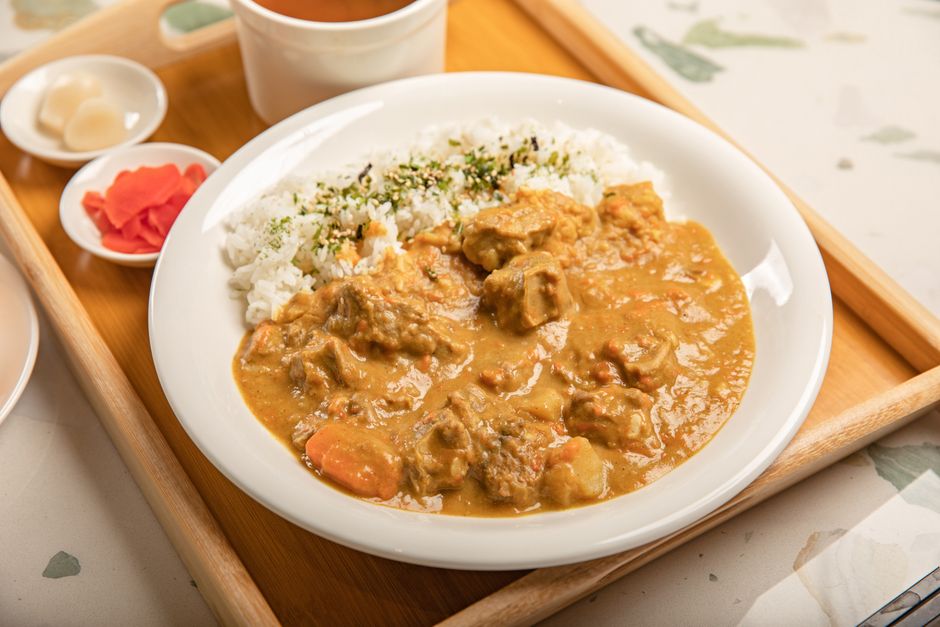
In Japan, the word karē (カレー) rarely points to the Indian subcontinent. It points to karē raisu — curry rice — a thick, glossy, faintly sweet sauce spooned over short-grain white rice and eaten with a heap of bright red fukujinzuke pickles. It belongs to the yōshoku family: Western-derived dishes that Japan absorbed in the Meiji era and then rebuilt on its own terms, alongside tonkatsu, omurice, and korokke.
That history matters, because it explains why the “secret ingredient” question is so slippery. Authentic Japanese curry is not a fixed recipe handed down through generations — it is a moving target shaped by navy rations, school lunches, and two companies that turned a spice blend into a national flavour memory. What people mean by “authentic” is usually the taste they grew up with: mild, sweet, faintly fruity, deeply savoury, and only gently warm.
Structure: a butter-and-flour roux loosened with stock or water, thickened to a gravy that coats a spoon but never pours thin.
Flavour architecture: sweetness first (fruit, honey, caramelised onion), then savoury depth (meat, stock, umami sauces), then a warm spice note that sits far below Indian or Thai heat levels.
Signature garnish: fukujinzuke (sweet pickled vegetables) and, in some households, a spoon of rakkyo or a splash of milk stirred in at the table.
Heat range: commercial roux blocks are graded from amakuchi (mild) to karakuchi (hot), but even the hottest Japanese block is roughly a 3 out of 10 by South Asian standards.
A 150-Year Timeline: How Curry Became Japanese
To find the secret ingredient, you have to follow the dish from a foreign curiosity to a Friday ritual. Each era added a layer.
The Real Answer: Three Layers, Not One Ingredient
Search hard enough and you will find a dozen candidates: chocolate, instant coffee, soy sauce, ketchup, yogurt, cheese, a bay leaf, a spoon of jam, even a dash of milk at the table. All of them work — but they are not competitors. They are components of a three-part system that Japanese cooks build without naming it.
“The secret isn’t an ingredient you hide. It’s a sequence: sweetness first, umami in the middle, aroma last.”
— The working principle behind every good pot of Japanese curry
- Sweetness (amami) — fruit, honey, and long-caramelised onion. This is what people are actually tasting when they call Japanese curry “authentic”.
- Umami and body — meat, stock, Worcestershire-style sauce, ketchup, soy sauce, yogurt, or a grating of cheese.
- Aroma — a small amount of fresh spice added at the end, most often garam masala, that survives the long simmer.
Get the first layer right and the dish tastes Japanese. Get the third layer right and it tastes like it came from a restaurant. Skip both and you have browned meat in gravy.
Secret #1 — The Fruit (Apple, Honey, and Why It Works)
If you only take one answer away, take this one. Grated apple — sometimes puréed, sometimes cooked down with the onions — is the most widely agreed-upon secret ingredient in Japanese curry rice. The evidence is not folklore: it is on the packaging. House Foods’ Vermont Curry has built its identity on apple and honey since 1963, and imitation followed across the category.[2]
What the apple actually does
A grated apple added early does three jobs at once. Its sugars (fructose and glucose) round off the bitterness of turmeric and the bite of pepper, which is why Japanese curry reads sweet even at higher spice grades. Its pectin adds a faint, silky body that supports the roux. And its malic acid lifts the whole pot without making it taste sour.
Honey plays a supporting role rather than a leading one. A single teaspoon per four servings adds a floral top note and helps the sauce glaze — and because honey is roughly sweeter than table sugar by weight, a little goes a long way.
Other fruits that show up
- Banana — mashed into the onions, common in Hokkaido and in home recipes that want extra body.
- Mango chutney — half a tablespoon, borrowed from British curry-house practice; adds tang as well as sweetness.
- Raisins or prunes — simmered and then fished out or blended in, for a darker, more wine-like sweetness.
- Pineapple — appears in some Okinawan and Southeast Asian-influenced versions, usually with pork.
Add grated apple with the liquid, not at the end. It needs 15–20 minutes of simmering to lose its raw edge and dissolve into the sauce. Apple added in the last five minutes tastes like apple — which is not the goal.
Secret #2 — The Late Spice (Garam Masala and Coffee)
Commercial roux blocks are built for shelf stability, which means their aromatic top notes have largely gone by the time you open the box. This is the gap professional cooks close with a finishing spice — and it is the single change that most reliably makes home curry taste restaurant-grade.
Garam masala, off the heat
Half a teaspoon of garam masala per four servings, stirred in after the pot comes off the heat, restores the warm, resinous aroma that a 20-minute simmer destroys. The reason is simple: the compounds responsible for that aroma are volatile and heat-sensitive, so the longer they cook, the less of them you taste.
If you prefer to build your own blend instead of buying a jar, a workable Japanese-leaning ratio per pot is: 1 part cumin, 1 part coriander, ½ part cardamom, ¼ part clove, ¼ part cinnamon, plus a pinch of black pepper. Toast whole seeds in a dry pan until they smell nutty, cool completely, then grind — grinding hot spices steams them and kills the very aromatics you are chasing.
The bitter accents: coffee and chocolate
Instant coffee and dark chocolate are the most common “hidden” additions in Japanese home cooking, and both work for the same reason: they add roasted, bitter, Maillard-adjacent notes that make a sweet sauce taste older and more savoury rather than simply sugary.
- Instant coffee — ½ to 1 teaspoon dissolved in the stock. You should not taste coffee; you should taste “less sweet”.
- Dark chocolate (70% or higher) — 5–10 g per pot. Adds gloss as well as depth, but anything above 15 g turns the sauce muddy.
- Worcestershire-style sauce — also bitter, also fermented, and arguably the true workhorse of the category.
Secret #3 — The Umami Stack
Here is the layer that separates a good pot from a great one, and the one nobody writes on a label because it is not a single ingredient. Japanese curry depth is built from stacked sources of glutamate and nucleotides — and when those two families meet, the perceived savouriness multiplies rather than adds.[4]
In practice, that means combining a glutamate source (ketchup, tomato, soy sauce, cheese, kombu) with an inosinate source (meat stock, bonito dashi, or a splash of fish sauce). A pot with both tastes dramatically fuller than a pot with twice as much of either alone.
| Umami Source | What It Adds | Amount per 4 Servings | When to Add |
|---|---|---|---|
| Worcestershire-style sauce | Fermented tang, anchovy savouriness, acidity | 1 tbsp | With the liquid |
| Ketchup | Glutamate, sweetness, glossy red-brown colour | 1–2 tbsp | With the liquid |
| Soy sauce | Salt plus glutamate; darkens slightly | 1 tsp–1 tbsp | Last 5 minutes |
| Plain yogurt | Lactic tang, body, tenderises meat | 2 tbsp | Off the heat, tempered first |
| Dashi or kombu stock | Inosinate and glutamate base liquid | Replace 25% of the water | As the cooking liquid |
| Grated cheese (hard, aged) | Glutamate, salt, richness | 15 g | Last 5 minutes |
Yogurt and other dairy should be tempered — whisk a ladle of hot curry into the yogurt in a bowl first, then return the mixture to the pot. Adding cold yogurt directly to a simmering sauce invites curdling, and a split curry never fully comes back together.
Regional Versions and Their Own Secrets
Japan is long enough, and its curry culture old enough, that regions have developed genuinely distinct answers to the same question. Two are worth knowing because they invert the standard formula entirely.
Born in Sapporo in the 1970s and now a regional institution. Thin and broth-like rather than roux-thick, heavily spiced, loaded with large chunks of chicken on the bone and char-grilled vegetables. The “secret” here inverts the rule: instead of adding sweetness, cooks push spice forward and rely on a long, collagen-rich chicken stock for body.
A near-black sauce served over katsu, achieved through deeply caramelised onions, dark soy, and long reduction. The secret ingredient is essentially time: onions cooked past golden and into the deep brown stage, delivering bitterness and roast that no roux block provides on its own.
Elsewhere, the local twist is about what goes into the pot rather than the sauce itself: Okinawan curry leans on pork belly and sometimes pineapple; Nagoya pairs curry with miso-katsu and udon; Osaka-style curry tends beefier and slightly sharper. None of these contradict the three-layer principle — they simply re-weight it.
Secret Ingredient Cheat Sheet
If you want to taste the difference for yourself, work through this list one variable at a time. Amounts assume a pot serving four, built from two roux blocks or an equivalent from-scratch roux.
| Secret Ingredient | Flavour Role | Amount | Add When |
|---|---|---|---|
| Grated apple | Sweetness, body, acidity | 1 medium apple | With the liquid |
| Honey | Rounds bitterness, gloss | 1 tsp | With the liquid |
| Caramelised onion | Deep sweetness, colour | 2 large onions, 25–35 min | Before the liquid |
| Garam masala | Aromatic top note | ½ tsp | Off the heat |
| Instant coffee | Bitter roast, cuts sweetness | ½–1 tsp | With the liquid |
| Dark chocolate | Depth, gloss | 5–10 g | Last 5 minutes |
| Worcestershire sauce | Fermented savouriness | 1 tbsp | With the liquid |
| Ketchup | Glutamate, sweetness, colour | 1–2 tbsp | With the liquid |
| Soy sauce | Salt and glutamate | 1 tsp | Last 5 minutes |
| Yogurt | Tang, body, tenderness | 2 tbsp | Off the heat, tempered |
| Butter | Finish, sheen, richness | 10 g | Off the heat |
If you change only one thing, add the grated apple. If you change two, add garam masala off the heat. Those two moves account for most of the gap between a home pot that tastes flat and one that tastes like it came from a specialist curry shop.
Building the Bowl: A Chef’s Method
This is the sequence that makes all three layers land in the right order. It takes about 55 minutes of mostly hands-off cooking.
Curry made a day ahead needs roughly 10% more liquid when reheating, because the roux continues to absorb water as it sits. Reheat over low heat, stirring often, and add stock or water a tablespoon at a time until it flows the way it did on day one.
Storing and Reheating Curry Safely
Japanese curry is one of the world’s great leftovers — and also one of the most reliably reported sources of home food poisoning, for a very simple reason: a big, dense pot of thick sauce cools slowly, and the danger zone sits right in the middle of it.
FAQ
What is the single secret ingredient in authentic Japanese curry?
If you force one answer: grated apple. It is the ingredient most commonly associated with the authentic flavour profile, it has been sold as part of a mainstream roux block since 1963, and it explains the round sweetness that distinguishes Japanese curry from other curry traditions. Honey is its usual partner.
Is Japanese curry actually Indian?
No. Japanese curry rice descends from British interpretations of Indian curry, filtered through Meiji-era cookbooks and then transformed by the navy, school lunches, and commercial roux. It shares spice vocabulary with South Asian cooking but its technique — a butter-flour roux, a long simmer, a mild sweetness — is its own.
Do I need a roux block, or can I make the roux myself?
Both work. A roux block is faster and more consistent; a from-scratch roux gives you control over spice and salt. A common hybrid is to use one roux block for body and add your own toasted spice blend at the end, which gets you most of the way to restaurant quality with minimal effort.
How much garam masala should I add?
About ½ teaspoon for four servings, stirred in after the pot comes off the heat. More than 1 teaspoon starts to taste like a separate spice rather than a finish, and it will overwhelm the fruit and dairy notes that define the dish.
Why does Japanese curry taste sweeter than other curries?
Three sources stack up: the flour-and-butter roux itself, the fruit and honey tradition, and long-caramelised onion. The roux also mutes the sharper volatile compounds in the spice blend, so what remains on the palate is sweetness and warmth rather than heat and bitterness.
Is curry really better the next day?
Yes, and it is not just nostalgia. Overnight chilling lets starch granules retrograde and the fat and spice compounds redistribute evenly through the sauce, which reads as a rounder, thicker curry. The catch is food safety: only if the curry was cooled quickly in shallow containers, refrigerated promptly, and reheated thoroughly.
What is the best way to add heat without losing the Japanese character?
Use ichimi togarashi or shichimi togarashi at the table rather than building heat into the pot. That way each person controls their own burn, and the sweet-savoury base — the part that makes the dish Japanese — stays intact for everyone.
- Fruit is the headline secret. Grated apple, often with honey, is the most widely cited and commercially documented “secret ingredient” in Japanese curry rice.
- It is never one ingredient. Japanese curry works on three layers: sweetness, umami, and a late aromatic finish.
- Add garam masala off the heat. Half a teaspoon per four servings restores aroma that a long simmer destroys.
- Stack your umami. Pairing a glutamate source with an inosinate source multiplies savouriness rather than just adding to it.
- Caramelise the onions for 25–35 minutes. It is the most-skipped step and the biggest single upgrade a home cook can make.
- Cool fast, store cold, reheat hot. Thick curry is a high-risk leftover — shallow containers and a two-hour rule keep day-two curry safe.
- S&B Foods — corporate history and the launch of Japan’s first domestically produced curry powder in 1923. sbfoods.co.jp
- House Foods — Vermont Curry product history, launched in 1963 with apple and honey as signature ingredients. housefoods.jp
- Japan Maritime Self-Defense Force — the enduring Friday curry tradition in Japanese naval mess halls, inherited from the Imperial Japanese Navy. mod.go.jp/msdf
- Umami Information Center — research on umami synergy between glutamate and inosinate compounds. umamiinfo.com
- USDA Food Safety and Inspection Service — leftovers storage guidance: refrigerate within two hours, use within three to four days, reheat to 165°F / 74°C. fsis.usda.gov