A deltawide field guide to the two kitchens of south Louisiana — what separates them, which dishes prove a cook knows the tradition, and how to judge a restaurant before you sit down.
Cajun and Creole are two distinct cuisines that share a postcode, not a recipe file. Creole cooking grew up in New Orleans around French, Spanish, African, and Caribbean kitchens with access to butter, cream, and tomatoes. Cajun cooking came from Acadian exiles who settled the prairies and bayous west of the city and built dishes on one black iron pot, a dark flour roux, smoked pork, and whatever the swamp offered. When you search for them “near me,” the fastest quality test is simpler than any review score: does the menu do a few things or everything? A kitchen serving gumbo, jambalaya, étouffée, boudin, and étouffée’s cousins alongside pad thai is almost never a Cajun kitchen.
Two Kitchens, One Delta: The Cultural Split
In 1755, British colonial authorities in Nova Scotia began seizing Acadian farms and deporting the families who lived on them — an expulsion remembered as Le Grand Dérangement. Roughly ten thousand people were scattered down the Atlantic coast, into the Caribbean, and back to France.[1] Between 1765 and 1785, thousands of those exiles found their way into Spanish Louisiana and settled the prairie and bayou country west and south of New Orleans, where land was cheap and nobody was interested in their language.
Meanwhile, “Creole” was already two generations old in the city. The word descends from the Portuguese crioulo and the Spanish criollo — a person born in the colony rather than the mother country — and in Louisiana it never meant a single race or nationality. It described French, Spanish, German, African, and Caribbean-descended families born in the territory, free people of color included. Their kitchens had money behind them: butter and cream from the dairy, tomatoes and mirlitons from the garden, wine, sugar, and imported spices through the port.
Acadian kitchens had a different set of constraints. One heavy pot, an open fire, no dairy, no tomato habit, and a landscape that supplied crawfish, shrimp, crab, alligator, wild game, and rice. That is why the two traditions taste like cousins rather than siblings: same holy trinity of onion, celery, and bell pepper, very different fat, very different roux, very different finishing moves.
In 1971, the Louisiana Legislature formally adopted “Acadiana” as the name for the 22-parish region anchored by Lafayette, where Cajun culture is concentrated. It is not a marketing invention; it is a legal geography, and it is the single best filter for anyone hunting Cajun food. A restaurant inside those 22 parishes is cooking for people who grew up eating it. A restaurant 1,500 miles away is cooking for a memory — which can still be excellent, but the burden of proof is higher.
New Orleans, by contrast, is Creole country, with a Creole-Acadian overlap zone that begins in Baton Rouge and thickens as you drive west. That overlap is where the “Cajun-Creole” menu label you see on restaurant signage actually comes from.
Reading a Menu by Geography: The Regional Map
Cajun and Creole food is not uniform across Louisiana. Once you know what each sub-region actually eats, a menu stops being a list of dishes and becomes a set of coordinates.
Typing “Cajun food near me” returns a list of places that bought the keyword. Typing the dish returns the places that cook it: gumbo near me, boudin near me, crawfish boil near me, étouffée near me, po’boy near me. Specificity is the whole game — a kitchen that appears for “boudin” has a sausage program, and a sausage program means somebody there cares.
Flavor Architecture: Roux, Trinity, and Sassafras
Underneath the regional variation, both cuisines run on the same four-part structure: a fat-and-flour roux, the holy trinity, a stock, and a thickener. Knowing how those four interact tells you why one gumbo is silky and another is soupy — and it gives you a vocabulary for asking a server or chef a question that actually reveals something.
The roux: color is a flavor decision, not a cosmetic one
Equal parts flour and fat, cooked and stirred continuously. Cajun gumbos push toward the chocolate end — 30 to 45 minutes of constant stirring at a moderate heat, oil held somewhere around 350°F (175°C) — until the flour smells nutty and the color is dark as a copper penny. Creole kitchens often stop at peanut-butter brown, sometimes in as little as 10 to 15 minutes.
The holy trinity, in a fixed ratio
Onion, celery, and green bell pepper, classically at roughly 2:1:1 by volume. The order matters: the trinity goes into the hot roux and cooks until the onion turns translucent and the mix smells sweet, which stops the flour from scorching and blooms the vegetables in fat at the same time. Skip that step and you get raw-flour gumbo, which no amount of simmering fully fixes.
Okra, filé, or both — the thickener question
Gumbo takes its name from a Bantu word for okra, ki ngombo, and okra is the original thickener: sliced and cooked down, its mucilage gives the pot a glossy, slightly ropey body. Filé powder — ground dried sassafras leaves, a Choctaw contribution — does the opposite job with a clean, root-beer-adjacent perfume. It must be stirred in off the heat or at the very end; boiled filé turns stringy and gritty.
“A gumbo is a conversation between a roux and a stock. If either one is lazy, everybody at the table knows it.”
— A working principle in every south Louisiana home kitchen
The supporting cast
- Andouille — heavily smoked, coarse-ground pork sausage, sliced and browned first so its fat seasons the pot.
- Tasso and pickled pork — concentrated seasoning meats used for depth, not as the main protein.
- Long-grain rice — separate grains, cooked with salt but not fat, used as a bed rather than a binder.
- Acid at the end — vinegar-pepper hot sauce, lemon, or a splash of brine, added at the bowl. Louisiana hot sauce is a finishing condiment, not a cooking ingredient.
- Smoked paprika, cayenne, black pepper, garlic, thyme, bay — the backbone of most commercial Cajun seasoning blends, most of which are salt-dominant and should be used cautiously during cooking.
Finding Real Cajun and Creole Food Near You
This is the part the search box can’t do for you. A restaurant can carry the right word in its name and still serve a gumbo built from a jarred roux and a chicken base. Here’s what to look for, in the order that pays off fastest.
Narrow menu → daily gumbo → house-made sausage → market-priced crawfish in spring → Monday red beans → regional hot sauce on the table. Two or three of these together is a restaurant worth a drive. Five or more and you should probably order the whole left side of the menu.
“Cajun” applied to chicken wings, fries, pasta, and a burger on the same menu. A gumbo served with a gravy-like texture and no visible roux sheen. Blackened dishes coated in a thick crust rather than a thin, seared spice layer. Étouffée made with a tomato cream sauce — that’s a different dish entirely. And any place that lists “jambalaya” as a side.
Look one level up from restaurants. Louisiana and Gulf Coast festivals run through spring and fall and often host visiting cook teams. Fish markets and butcher shops in Gulf-adjacent cities frequently sell boudin and boiled crawfish by the pound without any restaurant attached. And community and church halls — particularly in cities with sizable Louisiana transplant populations — run periodic boils and plate lunches that are often more traditional than anything with a liquor license.
Ordering Decoder: Dish by Dish
Use this table as a quality instrument, not just a translation. The last column is the useful one: each dish has a specific failure mode, and each failure mode points to a specific shortcut in the kitchen.
| Dish | Tradition | What a good version looks like | Red flag |
|---|---|---|---|
| Gumbo | Cajun & Creole | Dark, glossy, distinct layer of fat on the surface; visible trinity; okra or filé, not both fighting. Served over a scoop of long-grain rice. | Thick like gravy, floury on the tongue, or pale brown with no roasted aroma. |
| Jambalaya | Cajun (brown) & Creole (red) | Grains separate and stained throughout, never mushy. Cajun versions are brown and meat-forward; Creole versions are red with tomato. | Rice cooked separately and stirred in — you can see the uncolored grains. |
| Crawfish Étouffée | Cajun | A blond-to-medium roux, crawfish tails, butter, and a “smothered” sauce that clings. No tomato in the Cajun version. | Pink cream sauce, or a tomato base presented as étouffée. |
| Red Beans & Rice | Creole | Beans broken down into a creamy, slightly smoky pot liquor; a link of sausage on top; Monday availability. | Whole firm beans in a thin broth, tasting of nothing but salt. |
| Po’boy | New Orleans | Crusty-on-the-outside, airy-inside French bread, dressed (lettuce, tomato, pickle, mayo) unless you say otherwise. Roast beef with debris and gravy is the deep end. | Soft sandwich roll, or a “po’boy” on a hoagie roll. |
| Boudin | Cajun | Pork, liver, rice, and seasoning in a natural casing; moist, coarse, gently warm-spiced. Sold by the link, often at a counter. | Dense, pale, uniform texture — a sign of machine-blended filler. |
| Cracklins | Cajun | Pork skin and belly fried hard, crunchy, aggressively seasoned, served hot. Best within minutes of the fryer. | Chewy, cold, or bagged on a shelf. |
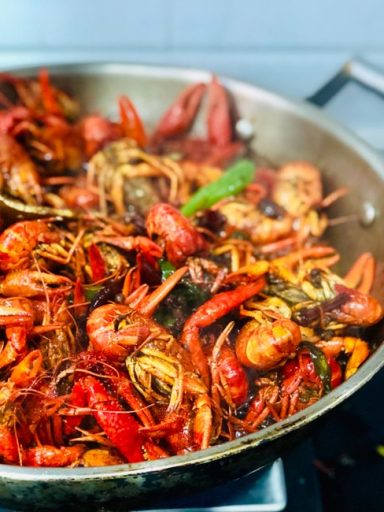
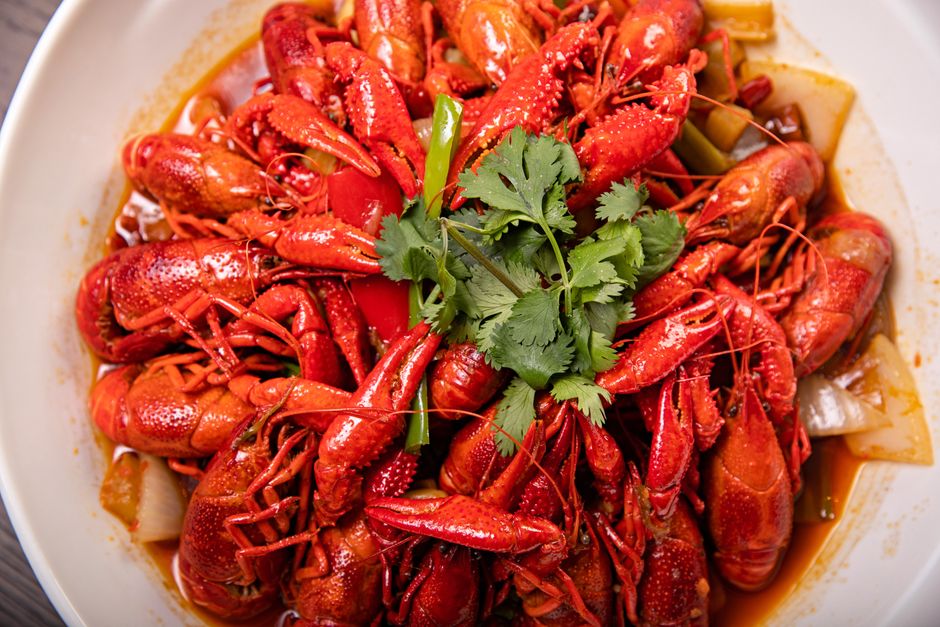
| Boiled Crawfish | Cajun & Creole | Sold by the pound in season, with corn and potatoes, heavily seasoned, served in a pile on newspaper. Heads on. | Pre-peeled tails only, or a fixed off-season price. |
| Blackened Redfish | Creole (modern) | A thin coat of spice, seared hard in a very hot pan until it crusts dark without burning. Invented at K-Paul’s in New Orleans in the early 1980s. | A thick black spice paste coating, or a fish that’s raw in the middle under the crust. |
| Muffuletta | New Orleans | Round sesame bread, olive salad with visible oil and oregano, layered cured meats and provolone. Best after a few hours of pressing. | Dry bread, sparse olive salad, or deli-style assembly. |
| Beignets & Pralines | Creole | Beignets served hot, puffed, and buried in powdered sugar; pralines creamy with visible pecan halves. | Cold beignets, or pralines that shatter like candy glass. |
If you only have one meal to judge a Cajun-Creole kitchen, order the gumbo and the boudin. The gumbo tests whether anyone there can build a roux and a stock. The boudin tests whether anyone there is willing to make something by hand that most restaurants buy frozen. Together they tell you more than a full entrée ever will.
Seasons, Rituals, and Crawfish Math
This cuisine has a calendar, and eating inside it changes both the quality and the price. Crawfish is the clearest example: Louisiana produces the overwhelming majority of the nation’s supply, and the season runs roughly from late winter through early summer, peaking from March through May. In peak season, a boil is abundant and relatively affordable. In October, anything labeled “fresh crawfish” has traveled a long way.
Crawfish and other shellfish should be cooked until the flesh is opaque and firm; the U.S. Department of Agriculture’s safe minimum internal temperature guidance puts fin fish at 145°F (63°C) and any reheated leftovers at 165°F (74°C).[3] Boils reach that easily — the practical risk instead comes from holding cooked shellfish warm for hours at a festival or backyard party. Keep hot food above 140°F (60°C) and discard anything that has sat between 40°F and 140°F for more than two hours.
Budget 3 to 5 pounds of whole, unpeeled crawfish per person for a boil — heavy eaters and experienced peelers run higher, and children far lower. Live crawfish should be purged and rinsed before cooking, and any that are dead, limp, or smell strongly should be discarded rather than boiled. Cook them in a heavily seasoned pot, then let them soak off the heat for 10 to 20 minutes; the soak, not the boil, is what builds flavor. Never leave a boiled batch sitting in the pot overnight at room temperature.
The rest of the calendar
- Lenten Fridays (roughly February–April) — seafood-centric menus peak; fried catfish, oyster po’boys, and shrimp dishes dominate.
- Mardi Gras (February or early March) — king cake season; rich Creole and Cajun party food, and the best time to find a restaurant running a special menu.
- Spring festival season (April–May) — crawfish festivals, the New Orleans Jazz & Heritage Festival, and French Quarter Fest all drive boil and gumbo volume.
- Fall (October–November) — filé gumbo returns as okra goes out; the seasoning shifts from bright to smoked.
- Reveillon (December) — the old Creole holiday dining tradition, revived by New Orleans restaurants as a prix-fixe season.
FAQ
Is Cajun food always spicy?
No — and this is the most common misconception. Cajun cooking is deeply seasoned and often smoky, but heat is added at the table via vinegar-pepper sauce and cayenne, not built into the pot at scorching levels. A proper gumbo should taste of roasted roux, stock, and smoked sausage first, with heat arriving as a background note. Kitchens that make “Cajun” mean “burn your mouth” are usually covering for a thin base.
What’s the real difference between Cajun and Creole gumbo?
Three things: the roux, the tomato, and the thickener. Cajun gumbo generally uses a darker roux, no tomato, and either okra or filé. Creole gumbo often uses a lighter roux, frequently includes tomato, and may add both okra and filé. Creole versions also tend to include more varied proteins and are more likely to be finished with a touch of cream or a heavier hand of herbs.
How do I find Cajun or Creole food near me if there’s nothing local?
Search for the dish rather than the cuisine: “boudin,” “gumbo,” “crawfish boil,” and “po’boy” surface far more relevant results than “Cajun near me.” Beyond restaurants, check Gulf Coast fish markets and butcher counters, Louisiana transplant community halls, regional food festivals, and food trucks in cities with sizable Gulf Coast populations. Many of the best plates come from a folding table in a parking lot.
Why does my gumbo never thicken properly?
Most often because the roux was darkened past the point where its starch still thickens effectively. Dextrinization during long browning reduces a roux’s thickening power, so a dark roux needs more volume to reach the same body. The fix is to increase the roux quantity, add a small amount of blonde roux alongside the dark one, or finish with a filé or okra contribution — not to boil the pot down for an hour, which concentrates salt and muddies the flavor.
Is blackened fish authentic Cajun or Creole cooking?
It’s modern Creole. Chef Paul Prudhomme popularized blackened redfish at K-Paul’s Louisiana Kitchen in New Orleans in the early 1980s, and it spread nationally so fast that redfish stocks were briefly pressured. The technique is a very hot cast-iron sear of a spice-coated fillet — closer to a technique than a tradition, but thoroughly rooted in Louisiana kitchens.
When is crawfish season, and can I get it year-round?
Fresh Louisiana crawfish runs roughly from late winter through early summer, with peak availability and best pricing from March through May. Farmed production has stretched the edges of the season, and frozen tail meat is available year-round and perfectly good for étouffée. But a crawfish boil in November is either frozen or imported, and it will taste like it.
Are “Cajun” seasoning blends on grocery shelves the real thing?
Some are, most are salt with red pigment. Read the label: a blend where salt is the first ingredient and the total sodium is very high will over-salt any dish before it delivers meaningful spice. Many Louisiana cooks keep a salt-free blend for cooking and add salt separately, then finish with a vinegar-based hot sauce at the table.
What should I order if I’ve never eaten this food before?
Start with a chicken-and-sausage gumbo and a side of red beans and rice. Both are forgiving, both are indicative of kitchen quality, and neither depends on a specific seasonal ingredient. If you’re eating in, add a link of boudin as an appetizer. If you’re eating at a boil, order three pounds of crawfish, watch someone else peel the first one, and copy them.
- Cajun and Creole are separate traditions: Creole grew up in New Orleans with butter, cream, and tomato; Cajun grew out of Acadian exile settlements west of the city with one pot, a dark roux, and smoked pork.
- The fastest restaurant quality test is menu width — a narrow menu built around one roux and one stock beats a forty-item “Louisiana” selection every time.
- Search by dish, not by cuisine: “boudin near me” and “gumbo near me” return better results than “Cajun food near me.”
- A dark roux thickens less than a blonde one because prolonged browning dextrinizes the starch — compensate with volume, not with boiling.
- Crawfish is seasonal and priced at market; March through May is peak, and off-season “fresh” crawfish is a contradiction.
- Keep cooked shellfish above 140°F or refrigerate it promptly, and order oysters cooked if you’re in a higher-risk health group.
- National Park Service, Jean Lafitte National Historical Park and Preserve — Acadian Cultural Center materials on Le Grand Dérangement and Acadian resettlement in Louisiana. nps.gov/jela
- U.S. Food and Drug Administration, Code of Federal Regulations Title 21, §189.180 — prohibition of safrole as a food additive (1960). accessdata.fda.gov
- U.S. Department of Agriculture, Food Safety and Inspection Service — Safe Minimum Internal Temperature Chart. fsis.usda.gov
- U.S. Centers for Disease Control and Prevention — Vibrio vulnificus infections associated with raw oyster consumption, Gulf Coast surveillance data. cdc.gov/vibrio
- LSU AgCenter — Louisiana crawfish production and seasonality research. lsuagcenter.com
- Southern Foodways Alliance — oral histories documenting Cajun and Creole culinary traditions across south Louisiana. southernfoodways.org
- Louisiana Seafood Promotion & Marketing Board — Gulf seafood species, seasons, and handling guidance. louisianaseafood.com
This guide is editorial and cultural in nature and reflects general culinary practice in south Louisiana as of September 2026. Menu availability, seasonality, and pricing vary by region and year. Food safety guidance is drawn from published federal sources; anyone with a medical condition that increases risk from raw or undercooked seafood should follow their physician’s advice. Restaurant recommendations are situational and not endorsements of any specific business.