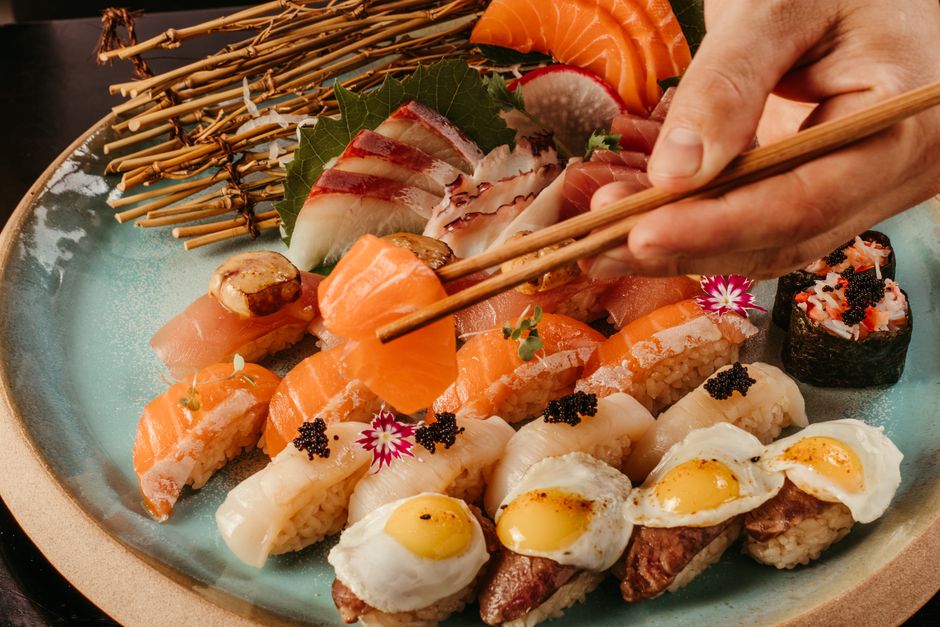
Sushi is often named the pinnacle of Japanese cuisine, yet the deepest roots belong to the sour-rice fermenting kitchens of Southeast Asia — long before Tokyo’s chefs turned it into a piece of hand-pressed edible fast food.
Sushi did not begin as raw fish, nor did it begin in Japan. The earliest culinary evidence traces it to narezushi, an ancient preservation technique in the Mekong River basin more than 2,000 years ago, where gutted fish was packed in salted, fermented rice. The sour rice was a fermentation medium, not a serving component. Over centuries, Japanese cooks shortened that process and eventually replaced long aging with vinegar-dressed rice. Hand-pressed Edomae nigiri, the global icon, emerged around 1824 as street food in Tokyo.
Watch a modern sushi chef press seasoned rice and a slice of sea bream into a single glistening morsel, and the process feels almost surgical: precise, quick, modern. But the ancestral dish tells a different story. It was slow, dark, and deeply regional — a source of preserved protein born not in a Tokyo counter kitchen but in the flooded river valleys of mainland Southeast Asia, where freshwater fish was plentiful one season and scarce the next.
The flavor philosophy of sushi has always revolved around the same chemical insight: acid preserves fish and makes rice taste alive. What changed over time is where that acid comes from. Ancient cooks let living bacteria sour the rice over months. Modern chefs pour rice vinegar over warm grains in seconds. In between lies the fascinating migration of an idea — through China, into Japan, and eventually around the world.
Where Sushi Was Actually Born
The origin of sushi points not to Japan’s coastline, but inland, to the Mekong River basin spanning modern-day Thailand, Laos, Cambodia, and Vietnam. Over 2,000 years ago, cooks there perfected a preservation method that anthropologists and culinary historians broadly describe as narezushi: cleaned and salted fish pressed with cooked rice under weighted stones in wooden barrels or earthenware jars. The rice was never intended as a meal. It existed to feed lactobacillus — salt-tolerant bacteria that consume carbohydrates and excrete lactic and acetic acids.
This quiet microbial labor dropped the pH inside the vessel low enough to inhibit the putrefying bacteria that would normally destroy fish in tropical heat. Months later, the fish emerged safely cured, intensely savory, slightly fizzy, and powerfully sour. The surrounding rice, meanwhile, was degraded into a milky slurry, often rinsed off and discarded before the fish was sliced. For ancient eaters, sushi was a survival technology — one that converted a feast season into a pantry staple.
The technique eventually traveled north through China, where dynastic archives record similar salted-rice-fermented fish preparations, and the Chinese character later used to write sushi in Japan originally denoted this class of processed fish. By the eighth century, the practice had arrived in Japan, carried along trade networks and by Buddhist culinary culture that prized seafood preservation. But Japan would change the formula more profoundly than any culture that preceded it.
Sushi Crosses Into Japan
When fermented-rice-fish making reached the Japanese archipelago during the Nara period (710–794), it found ideal conditions. Japan had abundant freshwater lakes, a deeply established wet-rice culture, and a Buddhist-influenced diet that relied on fish for protein. In the paddies and lake country around Kyoto and present-day Shiga Prefecture, narezushi took on its most famous surviving form: funazushi, made with nigorobuna crucian carp from Lake Biwa.
Funazushi remains a rare culinary fossil of the pre-sushi world. Female crucian carp are gutted through the gills, packed in salt for a year, then rinsed and layered with cooked rice to ferment for another season — sometimes more than two years in total. The finished fish is amber, translucent, and intensely aromatic, closer in spirit to an aged cheese or cured anchovy than to the clean slices of raw fish we associate with a modern sushi bar. It is served in whisper-thin slices, and the rice is still treated almost as a byproduct. Yet funazushi reveals something crucial: the Japanese did not simply inherit a recipe; they made it native to their climate and water.
Because Japan had no Mediterranean-style salting tradition on the same scale, freshwater fish preservation mattered enormously. Over centuries of making narezushi, Japanese cooks noticed something the original Southeast Asian makers had overlooked. When fermentation was cut short — called namanare or namanari — the rice retained enough structure and flavor to be eaten alongside the fish. This single realization reframed sushi from a container of preserved protein into a composed dish of grain and seafood. From there, the evolution accelerated.
The Four Eras That Remade Sushi
The chronological path from ferocious Lake Biwa fermentation to today’s pale pink tuna nigiri can be divided into four distinct culinary eras. Each one marks a generational decision about time, taste, and what freshness actually meant.
From the eighth century through the medieval period, sushi in Japan was narezushi — a long and severe preservation process. The fish carried the meal; the rice was a disposable culture medium. This era established the fundamental acids-and-umami palate that still defines sushi, even though modern versions taste nothing like their ancestor.
During the Muromachi period, cooks began pulling fish from the barrels after weeks instead of months. The partially fermented rice was now rinsed, seasoned, and eaten beside the fish — Japanese diners effectively discovered that sour-tart rice was delicious, not just waste. This is the moment sushi became a food of grain and seafood together.
With the rise of rice-brewing technology, sushi rice could be seasoned with rice vinegar, salt, and sugar the moment it cooled. This hayazushi, or “quick sushi,” eliminated months of controlled rot in favor of a bright, clean, instantly sour rice. In the Kansai region, this gave rise to box-pressed oshizushi; in the booming city of Edo, vendors began finger-forming rice and seafood on the spot.
Street-food legend Hanaya Yohei recognized that the freshest fish from Edo Bay did not need curing at all. Around 1824, at his stall in the Ryogoku district of Tokyo, he shaped warm seasoned rice into small oval portions, brushed a slice of fish with soy, and pressed it over wasabi. His Edomae nigiri was the first sushi designed to be eaten within minutes, not months. In the twentieth century, sushi made the leap abroad; Japanese chefs in North America created inside-out maki adaptations such as the California roll in the 1960s, ultimately making sushi a global rice-and-seafood language.[3]
The modern misconception that “sushi means raw fish” would confuse nearly every sushi maker before the mid-nineteenth century. Long before Hanaya Yohei, sushi was cooked, cured, vinegared, or fermented fish — often anything but raw. Even today, the term sashimi, not sushi, denotes an unaccompanied slice of raw fish.
Why Vinegar Displaced the Long Ferment
Sushi’s entire timeline is a story of chefs substituting one kind of acid for another. In traditional narezushi, salt and resident bacteria produced the preservative sourness. A salt concentration of roughly 20 to 23 percent suppressed spoilage bacteria while allowing halophilic lactobacilli to multiply and acidify the vessel. Over weeks, these bacteria lowered the pH through lactic and acetic acid production, effectively pickling the fish from within.
Rice vinegar accomplishes the same preservation and flavor goal in seconds. Vinegar is essentially a pre-formed solution of dilute acetic acid, produced by fermenting alcohol from rice, sake lees, or other starches. Harold McGee, in On Food and Cooking, describes acetic acid as one of the most effective acid preservatives in the kitchen — strong enough to inhibit a wide range of spoilage microbes at relatively low concentrations.[2] When the Japanese perfected rice-vinegar production in the Edo period, sushi chefs recognized they could shortcut weeks of bacterial fermentation by adding vinegar directly to cooked rice and fresh fish.
The modern sushi rice balance still follows this principle. A standard sushi-zu — a mix of rice vinegar, salt, and sugar — is folded into hot rice at roughly one-tenth to one-sixth of the rice’s weight, giving every grain a gentle sour tang without making the rice soggy. The rice becomes mildly acidic, bright, and seasoned in exactly the way that narezushi’s discarded slurry once was — only now it is the main attraction.
Kansai Pressing vs. Edomae Nigiri
Geography, not just taste, split sushi into two regional identities. The ancient capitals Kyoto and Osaka formed the Kansai culinary powerhouse, located far from daily ocean landings. In Kansai, chefs preserved fish through vinegar and kombu kelp wrapping, then pressed it into wooden boxes with seasoned rice under heavy lids. The result was oshizushi — a neat rectangular block of cured fish and rice that improved after a day or two of compression. Kyoto’s cooks prized patience, and the region still honors it in battera (pressed mackerel sushi) and hako-zushi.
Edo, modern Tokyo, faced directly onto Tokyo Bay, giving vendors and artisans access to fish still alive at dawn. That abundance made freshness a higher currency than preservation. Hanaya Yohei’s hand-pressed nigiri celebrated the moment — no box, no weights, no waiting. This dichotomy still shapes Japanese sushi culture, though Tokyo’s Edomae style eventually dominated global perception.
| Style | Region / Era | Core Technique | Role of the Rice |
|---|---|---|---|
| Funazushi (surviving narezushi) | Lake Biwa, Shiga · ancient | Nigorobuna carp salted for a year, fermented in rice for up to another year | Rice is mostly a fermentation medium; discarded or reduced to seasoning |
| Oshizushi / hako-zushi | Osaka & Kyoto, Kansai · Edo period | Vinegared fish and seasoned rice pressed in a wooden mold | Rice is a structural layer; aging under pressure develops flavor |
| Edomae nigiri | Tokyo · circa 1824 onward | Fresh raw or lightly cured seafood hand-pressed over seasoned rice | One-hand rice base, seasoned, meant to be eaten immediately |
| Makizushi & international rolls | Japan; adapted globally mid-20th century | Seasoned rice and fillings rolled in nori, or rolled inside-out for American palates | Rice is the structural outer or inner layer — fully a food component |
Understanding this regional fork helps explain why sushi restaurants in Japan feel so specialized. A Kyoto shop might age its mackerel in kelp and vinegar before pressing; a Tokyo app will make omakase out of the day’s best from the bay or market. Both trace their lineage to the same fermented Southeast Asian ancestor, but they read it through completely different lenses of time.
Origin Lessons for the Home Cook
Reading the full arc of sushi’s past changes how a home cook should approach a sushi meal. The first lesson is that sushi’s identity lives in the rice. A sushi roll or nigiri can taste only as good as its seasoned grains; fish and vegetables are accents. In Japanese cooking schools, students often spend the first weeks practicing rice preparation before touching seafood — a discipline rooted in the grain’s ancient role as a living fermentation medium.
The second lesson is that acid is sushi’s true backbone. When making sushi rice at home, aim for freshly cooked Japanese short-grain rice at a warm temperature, folded gently with a rice vinegar dressing. The goal is shiny but separate grains, neither soupy nor dry. A slightly assertive acidity is authentic; bland unseasoned rice is the most common home-sushi failure.
The third lesson is respect for the ocean. Modern sushi treats raw fish as an ingredient, not a preserved staple, which transfers food-safety responsibility to the supplier. Buy seafood from a reputable fishmonger who clearly labels it as safe for sushi or as previously frozen to parasite-destruction standards. If you have any doubt, cook the seafood — many exquisite sushi preparations, from unagi to cooked shrimp tamago, have no need for rawness at all.
Finally, remember the story’s deeper value: sushi was invented by people who could not afford to waste abundance. Each evolution — shorter fermentation, brighter vinegar, overnight-aged fish, global maki — preserved a food culture by making it relevant to a new economy and palate. Home cooks can participate by adapting the sushi principle rather than copying a museum piece.
Quick Answers to Common Sushi Origin Questions
Did sushi originate in China or Japan?
Neither is the complete answer. Sushi’s deepest identifiable roots are in mainland Southeast Asia, specifically the Mekong River basin, where fermented fish packed in rice was made more than 2,000 years ago. The technique traveled through China, where early records document salted-fermented fish, then reached Japan by the Nara period. Japan is where modern sushi — particularly nigiri, maki, and pressed styles — was fully developed.
Why was the rice in narezushi thrown away?
In ancient narezushi, rice was a fuel source for lactobacillus bacteria, not a menu item. During months of fermentation, the bacteria consumed the rice’s starches and sugars, leaving a sour slurry. Salt drew moisture from the fish, and the acids produced in the rice kept the fish from rotting. Because the rice had been exhausted by the microbes, it was traditionally discarded, though some modern funazushi enthusiasts use the leftover rice as a pungent seasoning.
Who invented Edomae nigiri sushi?
Most food historians credit Hanaya Yohei, a sushi vendor working in the Ryogoku district of Edo, around 1824. He hand-pressed seasoned rice and fresh seafood into bite-size ovals, creating sushi that could be eaten immediately by hand. His style was named Edomae, meaning “front of the bay,” because it used seafood from the waters in front of Edo. It was originally fast food for commoners, not an aristocratic luxury dish.
Is sushi the same as sashimi?
No. Sushi refers to a dish built around seasoned rice, often but not always with fish. Sashimi is a separate dish consisting only of skillfully sliced raw seafood, served without rice. The confusion developed because Western sushi restaurants pair raw fish so closely with the rice-based form; but culinary tradition treats them as distinct categories.
What does the word “sushi” actually mean?
The Japanese name sushi descends from the classical adjective sui, meaning sour or acidic, an etymological fossil pointing to its fermented narezushi heritage. The word has been written historically with characters meaning “vinegared fish” and “estuary fish,” reflecting the dish’s long transformation from sour preservation to refined seasoned rice.
- Sushi’s true origin lies in the Mekong River basin, where Southeast Asian cooks fermented fish in rice more than 2,000 years ago; Japan inherited and eventually reinvented that technique.
- The name sushi translates essentially to “sour-tasting,” a direct reference to the acidic fermented rice and vinegar-seasoned grains that define the dish’s heritage.
- Japanese sushi evolved through four transformative stages: narezushi, namanare, hayazushi, and finally Edomae nigiri.
- Hand-pressed Edomae nigiri was created around 1824 by Hanaya Yohei in Tokyo and was originally served as street food.
- Seasoned rice is the true heart of sushi; funazushi’s fermentation, oshizushi’s pressing, and nigiri’s hand-molding all express different regional relationships with acid, time, and seafood freshness.
- Modern raw seafood safety begins with parasite-control freezing under FDA guidelines — not with reliance on vinegar or wasabi.
- U.S. Food and Drug Administration — FDA Food Code, Annex 3: Parasite Destruction Criteria for Fish.
- McGee, Harold. On Food and Cooking: The Science and Lore of the Kitchen, rev. ed., Scribner, 2004.
- UNESCO — Washoku, Traditional Dietary Cultures of the Japanese, Representative List, 2013.