Before chocolate became a neatly wrapped bar, a glossy truffle, or a Valentine heart, it was a forest fruit pounded into a bitter, foaming cup of ritual and rank. Its passage from sacred Mesoamerican beverage to the world’s most beloved confection is one of gastronomy’s most dramatic arcs — and nearly all of that drama happened in liquid form.
The history of chocolate is a 5,000-year evolution from a bitter, chili-and-maize-spiked fermented drink of the ancient Americas to the silky edible bar of the modern world. Chocolate remained a beverage for nearly all of its recorded history: the decisive break came when Spanish kitchens added cane sugar in the 16th century, and the solid bar emerged only later, driven by 19th-century industrial pressing, milk-drying, and conching technologies.
Where Chocolate Was Born: The Heritage of Cacao
Chocolate’s origin story begins not in a Swiss patisserie but in the hot, shaded understory of equatorial rainforest. The tree that produces cacao, Theobroma cacao — a name Carolus Linnaeus coined from Greek for “food of the gods” — likely emerged in the upper Amazon basin of present-day Ecuador and Peru, where archaeologists have found cacao starch grains embedded in 5,000-year-old pottery. From that wild origin, the plant was carried north into Mesoamerica, where it found its most culturally fertile home.
The Olmec, Maya, and Aztec civilizations did not eat chocolate as we understand it. They fermented the pulp and beans, sun-dried them, then roasted and ground them on stone metates, working the paste with water to make a thick, earthy liquid. Maya cooks often blended that paste with dried maize, chili, and annatto, then poured the drink back and forth between vessels until a delicate foam rose to the surface. Flavor philosophy was built on bitterness, earth, spice, and aromatics — never sugar — and the drink’s importance was simultaneously nutritional, ceremonial, and political.
Cacao beans carried astonishing value in Mesoamerican society. The Aztecs used them as a standardized currency for everything from small-market produce to tribute quotas; a turkey might cost a hundred beans, while a ripe avocado sold for three.[1] The emperor Montezuma reportedly drank golden goblets of cold, spiced cacao blended with vanilla and ground flowers, and his royal stores held hundreds of thousands of dried beans. This layering of luxury, economics, and ritual set chocolate apart from every other foodstuff the Spanish conquistadors encountered.
Chocolate was not originally designed to be eaten. It was drunk, displayed, exchanged to seal alliances, poured for warriors, and sacrificed to gods.
— A central narrative thread in Coe & Coe, The True History of Chocolate[1]
For the rest of chocolate’s early history, the drink remained reserved for nobles, priests, and the highest ranks of Aztec and Maya society. Commoners might taste it only at festivals or receive it as military reward, but the daily ceremony of grinding, frothing, and serving chocolate belonged to elite households. That association with power and privilege would travel with the cacao bean across the Atlantic — and it partially explains why Europeans first treated chocolate as an aristocratic medicine rather than an everyday pleasure.
From Bitter Drink to Edible Bar: Five Turning Points
Chocolate’s transformation from a bitter beverage to a moldable sweet is not a simple story of inevitable progress. It is a sequence of surprising collisions between Indigenous food technology and European taste, each collision leaving permanent marks on the flavor, texture, and social standing of the finished product.
| Period | Innovation | Culinary Consequence |
|---|---|---|
| Ancient Mesoamerica | Stone metate grinding, fermentation, foam pouring | A bitter, spicy, foaming ceremonial beverage |
| 16th century | Cane sugar and hot serving introduced in Spain | Chocolate becomes a sweetened aristocratic drink |
| 1828 | Van Houten hydraulic cacao press | Cocoa butter separated; powdered cocoa democratized |
| 1847 | J.S. Fry & Sons molded chocolate bar | The first modern solid eating chocolate |
| 1875–1879 | Milk powder, then Lindt’s conche | Smooth, creamy, milder consumer chocolate |
Fermentation, Roasting, and Conching: The Science Beneath the Flavor
The history of chocolate is inseparable from the chemistry of its production. A raw cacao bean tastes nothing like chocolate — it is intensely astringent, bitter, and faintly fruity. Every distinctive chocolate note must be created through a precise biological and thermal sequence, and each stage in that sequence was discovered empirically over centuries.
Fermentation is the most underappreciated step. Inside the heap of freshly opened cacao pods, wild yeasts convert the sugars of the surrounding pulp to ethanol; then acetic acid bacteria oxidize that alcohol into acetic acid, driving the bean mass upward in temperature. Harold McGee describes this process as the crucial pre-condition for chocolate flavor, because enzymes inside the germinating seed begin breaking down storage proteins into peptides and amino acids while sugars rearrange into the substrates later needed for Maillard browning.[2] A heap that ferments too briefly produces beans with flat, hammy, or intensely bitter characters; over-fermentation yields smoky, heavily acidic, or even putrid notes.
Roasting then takes over. When fermented beans are heated, typically to between 120°C and 150°C (250°–300°F), reducing sugars and amino acids generated during fermentation collide in a cascading series of Maillard reactions.[2] Hundreds of aroma compounds form — pyrazines for roasted nuttiness, aldehydes for fruity brightness, thiazoles for savory depth. Interestingly, many of chocolate’s most familiar tasting notes do not come from the cacao bean at all but from this applied dry heat.
Conching, the last great technical leap, is more sensory subtlety than flavor creation. Rodolphe Lindt discovered that continuously working warm liquid chocolate for hours or days smooths the jagged edges of sugar and cocoa particles, reduces residual acetic acid, and coats every solid particle in a film of cocoa butter. The result is a rounder, silkier, less acidic chocolate that masks the slightly harsh quality of industrial cacao. Fine craft chocolate makers today sometimes skip or shorten conching intentionally, preserving volatile acidic and fruity aromas that the long mechanical massage would erase.
Regional Identities That Reshaped Chocolate
Although cacao beans originate in the Americas, virtually every country that embraced chocolate modified its flavor grammar according to local ingredients, dairy traditions, and culinary priorities. The regional results are so distinct that eating a Spanish drinking chocolate, a Swiss milk bar, and a Mexican ceremonial brew side by side can feel like three unrelated foods.
Honoring Chocolate’s History in a Modern Kitchen
The most respectful way to cook with chocolate’s history is to abandon the assumption that it belongs exclusively in desserts. The ancestral Mesoamerican pairing of cacao with chili, corn, herbs, and savory stews produces dishes of extraordinary depth — a reminder that chocolate entered the human diet as a food, not a treat. In modern kitchens, a 70% or higher single-origin bar can be grated into braised meat sauces, where its bitterness adds unsweetened complexity similar to espresso or dried porcini. The ancient Mexican mole negro offers the fullest expression of this logic: fermented cacao paste thickens and darkens a chile-based sauce so that chocolate’s roastiness supports rather than dominates.
For cooks who prefer to stay closer to the beverage tradition, the quickest historical portal is a simple Mexican ground-chocolate tablet melted into warm milk and frothed with a wooden molinillo. If you want the modern counterpart, learning to temper dark chocolate correctly is the essential bar-making skill. Use the working temperature ranges below and a digital probe thermometer for reliable results.
| Chocolate Type | Melt | Cool | Working Temperature |
|---|---|---|---|
| Dark | 45–50°C (113–122°F) | 28°C (82°F) | 31–32°C (88–90°F) |
| Milk | 45–50°C (113–122°F) | 27°C (81°F) | 29–30°C (84–86°F) |
| White | 40–45°C (104–113°F) | 26°C (79°F) | 28–29°C (82–84°F) |
The crystalline science behind those numbers matters as much as the numbers themselves: improperly cooled chocolate forms unstable fat crystals that bloom gray, crumble softly, and melt too readily on the fingers. Stable beta crystals produce the familiar audible snap and mirror gloss of fine chocolate.[2] Even if you never temper a bar at home, choosing chocolate the way a cultural historian would means reading the label for origin details, looking for single-origin or estate cacao, and approaching white chocolate with legal clarity: the United States requires white chocolate to contain at least 20% cocoa butter, at least 14% total milk solids, and no more than 55% sweeteners, so a product failing those benchmarks is not legally white chocolate.[3]
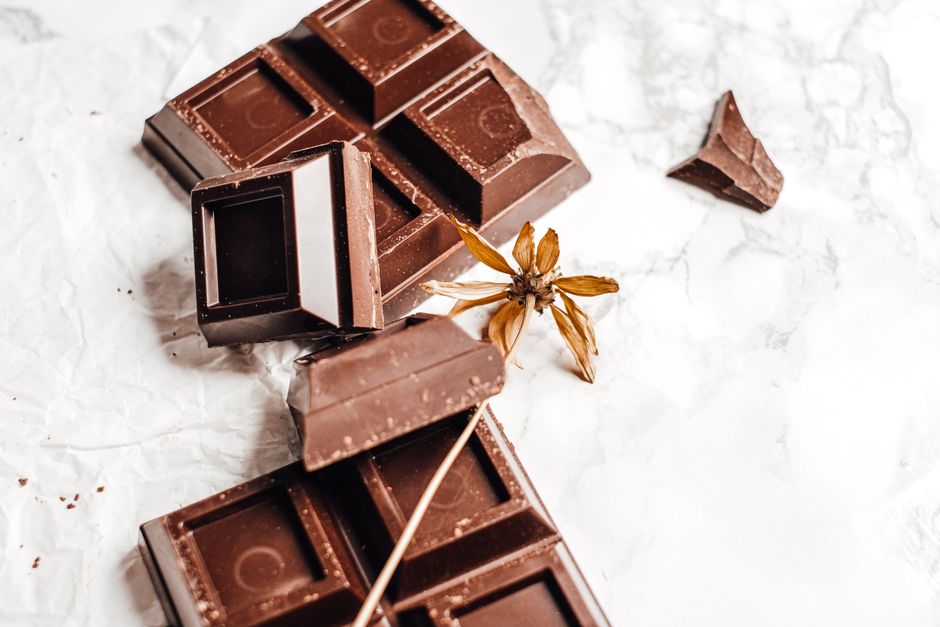
When tasting chocolate as a historical artifact rather than a candy, stop evaluating sweetness. Smell the broken edge before tasting; notice whether the aroma is fruity, floral, nutty, or earthy. Let a thin piece melt slowly on the tongue and watch for the order of flavor development — a well-fermented, lightly conched single-origin bar will expand over several minutes, whereas a commodity bar tastes almost identical from first touch to finish. Evaluate for fruit acidity, spice heat, nutty roast, and tannic dryness on the finish, and you will be reading the bean’s growing conditions and production story in your mouth.
Chocolate History FAQ
Was chocolate originally a dessert?
No — for the vast majority of its culinary history, chocolate was a bitter, foaming, savory-spiced beverage served at temperature ranging from cool to hot. Mesoamericans did not combine cacao with sugar because they had no cane sugar; they flavored it with chili, maize, vanilla, annatto, herbs, and flowers. Chocolate’s identity as a sweet dessert dates only to the 16th-century Spanish introduction of cane sugar.
When did chocolate become a solid bar?
Chocolate remained liquid until the 19th century. In 1828, Coenraad van Houten’s hydraulic press separated cocoa butter from cocoa powder, making it possible to recombine the butter with ground cacao into a moldable paste. In 1847, the Bristol firm J.S. Fry & Sons molded that paste into the first modern eating bar; Rodolphe Lindt’s conche in 1879 then gave those bars the smooth, silky texture familiar today.[1]
Where was the cacao tree originally domesticated?
The tropical cacao tree likely first grew wild in the upper Amazon basin of modern Ecuador and Peru. Archaeologists have identified cacao residue on pottery from that region dating back about 5,300 years, and genetics suggest that a major domestication event subsequently occurred in Central America and southern Mexico, where the Maya and Aztec peoples built elaborate ritual, economic, and beverage cultures around the bean.[1]
Why did the Aztecs use cacao beans as money?
Cacao beans were uniform enough to count, durable enough to store, rare enough to hold value, and universally in demand. The Aztec tribute system collected cacao from conquered lowland regions that could grow the tree, while the high-altitude capital Tenochtitlán could not. Similar to salt or peppercorns in other cultures, cacao operated as a food whose intrinsic value made it an effective currency during ceremonial festivals and daily markets.
What is legally required for a product to be called white chocolate?
Under the United States standard of identity for cacao products, white chocolate must contain at least 20% cocoa butter, at least 14% total milk solids, at least 3.5% milk fat, and no more than 55% carbohydrate sweeteners; it also must contain no non-cacao vegetable fats.[3] Products that substitute palm oil or other fats for cocoa butter are usually labeled white confectionery coating or white melting wafers.
- Chocolate was a beverage for most of its 5,000-year history; the edible bar is barely 175 years old.
- Fermentation is the first essential flavor-creating step: without two to eight days of microbial heat, roasting cannot build true chocolate notes.[2]
- Roasting between 120°C and 150°C drives the Maillard reactions that generate chocolate’s nutty, roasty, fruity aroma compounds.[2]
- The historical flavor template for cacao is savory-spiced, not sweet: chili, maize, vanilla, herbs, and flowers all precede sugar.
- Stable tempered dark chocolate requires a melt to 45–50°C, a cool to 28°C, and a final working temperature of 31–32°C.
- Read labels with care: true white chocolate legally requires a minimum of 20% cocoa butter under FDA standards.[3]
- Coe, Sophie D., and Michael D. Coe. The True History of Chocolate. 3rd ed., Thames & Hudson, 2013.
- McGee, Harold. On Food and Cooking: The Science and Lore of the Kitchen. Revised ed., Scribner, 2004.
- U.S. Food and Drug Administration. “Standard of Identity for Cacao Products.” Title 21 of the Code of Federal Regulations, Part 163.
- International Cocoa Organization. Cocoa Market Report and Quarterly Bulletin, West African production statistics.