Most people meet Mexican food through five clichéd dishes and assume they know the country. But real Mexican cooking is one of history’s great culinary conversations — 9,000 years old, shaped by volcanoes, corn, chiles, and at least seven completely distinct regional kitchens.
Real Mexican food is a regional cuisine rooted in corn, chiles, beans, and nixtamalization. It contains ancient Mesoamerican techniques, colonial-era inventions, and modern street-food creativity. Mexican cuisine was inscribed on UNESCO’s Intangible Cultural Heritage list in 2010, and it is far more diverse — and often far less spicy — than the fast-casual version most visitors know. To cook it properly, you first need a map of Mexico’s seven culinary territories and the handful of foundational techniques that tie them together.
- Before 1491: Mexico’s Original Pantry and Two Colonial Resets
- Seven Mexicos on One Map: The Real Regional Breakdown
- Corn, Chile, and Beans: The Sacred Trinity
- Nixtamalization: The Ancient Science Behind Real Mexican Food
- The Essential Dishes Every Cook Should Know
- UNESCO, Michoacán, and the Fight to Protect Mexican Cuisine
- Common Assumptions About Mexican Food — Tested
- Frequently Asked Questions
- Key Takeaways
1. Before 1491: Mexico’s Original Pantry and Two Colonial Resets
You cannot understand Mexican food as a recipe list. It is a layered historical document. The first layer begins not in a kitchen but in the Balsas River valley of what is now south-central Mexico, where indigenous farmers domesticated maize from the wild grass teosinte roughly 9,000 years ago[2]. By the time Europeans arrived in 1519, Mesoamerican cooks had already built a sophisticated culinary system around maize, beans, squash, chiles, tomatoes, tomatillos, avocados, cacao, vanilla, and a deep roster of herbs and mushrooms.
Maize became the identity of every meal. It was ground into masa for tortillas, wrapped in leaves and steamed as tamales, simmered into atoles and pozoles, and used as a ritual food for centuries. The Florentine Codex, compiled by Franciscan friar Bernardino de Sahagún in the 1500s, documents dozens of indigenous tamales, tortillas, stews, and beverages served in the Aztec world[3]. This was not a raw survival diet; it was a sophisticated cuisine with distinct festival foods, status foods, and daily foods.
When Spanish colonists brought wheat, rice, cattle, pigs, chickens, sheep, citrus, onions, garlic, cinnamon, cloves, and dairy, they did not simply replace the indigenous kitchen. The food was re-sorted through convents, haciendas, markets, and the hands of indigenous women working in Spanish households[4]. That fusion created the sauces, moles, stews, and stuffed chiles that most cooks now call comida mexicana. It was not ancient — and that is exactly what makes it a true living cuisine.
In the 1800s and 1900s, Mexican cities became engines of antojitos — literally “little cravings.” Tacos, quesadillas, pambazos, gorditas, and later tacos al pastor emerged from street stalls rather than pre-Hispanic temples. The taco itself is largely a modern Mexican invention, not an unchanging Aztec relic. Understanding that timeline helps you enjoy the cuisine without mislabeling every dish as “ancient.”
The word “chocolate” comes from the Nahuatl xocolatl, a bitter, often foamy beverage made from cacao — not the sweet candy bar most people think of. The drink was consumed by elite Mexica (Aztec) rulers and warriors long before sugar arrived from Europe.
2. Seven Mexicos on One Map: The Real Regional Breakdown
One reason outsiders misunderstand Mexican food is geography. Mexico is roughly four times the size of France, with deserts, tropical coastlines, cloud forests, and high volcanic plateaus. Each zone has different ingredients, cooking fuels, and cultural influences. These are the seven culinary territories worth memorizing.
Sonora, Chihuahua, Coahuila, Nuevo León, and Baja California Norte form cattle country. Here, cooks grill arrachera and carne asada over mesquite, make enormous thin flour tortillas, dry beef into machaca, and grate local cheeses over beans. Cabrito or young goat is a prized celebratory dish in the northeast, while frijoles charros — pinto beans simmered with bacon, tomato, onion, and chiles — came from this ranching culture.
Sinaloa, Nayarit, Sonora’s coast, and Baja California are defined by the sea. This is the home of aguachile, a sharp, spicy lime-marinated shrimp dish; coastal ceviches; and the now-famous Baja fish taco, which is a modern triumph of battered fish, cabbage, and crema rather than a centuries-old recipe. In Sinaloa, seafood often arrives in deep-fried tacos called tacos gobernador, stuffed with shrimp and melted cheese.
This is the region of Guadalajara tortas ahogadas, Jalisco-style pozole, birria from Jalisco and Zacatecas, and Michoacán’s celebrated carnitas. Carnitas are not simply fried pork; they are cooked gently in seasoned lard until every texture exists in one batch: crisp edges, silky fat, and tender meat. Tequila and its cooked agave heart, the piña, also come from this territory.
The capital is less a single regional tradition and more a living archive of the entire country. It is the world capital of street tacos, from suadero and longaniza to the vertically roasted tacos al pastor. This is also where cooks perfected huitlacoche, the prized corn fungus with an earthy, mushroom-like depth that many Mexicans love far more than truffles.
Puebla’s convents are the legendary birthplace of mole poblano and chiles en nogada, both dishes that combine European ingredients like almonds, raisins, and sherry with native chiles and cacao. Veracruz, by contrast, is a hot, tropical Gulf state where Spanish and Caribbean influences meet in dishes like huachinango a la veracruzana — red snapper in a bright sauce of tomatoes, olives, capers, and pickled chiles.
Oaxaca is arguably Mexico’s most complex culinary state. It is famous for seven traditional moles — including negro, colorado, amarillo, verde, chichilo, manchamanteles, and rojo — plus tlayudas, chocolate, mezcal, and the stretchy, stringy cheese now called quesillo. In the central valleys, cooks still grind masa on volcanic stone and roast chiles in ways that predate the Spanish conquest.
The Yucatán stands apart from the rest of Mexico. Its food relies on achiote, bitter orange, habanero chiles, and underground pit roasting. Cochinita pibil, pork marinated in achiote and sour orange, wrapped in banana leaves and cooked until tender, is the peninsula’s most famous export. But the region also produced papadzules, salbutes, panuchos, and the smoky sopa de lima that reflects a stronger Caribbean and Mayan personality than the central highlands.
3. Corn, Chile, and Beans: The Sacred Trinity
Ask a Mexican cook what the three anchors of the cuisine are, and you will hear variations of the same triad: corn, chile, and beans. Tomatoes, tomatillos, squash, avocado, and cacao are essential supporting actors, but these three are structural.
“Real Mexican cooking almost never starts with protein. It starts with corn, chile, and a good salsa — and builds from there.”
This trinity is why so many Mexican dishes are naturally vegetarian or vegan at their core. When beans or mushrooms are added to the same salsas and tortillas, the structure remains intact.
4. Nixtamalization: The Ancient Science Behind Real Mexican Food
The single most important technique in Mexican cuisine is not a knife cut or a sauce ratio. It is nixtamalization: the alkaline treatment of dried maize with water and food-grade lime, or calcium hydroxide. Without this step, the tortilla, tamal, and pozole culture of Mexico could not exist.
For about 500 g (1 lb) dry white or yellow field corn, use 1 L water and about 5 g food-grade calcium hydroxide. Simmer 15–20 minutes, then turn off the heat and let the pot sit overnight. Drain, rinse the kernels very well, and grind them while damp; the result is fresh masa. This is not the same as buying Maseca, but it is the closest you can get to the original Mexican kitchen process.
5. The Essential Dishes Every Cook Should Know
A full tour of Mexican cuisine would cover dozens of moles, regional barbacoas, indigenous stews, and coastal preparations. But these six dishes form a practical introduction to the country’s cooking logic.
| Dish | Home Region | What To Know |
|---|---|---|
| Tacos al pastor | Mexico City / Central Mexico | Marinated pork stacked on a vertical spit, carved in thin ribbons, and served with pineapple, onion, and cilantro. The style evolved from Lebanese shawarma brought by immigrants in the 20th century — proof that Mexican food never stopped evolving. |
| Mole negro | Oaxaca | A slow, dark festival sauce made from many dried chiles, nuts, seeds, bread or tortilla, and often a small amount of chocolate. It tastes smoky, sweet, bitter, and deeply savory all at once. |
| Pozole | Jalisco / Guerrero | A hominy stew, usually red, green, or white, topped with shredded cabbage, radish, onion, lime, and oregano. The nixtamalized giant corn kernels are the real star. |
| Cochinita pibil | Yucatán | Pork shoulder marinated in achiote and sour orange, wrapped in banana leaves, and baked or pit-roasted until shreddable. Serve with pickled red onions and habanero salsa. |
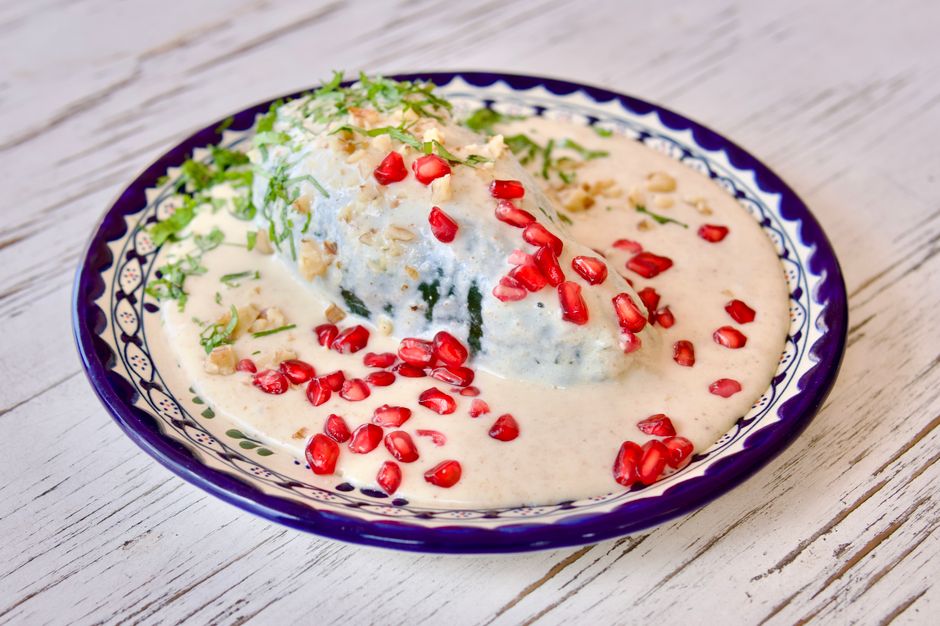
| Chiles en nogada | Puebla | Roasted poblano chiles stuffed with meat-and-fruit picadillo, topped with walnut sauce and pomegranate seeds. The three colors recall the Mexican flag; the flavor is sweet, savory, and seasonal. |
| Tamales | Nationwide | Masa stuffed with meat, chiles, cheese, vegetables, or fruit, then steamed in corn husks or banana leaves. Every region has a style — Oaxacan tamales are wrapped in banana leaves and can be enormous. |
6. UNESCO, Michoacán, and the Fight to Protect Mexican Cuisine
In 2010, UNESCO recognized the depth of Mexican food with an official inscription titled “Traditional Mexican cuisine — ancestral, ongoing community culture, the Michoacán paradigm.” The model for the nomination was not a single dish but the entire living system of the Purépecha people in Michoacán: their fields, farming calendars, cooking techniques, nixtamalization, ceremonial meals, and the women who pass knowledge between generations[1].
Inscribed in 2010 on the Representative List of the Intangible Cultural Heritage of Humanity, the designation covers “traditional Mexican cuisine” as a complete ancestral community culture. It protects not just recipes but the traditional processes, agricultural practices, rituals, and knowledge of Mexican cooks.
What this means practically: Mexican food is treated as cultural heritage with living practitioners, not merely as copyrighted recipes. The UNESCO recognition also draws attention to the vulnerability of small-scale maize farming, native seed diversity, and the role of women in transmitting cooking knowledge.
As global interest in Mexican flavors continues to grow, the real risk is flattening this complex regional cuisine into a few fast-food templates. The UNESCO framework reminds cooks that there is no single “authentic Mexican food” — there are regional cuisines with deep local logic and real agricultural ecosystems behind them.
7. Common Assumptions About Mexican Food — Tested
Separating fact from kitchen folklore is essential for anyone learning to cook Mexican food properly. Here are a few widely repeated claims, tested against history and kitchen reality.
“All Mexican food is spicy.”
Heat exists, but it is not uniform. Many traditional dishes — chicken in pipián, chiles en nogada, some moles, and rice dishes — are mild or aromatic rather than fiery. Chile is used for depth, fruitiness, smoke, and color as much as for burn. The heat usually comes from the salsa you choose.
“Tacos have been eaten since Aztec times.”
Pre-Hispanic people certainly ate nixtamalized tortillas and tamales, documented in sources like the Florentine Codex[3], but the folded tortilla-with-fillings that we call a taco is largely a product of Mexican street-food culture from the 19th century onward.
“Mole always contains chocolate.”
Chocolate appears in a few famous moles, especially Oaxacan mole negro and Puebla-style mole poblano. But many moles contain no cacao at all, relying instead on dried chiles, seeds, nuts, fruits, and spices for their depth. A green mole with tomatillos and pumpkin seeds is still a true mole.
“Good tortillas should taste like corn, not like cardboard.”
A fresh, nixtamalized tortilla needs only masa, water, and salt. It should have a soft, slightly springy texture and visible small char spots from the comal. The flavor is nutty, earthy, and faintly sweet — not neutral.
“Tex-Mex is fake Mexican food.”
Tex-Mex is not fake — it is its own border cuisine developed by Tejanos in Texas, heavily influenced by northern Mexico. But it is not the same as regional Mexican cooking. The two share ancestors, but they diverged generations ago.
8. Frequently Asked Questions
What is the true base of Mexican food?
Maize, or corn, is the true structural base of Mexican cuisine. Most meals include tortillas or tamales, which are made from nixtamalized masa. Beyond corn, the daily flavor backbone comes from chiles, beans, tomatoes, tomatillos, onions, garlic, cilantro, and lime.
Is there a “national dish” of Mexico?
No single official national dish exists, but mole poblano is often named unofficially because of its historical and cultural weight. Realistically, pozole, tacos, and tamales could each make the case. The regional diversity is too strong for one dish to represent the whole country.
What is the difference between red, green, and negro mole?
Red mole leans on red dried chiles and tomatoes. Green mole uses tomatillos, green chiles, herbs, and often pumpkin seeds. Negro mole is the darkest and most complex, with roasted chiles, nuts, seeds, plantain, bread, and often chocolate. They are different sauces dressed in the same word.
Can Mexican food be vegetarian or vegan?
Absolutely. Nopales, huitlacoche, mushroom quesadillas, bean tacos, chiles rellenos de queso with tomato sauce, and hundreds of vegetable stews are part of the tradition. Much of the cuisine is plant-based by design; lard and cheese are additions, not the identity.
Why does real Mexican food not use nacho cheese?
Traditional Mexican cheeses include queso fresco, cotija, panela, requesón, asadero, and quesillo or Oaxaca cheese. The bright orange processed cheese dip familiar in U.S. sports bars is a Tex-Mex snack invention of the 20th century, not part of Mexican regional cooking.
What is the most important pantry item for a home cook?
Good dried chiles. Guajillo for mild fruity depth, ancho for raisin-like richness, chipotle for smoke, and árbol for sharp heat. Once you can toast and rehydrate those, you can make salsas, marinades, and adobos that carry an entire dish.
- Mexican food is regional first. The cuisine splits into at least seven distinct culinary territories, from Sonoran beef to Yucatecan pit-roasted pork.
- Corn is the structural center. Nixtamalization unlocks both flavor and nutrition, and fresh masa is the foundation of tortillas, tamales, and many daily meals.
- Chiles are flavor, not only heat. There are hundreds of Mexican chiles with fruity, smoky, nutty, and herbal profiles; spiciness is optional.
- The cuisine is layered with history. Pre-Hispanic ingredients survived the colonial period and merged with European traditions to create moles, chiles en nogada, and antojitos.
- UNESCO recognized Mexican cuisine as living cultural heritage in 2010, protecting both traditional techniques and agricultural systems.
- Authenticity means respecting variation. The taco of Mexico City, the mole of Oaxaca, and the cochinita pibil of the Yucatán are all real Mexican food.
- UNESCO — Traditional Mexican cuisine: ancestral, ongoing community culture, the Michoacán paradigm
- Encyclopaedia Britannica — Maize: origin and domestication in the Balsas River valley
- Encyclopaedia Britannica — Florentine Codex and the documentation of Aztec food
- Encyclopaedia Britannica — Mexican cuisine: history and regional overview
- ScienceDirect Topics — Nixtamalization: nutrition and processing science