Soft herbs turn to black slime and woody ones go hay-dry when they hit the freezer wrong. Here are the five techniques professional kitchens rely on — with exact temperatures, blanch times, and ratios.
Wash and dry herbs completely, then match the method to the herb and its end use. Flash-freeze tender leaves (parsley, cilantro, dill) on a sheet pan for 1–2 hours before bagging. Blanch basil and mint for 30–60 seconds in boiling water, then shock in ice water to lock in color. Pack chopped robust herbs into ice cube trays under olive oil. Freeze woody herbs (rosemary, thyme, sage, bay) whole on the stem. Keep everything at 0°F (−18°C) or colder, press out all air, and label with the herb name and date.
- Before You Freeze: The 60-Second Prep Checklist
- Why Freezing Ruins Some Herbs and Not Others
- The 5 Freezer Methods, Step by Step
- The Mistakes That Turn Herbs to Slime
- Pro Moves That Extend Shelf Life
- How to Thaw and Cook With Frozen Herbs
- Freezer Shelf Life by Method
- Equipment You Actually Need
- Frequently Asked Questions
Before You Freeze: The 60-Second Prep Checklist
Skipping any one of these steps is the single most common reason frozen herbs come out mushy or flavorless. Run through it once, then pick your method.
Why Freezing Ruins Some Herbs and Not Others
Herb leaves are roughly 85–90% water held inside rigid cellulose cell walls. Freezing does not damage those walls — the ice crystals that form inside them do. Slow freezing produces a small number of large, jagged crystals that spear through cell membranes. Fast freezing produces many small crystals that do far less mechanical damage.[5] This is the entire logic behind flash-freezing on a sheet pan: a single layer of leaves at −0°F chills in minutes rather than hours.
“The difference between good and bad frozen herbs is almost entirely about crystal size and enzyme activity — control those two and texture and color follow.”
— Harold McGee, On Food and Cooking
The second villain is enzymatic browning. When you chop or bruise a leaf, polyphenol oxidase and lipoxygenase are released and start converting chlorophyll and lipids into brown, hay-smelling compounds. Those enzymes keep working in the freezer, just slowly. A 30–60 second blanch deactivates them, which is why blanched basil stays green for six to eight months while raw basil goes army-green in three weeks.[3]
The tender-versus-woody rule
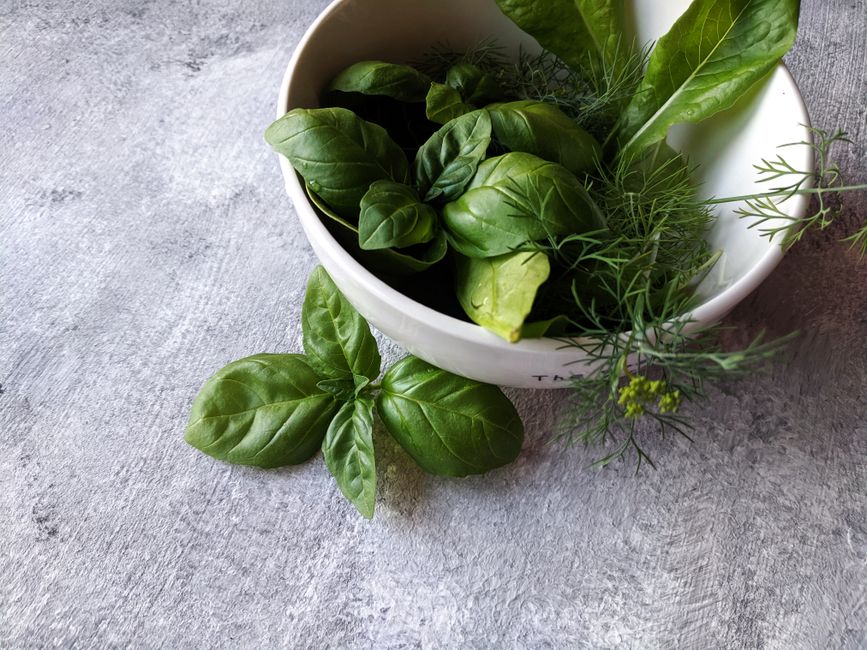
Tender herbs have thin, high-moisture leaves and almost no structural support — freeze them raw and they collapse into limp ribbons on thaw. Woody herbs have thick cuticles, lower water content, and volatile oils concentrated in resinous glands that survive freezing remarkably well. Rosemary, thyme, and sage often come out of the freezer tasting nearly identical to fresh. Basil sits alone in a third category: its leaves oxidize within minutes of bruising and turn black even in a sealed bag, so it needs blanching, oil, or a paste.
The 5 Freezer Methods, Step by Step
Pick the method by herb type and how you plan to cook. Most home cooks use two or three of these on rotation.
Method 1 — Flash-Frozen Whole Leaves (No Blanching)
Best for: parsley, cilantro, dill, mint, chives, tarragon heading into cooked dishes.
Method 2 — Blanch and Chop
Best for: basil, parsley, mint, dill, cilantro, chervil — anywhere you want visible color and a fresher flavor.
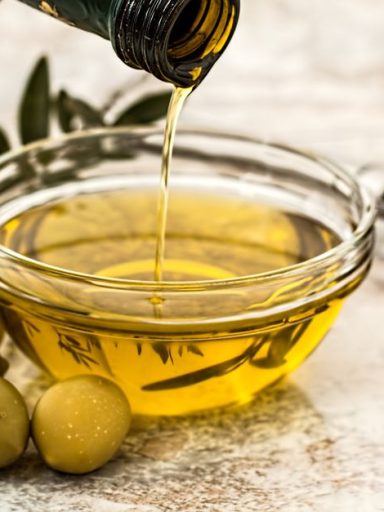
Method 3 — Oil and Butter Cubes
Best for: basil, oregano, rosemary, thyme, sage, cilantro — anything destined for a hot pan.
Yield math: 1 cup of packed, chopped herbs fills roughly 8 standard ice cube wells. A 12-cube tray needs about 1½ cups of packed herbs and 1½ cups of oil.
If you add garlic, shallot, or fresh chili to an oil pack, the mixture must stay frozen (or refrigerated) until the moment of use. Clostridium botulinum spores thrive in the anaerobic, low-acid environment of oil at room temperature, and the toxin they produce is not destroyed by normal cooking heat.[4] Freezing halts spore germination entirely — but a cube left on the counter for two hours is a genuine hazard. Drop oil cubes straight from the freezer into a hot pan.
Method 4 — Whole Stems for Woody Herbs
Best for: rosemary, thyme, sage, oregano, marjoram, savory, bay leaf.
Method 5 — Herb Paste and Pesto Blocks
Best for: basil, cilantro, mint, parsley, dill — the highest-flavor, longest-keeping option.
The Mistakes That Turn Herbs to Slime
Almost every frozen-herb failure traces back to one of these four errors. Each is easy to fix and impossible to reverse once it happens.
Pro Moves That Extend Shelf Life
- Freeze on metal, not plastic. An aluminum sheet pan conducts cold roughly 10 times faster than a plastic tray, shrinking crystal size measurably.
- Salt your blanch water at 1%. One tablespoon of kosher salt per quart of water helps chlorophyll hold its color and seasons the herb from within.
- Freeze in flat, thin packs. A ½-inch-thick layer freezes through in under 30 minutes and stacks vertically like a card catalog.
- Vacuum-seal if you have one. Removing oxygen delays freezer burn — the greyish, dehydrated patches caused by sublimation of ice from the leaf surface.[2]
- Keep a dedicated herb tray in the door-free zone. The freezer door swings 20–30 times a day and cycles through temperature spikes; the back wall of a chest freezer is far more stable.
- Note the method on the label. “Basil – blanched 9/26” tells you exactly what you can do with it. “Herbs” tells you nothing.
How to Thaw and Cook With Frozen Herbs
The honest answer for most frozen herbs is: don’t thaw them. Add them frozen, straight from the bag, at the point in cooking where you’d normally add fresh.
Sautéing with an oil cube is the highest-payoff use: put the cube in a cold pan over medium heat and let it melt into the oil before adding aromatics. The herb infuses the fat directly and nothing is lost to a thawing step.
Do not refreeze anything that has fully thawed. Once cell walls have ruptured and ice has melted, a second freeze compounds the damage and pushes texture past the point of recovery.
Freezer Shelf Life by Method
| Method | Best Herbs | Life at 0°F | Best Use |
|---|---|---|---|
| Flash-frozen whole leaves, raw | Parsley, cilantro, dill, mint, chives | 3–4 months | Soups, stews, sauces, curries |
| Blanched and chopped | Basil, parsley, mint, dill, chervil | 6–8 months | Cold sauces, dressings, finishing |
| Oil or butter cubes | Basil, oregano, thyme, rosemary, sage | 3–4 months | Sautéing, roasting, pasta |
| Whole woody stems | Rosemary, thyme, sage, bay, oregano | 6–12 months | Braises, stocks, roasts, grilling |
| Herb paste / pesto blocks | Basil, cilantro, mint, parsley | 3–4 months | Pesto, marinades, dressings, dips |
These windows assume a freezer holding at 0°F with minimal door opening. Flavor fades before safety does — frozen herbs do not “go bad” in the bacterial sense, they simply lose volatile aromatics and color. Once a pack smells like hay or looks uniformly olive-brown, it is still safe but no longer worth the freezer space.
Equipment You Actually Need
None of this requires specialty gear, but two or three items meaningfully change the outcome.
| Tool | Why It Matters | Budget Alternative |
|---|---|---|
| Rimmed sheet pan + parchment | Enables true single-layer flash freezing | A dinner plate in the coldest part of the freezer |
| Salad spinner | Removes roughly 90% of surface water before blotting | Clean kitchen towels and a gentle press |
| Silicone ice cube tray | Portioned cubes pop out cleanly without cracking | Standard plastic tray or a mini muffin tin |
| Vacuum sealer | Eliminates oxygen, delaying freezer burn by months | Zip bag plus the straw air-extraction method |
| Fine-tip marker + freezer tape | Method and date labeling prevents mystery packs | Masking tape |
| Freezer thermometer | Verifies the 0°F holding temperature | None — this one is worth the $8 |
Frequently Asked Questions
Can you freeze fresh herbs without blanching them?
Yes, and for most herbs headed into cooked dishes it is the better choice — blanching drives off some volatile oils and softens the leaf further. Blanch only when color retention and a fresher raw flavor matter, which in practice means basil, mint, and parsley for cold applications.
Why did my frozen basil turn black?
Two causes stacked on top of each other. Basil bruises easily, releasing polyphenol oxidase, which oxidizes green pigments into brown ones. And basil is chilling-sensitive: below about 42°F its cell membranes fail outright, which is why it also blackens in the refrigerator. Blanching and oil-packing solve both problems at once.
How long do frozen herbs really last?
Whole woody stems keep 6–12 months at 0°F. Blanched tender herbs keep 6–8 months. Raw frozen leaves and oil-packed cubes are best inside 3–4 months, after which the aromatic oils fade noticeably even though the herbs remain safe to eat.[2]
Can you freeze herbs in water instead of oil?
Yes — it works well for herbs that will go into soup or stock, since the ice melts into the liquid and dilutes nothing. It is a poor choice for anything being sautéed, because the water steams rather than fries and will splatter violently when it hits hot fat. Cover the herbs completely with water or the exposed leaves will oxidize.
Do you need to thaw frozen herbs before adding them to a recipe?
No. For cooked dishes, add them frozen in the last 5 minutes. Thawing on the counter accelerates oxidation and, in oil packs, creates a temperature window where C. botulinum spores can germinate. If you must thaw, do it overnight in the refrigerator.
Is it safe to freeze herbs in oil with garlic?
Freezing is the safe option — it prevents the anaerobic, low-acid conditions that allow Clostridium botulinum to produce toxin in oil.[4] The rule is absolute: keep those cubes frozen until the moment they go into a hot pan, and never let them sit at room temperature to soften.
Can you freeze herbs in a glass mason jar?
Only with headspace. Herb leaves themselves do not expand meaningfully, but any residual moisture or oil will, and a full jar of oil-packed herbs can crack glass on freezing. Leave ½ inch of headspace, use wide-mouth straight-sided jars, and let the jar sit at room temperature for a minute before running it under warm water to release the contents.
Which herbs should never go in the freezer?
There is no herb that is unsafe to freeze, but a few are rarely worth it. Chervil, tarragon, and delicate micro-herbs lose nearly all their character and are better used fresh. Basil will survive only with blanching or an oil pack. Everything else — including chives, dill, and mint — freezes acceptably when handled properly.
- Dry herbs completely before freezing — surface water is the leading cause of mush.
- Flash-freeze in a single layer on a sheet pan for 1–2 hours before bagging to prevent clumping and minimize ice crystal size.
- Blanch basil, mint, and parsley for 30–60 seconds and shock in ice water when you want color and fresh flavor.
- Freeze woody herbs whole on the stem; the leaves slip off effortlessly and keep their aroma for 6–12 months.
- Oil or butter cubes at roughly 2 tablespoons of fat per cube make the most convenient cooking format.
- Anything packed with garlic or shallot in oil must stay frozen until it hits the pan — never thaw at room temperature.
- Hold your freezer at 0°F (−18°C) or colder and label every pack with herb name, method, and date.
- FoodSafety.gov (USDA/FDA), Cold Food Storage Chart. foodsafety.gov
- U.S. Department of Agriculture, Food Safety and Inspection Service, Freezing and Food Safety. fsis.usda.gov
- National Center for Home Food Preservation, University of Georgia, Freezing Herbs and Blanching Guidelines. nchfp.uga.edu
- Centers for Disease Control and Prevention, Botulism Prevention: Garlic and Herbs in Oil. cdc.gov
- McGee, Harold. On Food and Cooking: The Science and Lore of the Kitchen. Scribner, 2004 — ice crystal formation and cell wall damage in frozen plant tissue.