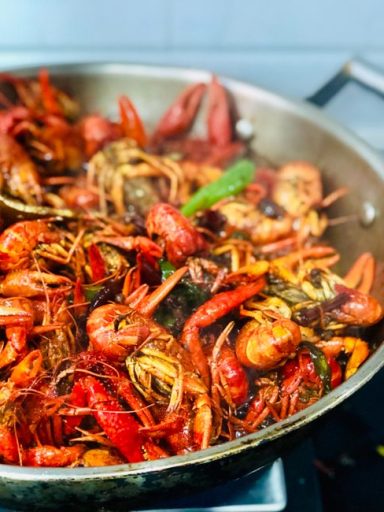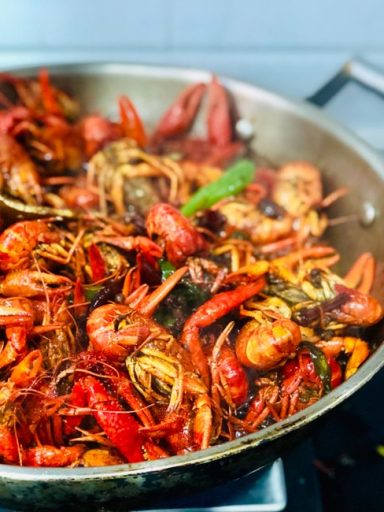
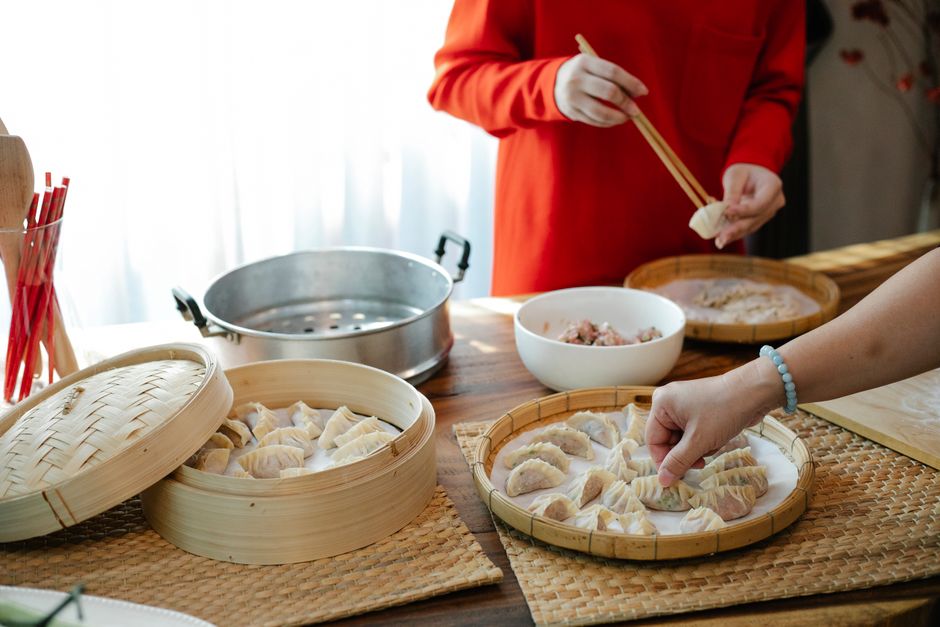
You don’t need a 30,000 BTU burner or a restaurant pantry. You need eight bottles, a hot pan, and the right order of operations. Here’s how takeout classics actually get made.
Home Chinese cooking runs on three rules: prep everything before the pan gets hot, velvet the protein in cornstarch, and build the sauce in stages (aromatics → protein → liquid → slurry → finishing oil). With light soy sauce, dark soy sauce, Shaoxing wine, Chinkiang vinegar, toasted sesame oil, cornstarch, doubanjiang, and oyster sauce, you can cook roughly 80% of the Chinese takeout canon at home. A carbon-steel wok or a wide stainless skillet over the highest heat your stove allows will get you the rest of the way.
- The flavor architecture of Chinese cooking
- The eight-bottle pantry (and what each one does)
- Prep discipline and equipment reality check
- The master stir-fry method, step by step
- Four recipes that teach the whole system
- Key ratios, temperatures, and timing table
- The seven mistakes that flatten home stir-fries
- Serving, storage, and leftovers
- Home cook FAQ
The Flavor Architecture of Chinese Cooking
Chinese home cooking — jiachang cai, literally “everyday dishes” — is not defined by a single flavor. It’s defined by balance across a small set of levers, adjusted dish by dish. Salty (soy), sour (vinegar), sweet (sugar, hoisin), bitter (bitter melon, charred aromatics), spicy (chili, doubanjiang), plus umami (fermented beans, mushroom seasoning, MSG) and aroma (garlic, ginger, scallion, sesame).
The second pillar is texture. Chinese cooking is unusually texture-forward: crisp-tender vegetables with audible snap, silky velveted meat that slides rather than chews, the crackle of fried chili oil, the spring of fresh noodles. When a home stir-fry tastes “off,” it’s often not the seasoning — it’s that everything came out soft.
The third pillar is regional range. Culinary scholarship commonly organizes Chinese cooking around eight great regional traditions — Sichuan, Cantonese, Shandong, Jiangsu, Zhejiang, Fujian, Hunan, and Anhui — but most households cook across all of them depending on the day. That’s why a single pantry can produce mapo tofu on Monday and Cantonese steamed fish on Tuesday.
Restaurant woks hit surface temperatures of 400–450°F (200–230°C) and sustain them under load. Residential stoves typically produce a fraction of that heat output, so restaurant dishes finish in 40 seconds and home dishes finish in 4 minutes — and those extra minutes are where texture goes to die.
The home-cook fix isn’t buying a bigger burner. It’s cooking smaller batches, cutting ingredients thinner, and pre-cooking components separately so nothing sits in the pan steaming while it waits.
The Eight-Bottle Pantry — and What Each One Actually Does
Chinese grocery aisles are wide, but home cooking doesn’t require filling them all. These eight buy you the most range per shelf inch.
1. Light soy sauce (生抽, sheng chou)
First-press soy, thin, salty, bright. This is your default seasoning liquid. Use it where you want salt and umami without color. Roughly 15–16% salt by volume, so treat it as your primary salt source and cut back on added salt.
2. Dark soy sauce (老抽, lao chou)
Light soy aged with molasses, giving it a syrupy body and near-black color. It is less salty than light soy and used almost purely for color and a faint caramel note — braises, noodles, red-braised pork. A teaspoon or two per dish, never a tablespoon.
3. Shaoxing wine (绍兴酒)
Fermented rice wine, typically 15–19% alcohol, with a nutty-savory edge. It deglazes, cuts gaminess in pork and fish, and adds a fermented depth that sherry mimics reasonably (dry fino or amontillado, not cream sherry). Add it to the hot pan, not the marinade bowl, when you want aroma; add it to the marinade when you want tenderness.
4. Chinkiang vinegar (镇江香醋)
Black rice vinegar from Jiangsu, malty, mildly sweet, less sharp than balsamic but more complex than white vinegar. It’s the acid in kung pao sauce, dumpling dips, and hot-and-sour soup. If you only stock one Chinese vinegar, stock this.
5. Toasted sesame oil
A finishing oil, not a cooking oil. Its smoke point sits around 175°C (350°F) and its flavor compounds are volatile — heated hard, it turns bitter and loses the toasted note. Add it off the heat, at the end, measured in teaspoons.
6. Cornstarch
Does three jobs: velveting (coating protein so it stays silky), thickening (as a slurry), and crisping (as a dry dusting before frying). A standard slurry is 1 tablespoon cornstarch whisked into 1 tablespoon cold water; add it to simmering liquid and it thickens within 15–20 seconds.
7. Doubanjiang (郫县豆瓣酱)
Fermented broad bean and chili paste from Pixian, Sichuan. It is the backbone of mapo tofu and twice-cooked pork. Good versions are aged three years or more and are gritty, deeply savory, and only moderately hot. Fry it in oil over medium-low heat for 60–90 seconds until the oil turns red — this step (called frying the paste) is not optional.[4]
8. Oyster sauce
Thick, sweet-savory, and the reason beef and broccoli tastes like beef and broccoli. It’s already salty, so when oyster sauce enters, light soy sauce should step back.
A quarter teaspoon of baking soda per 450g (1 lb) of sliced beef raises the meat’s surface pH, which speeds up the Maillard reaction during searing and helps proteins hold water. It also makes the meat feel noticeably springier. The catch: leave it on longer than 30 minutes and you’ll taste soap. Rinse or blot before cooking if you’ve gone past 20 minutes.[3]
Monosodium glutamate is a purified form of an amino acid naturally present in tomatoes, parmesan, and mushrooms. The U.S. FDA classifies it as Generally Recognized As Safe, and controlled studies have not confirmed it causes adverse reactions in the general population.[2] Use it at roughly 0.5% of a dish’s total weight — about ¼ teaspoon per 450g of food — and reduce your soy sauce slightly to compensate for the sodium.
Prep Discipline and Equipment Reality Check
Chinese cooking technique is 70% preparation. Once the pan is hot, there is no time to chop garlic. The concept has a name — mise en place — but Chinese kitchens push it further: every ingredient is not only cut but staged in cooking order, because ingredients go in sequentially over 90 seconds, not all at once.
The cutting rules that matter more than knife brand
- Against the grain, always for beef and pork. Flank steak sliced with the grain will chew like a belt no matter how long you marinate it.
- Uniform 3mm slices (about ⅛ inch) for stir-fry proteins. Thicker cuts cook unevenly and release water.
- Bias-cut vegetables — broccoli florets halved lengthwise, carrots on a steep diagonal, peppers in 2cm squares — to maximize surface contact with the pan.
- Separate bowls for separate stages. Aromatics in one small bowl, sauce in another, slurry in a third. You will not have time to measure mid-cook.
Best heat response and capacity. Needs seasoning and dedicated care. Round bottom requires a wok ring on electric and most gas ranges. Reaches 200–230°C fast and recovers heat quickly after food goes in.
Flat contact area means better browning on a domestic stove. Heavier and slower to respond, but a 12-inch skillet will out-sear a poorly heated wok. Use it if your stove is under 12,000 BTU.
Heat your wok over high heat until a drop of water skitters and evaporates on contact, then add oil and swirl. Thin wisps of smoke from a high-smoke-point oil (peanut, rice bran, canola) mean you’re in the 200°C range. If the oil is billowing, you’ve overshot and should pull the pan off the heat for 20 seconds.
The Master Stir-Fry Method, Step by Step
Nearly every dish in this guide follows the same skeleton. Learn it once and you can improvise with whatever is in the fridge.
Restaurant wok hei — that charred, smoky “breath of the wok” — comes from aerosolized oil droplets igniting above a 200°C+ surface. You can approximate it at home by letting the pan sit empty over maximum heat for a full three minutes before the first ingredient goes in.
Harold McGee, On Food and Cooking[3]
Four Recipes That Teach the Whole System
Each of these isolates a different technique. Cook them in this order and you’ll have covered velveting, slurry thickening, paste-frying, and high-heat rice work.
1. Egg Fried Rice (technique: dry rice + high heat)
Makes 2 servings. 600g (about 3 cups) cold cooked jasmine rice, 3 eggs beaten with a pinch of salt, 3 tbsp neutral oil, 3 scallions sliced, 1 tbsp light soy sauce, ½ tsp white pepper, ½ tsp toasted sesame oil.
- Break up the cold rice with wet hands until no clumps remain. Fresh rice steams and clumps — day-old refrigerated rice is the correct choice.
- Heat 1 tbsp oil until shimmering. Pour in the eggs, scramble hard for 15 seconds, and remove while still slightly wet.
- Add 2 tbsp oil, then the rice. Press it flat against the pan for 20 seconds, toss, and repeat for 2 minutes until grains separate and start to toast.
- Return the eggs, add soy sauce, white pepper, and scallions. Toss 30 seconds. Off heat, add sesame oil.
2. Kung Pao Chicken (technique: slurry sauce + dried chili tempering)
Makes 3 servings. 450g boneless chicken thigh, sliced 1.5cm; velvet with 1 tbsp cornstarch, 1 tbsp Shaoxing wine, 1 tsp light soy. Sauce: 2 tbsp light soy, 1 tbsp Chinkiang vinegar, 2 tsp sugar, 1 tsp cornstarch, 2 tbsp water. Plus 8 dried red chiles (seeds shaken out), 1 tsp Sichuan peppercorns, 3 slices ginger, 3 garlic cloves, 60g roasted peanuts.
- Heat 2 tbsp oil until shimmering. Add chiles and peppercorns; stir for 15 seconds until the chiles darken slightly but do not blacken.
- Add chicken in one layer, sear 60 seconds undisturbed, then stir-fry 90 seconds until just cooked through.
- Add ginger and garlic, toss 20 seconds. Pour in the whisked sauce and toss until glossy, about 25 seconds.
- Off heat: fold in peanuts and ¼ tsp ground toasted Sichuan peppercorn.
3. Mapo Tofu (technique: frying fermented paste for red oil)
Makes 3 servings. 450g medium-firm tofu cut into 2cm cubes; 150g ground pork or beef; 2 tbsp Pixian doubanjiang; 1 tbsp fermented black beans (rinsed, chopped); 1 tbsp chili flakes; 2 tsp ground roasted Sichuan peppercorn; 1 cup stock; slurry of 1 tbsp cornstarch + 1 tbsp water; 2 scallions.
- Slip the tofu into lightly salted hot water (about 2% salinity) and hold at a bare simmer for 2 minutes. Drain gently. This firms the surface and prevents shattering later.
- Brown the meat in 1 tbsp oil over high heat, 2 minutes. Push aside.
- Lower heat to medium-low. Add doubanjiang and black beans; fry 90 seconds until the oil turns deep red.[4] Add chili flakes, fry 20 seconds more.
- Add stock, bring to a simmer, then slide in the tofu. Simmer 3 minutes without stirring — push, don’t stir.
- Add half the slurry, wait 15 seconds, then the rest. The sauce should look glossy and hold to the tofu. Finish with scallions and ground peppercorn off heat.
4. Beef and Broccoli (technique: velveting + oyster sauce balance)
Makes 3 servings. 450g flank steak, sliced 3mm against the grain; velvet with 1 tbsp cornstarch, 1 tbsp Shaoxing, 1 tbsp water, 1 tsp light soy, ¼ tsp baking soda. Sauce: 3 tbsp oyster sauce, 1 tbsp light soy, 1 tbsp Shaoxing, 2 tsp sugar, 1 tsp cornstarch, 4 tbsp water. 400g broccoli florets.
- Blanch broccoli in boiling salted water for 60 seconds, then drain and shock in cold water. This sets the color and starts the cooking so the stir-fry stays under 3 minutes.
- Sear the beef in 2 tbsp oil over maximum heat in two batches — 60 seconds per batch, undisturbed. Crowding drops the pan temperature and the meat steams.
- Add 1 tbsp oil, then ginger and garlic, 15 seconds. Add broccoli, toss 45 seconds.
- Return beef, pour in sauce, toss 30 seconds until coated. Finish with ½ tsp sesame oil off heat.
Key Ratios, Temperatures, and Timing
| Element | Standard | Why It Matters |
|---|---|---|
| Velveting coat | 1 tbsp cornstarch : 1 tbsp wine : 1 tbsp water per 450g protein | Protects protein from direct heat; keeps texture silky |
| Baking soda (beef only) | ¼ tsp per 450g, max 30 min | Tenderizes and speeds browning; over-resting tastes soapy |
| Basic stir-fry sauce | 2 soy : 1 vinegar : 1 wine : 2 tsp sugar : 3 water | Balances salt, acid, and sweetness in one pour |
| Slurry | 1 tbsp cornstarch + 1 tbsp cold water | Thickens 1 cup of liquid in 15–20 seconds |
| Wok surface temp | 200–230°C (400–450°F) | Below 180°C food steams; above 240°C oil degrades |
| Deep-fry oil temp | 175°C (350°F) first fry, 190°C (375°F) second fry | Double-frying drives out moisture for lasting crunch |
| Poultry safe temp | 74°C (165°F) internal[1] | Instant-read thermometer in the thickest piece |
| Beef for stir-fry | 63°C (145°F) for medium-rare, rest 3 min[1] | Thin slices carry over fast; pull early |
| Refrigerated leftovers | 3–4 days at 4°C or below[5] | Applies to cooked meat, rice dishes, and stir-fries |
The USDA FSIS recommends cooking poultry to a minimum internal temperature of 165°F (74°C) and whole cuts of beef, pork, and lamb to 145°F (63°C) with a 3-minute rest.[1] Stir-fry slices are thin and cook fast — check the thickest piece, not the smallest.
The Seven Mistakes That Flatten Home Stir-Fries
Cooked rice can harbor Bacillus cereus, whose spores survive cooking and multiply at room temperature. Cool leftover rice within 1 hour of cooking, refrigerate it in a shallow container, and reheat to 74°C (165°F) before eating. Rice left in a warm rice cooker all afternoon is not shelf-stable.[6]
Serving, Storage, and Leftovers
Chinese meals are traditionally composed rather than single-plated: one protein, one vegetable, one soup or steamed dish, and steamed rice, all served simultaneously and eaten with individual rice bowls. For weeknight cooking at home, a two-dish structure — one stir-fry, one cold or steamed vegetable — hits the same register in about 35 minutes.
What to serve alongside
- Steamed jasmine rice — 1 cup dry rice to 1¼ cups water for a firm, separate grain that stands up to sauce.
- Smacked cucumber — cucumber crushed, salted 10 minutes, drained, then dressed with 1 tbsp Chinkiang vinegar, 1 tsp light soy, 1 tsp sugar, 1 tsp sesame oil, and garlic.
- Blanched greens with oyster sauce — gai lan or bok choy blanched 90 seconds, drained, drizzled with 1 tbsp oyster sauce loosened with 1 tsp hot water.
Storage that preserves texture
Stir-fries keep 3–4 days refrigerated at 4°C or below.[5] Reheat in a hot skillet with a splash of water rather than a microwave — microwaving velveted meat turns it rubbery and re-steams vegetables into mush. Fried rice, notably, reheats better than almost any other leftover. Keep sauces, slurries, and aromatics out of the storage container; they break when frozen and thaw grainy.
Home Cook FAQ
Can I make Chinese food at home without a wok?
Yes. A 12-inch stainless steel or cast-iron skillet with a flat base actually outperforms a round-bottomed wok on most domestic stovetops, because more of the pan makes contact with the burner. The technique stays identical: preheat longer than feels reasonable, cook smaller batches, and keep the pan hot between additions. If you do buy a wok, choose carbon steel and season it before first use.
What’s the best substitute for Shaoxing wine?
Dry sherry — fino or amontillado, not cream sherry — is the closest widely available match, with a similar alcohol level and nutty-savory profile. Dry white vermouth works in a pinch. Do not substitute rice vinegar or mirin; one adds acid, the other adds sweetness, and neither brings the fermented depth Shaoxing contributes.
Is MSG safe to cook with at home?
The U.S. Food and Drug Administration classes MSG as Generally Recognized As Safe, and controlled trials have not confirmed that it causes adverse reactions in the general population.[2] Use it like a seasoning, not a base: about ¼ teaspoon per 450g of food, added with the sauce, and reduce light soy sauce slightly since both contribute sodium.
Why does my stir-fry come out watery?
Three causes, usually in combination: the pan wasn’t hot enough before food went in, the pan was crowded, or the vegetables released water faster than it could evaporate. Fix in that order. Preheating 2–3 minutes over maximum heat, cooking in two batches, and salting vegetables after they’ve seared (not before) solves almost every watery stir-fry.
Do I need a rice cooker?
No, but it removes a variable. On a stovetop: rinse rice until the water runs clear, use a 1:1.25 rice-to-water ratio by volume, bring to a boil uncovered, cover, drop to the lowest simmer for 12 minutes, then rest off heat for 10 minutes before fluffing. The rinsing step is not optional — surface starch is what makes rice gluey.
How do I get “wok hei” at home?
Wok hei is the aroma created when aerosolized oil droplets ignite above a very hot surface — typically 200°C+ with visible flare-ups. On a domestic stove you can get partway there by preheating the pan dry for a full 3 minutes over maximum heat, using a high-smoke-point oil, and never adding more than 450g of food at once. A gas burner with an open flame gets much closer than electric.[3]
How long can I marinate meat in baking soda?
Cap it at 30 minutes for sliced beef or pork at the standard ¼ teaspoon per 450g ratio. Beyond that, the alkaline environment starts breaking down surface proteins into compounds with a distinctly soapy, metallic taste. If your meat has sat longer, rinse it under cold water and blot dry before cooking.
- Eight bottles — light soy, dark soy, Shaoxing wine, Chinkiang vinegar, toasted sesame oil, cornstarch, doubanjiang, oyster sauce — cover most Chinese takeout classics cooked at home.
- Velvet protein with cornstarch (plus ¼ tsp baking soda for beef, 30 minutes max) before it ever touches the pan.
- Preheat the pan 2–3 minutes over maximum heat and cook in small batches; crowding is the single biggest cause of soggy stir-fry.
- Build sauce in stages: aromatics 15–20 seconds, vegetables by density, protein returned, then slurry, then finishing oils off heat.
- Cook poultry to 74°C / 165°F and refrigerate leftovers within 1 hour; rice is the food-safety item home cooks most often mishandle.
- Toasted sesame oil and ground Sichuan peppercorn are finishing ingredients — heat destroys what you bought them for.
- U.S. Department of Agriculture, Food Safety and Inspection Service. “Safe Minimum Internal Temperature Chart.” fsis.usda.gov
- U.S. Food and Drug Administration. “Questions and Answers on Monosodium Glutamate (MSG).” fda.gov
- McGee, Harold. On Food and Cooking: The Science and Lore of the Kitchen. Scribner, revised edition — chapters on the Maillard reaction, starch gelatinization, and high-heat frying.
- Dunlop, Fuchsia. The Food of Sichuan. Bloomsbury — fermentation and paste-frying technique for Pixian doubanjiang.
- U.S. Department of Agriculture, Food Safety and Inspection Service. “Leftovers and Food Safety.” fsis.usda.gov
- U.S. Food and Drug Administration. “Refrigerator & Freezer Storage Chart” and Bad Bug Book entry on Bacillus cereus. fda.gov
- López-Alt, J. Kenji. The Wok: Recipes and Techniques. W. W. Norton — velveting ratios and home-kitchen stir-fry methodology.
This article is written for general culinary education. Ingredient brands, sauce salinity, and stove output vary widely — taste and adjust as you cook. Food safety guidance cited above reflects published USDA FSIS and FDA recommendations current as of September 2026. If you have a soy allergy, gluten sensitivity (many soy and oyster sauces contain wheat), or a histamine sensitivity, check labels before substituting ingredients. Readers with specific dietary restrictions should consult a qualified healthcare professional.