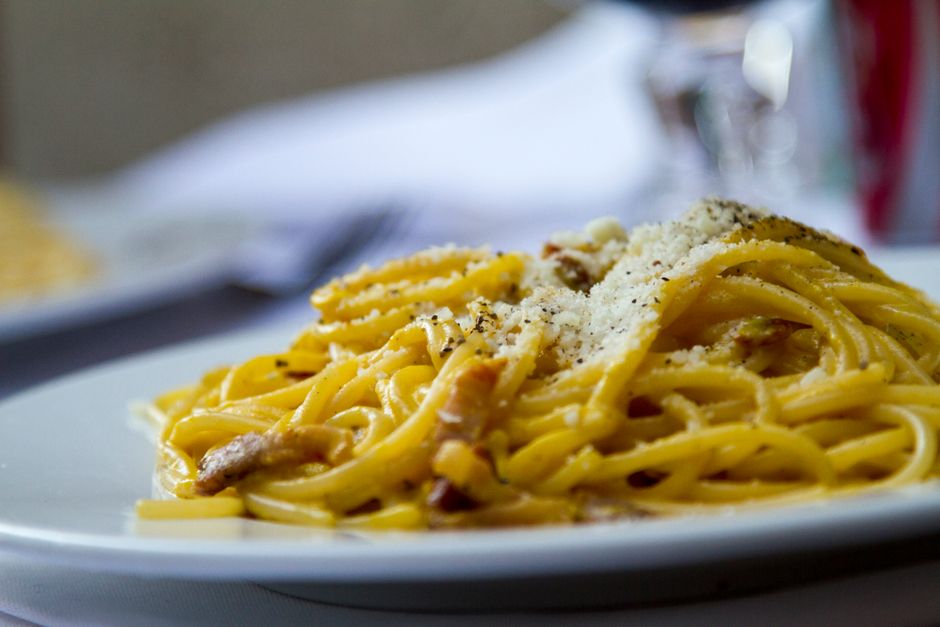
A true Roman carbonara is barely a sauce at all: glossy egg yolk, sharp Pecorino Romano, rendered guanciale fat and cracked black pepper held together by starchy pasta water.
Carbonara has only four core ingredients — pasta, guanciale, eggs and Pecorino Romano DOP — plus black pepper and salted pasta water. The creamy texture comes from the starch-rich cooking water emulsifying the egg and cheese mixture. Never add cream. Work off the heat, toss fast, and serve immediately for the classic Roman silkiness.
Flavor Profile: What It Means to Taste “Roman”
Carbonara is a study in restraint. At its best, the first note is cured pork: deeply savory, softly salted from the guanciale, with a melting richness that never reads as heavy grease. The second note is the sheep’s-milk tang of Pecorino Romano — sharp, almost piquant — followed by a bloom of freshly cracked black pepper.
The texture is even more important than the flavor. The sauce should be glossy, velvety and just thick enough to cling to each noodle. When you twirl a forkful of spaghetti, there should be no puddle of liquid pooling in the bottom of the bowl, but no stiff, congealed mass either. Think of it as a coat of warm custard that is almost imperceptibly coating the pasta.
“Carbonara is a perfection test disguised as a simple dinner.”
— WorldDishly Editorial Note
The Contested Origins of Carbonara
Rome claims carbonara, but its exact birthplace remains one of Italy’s most debated culinary mysteries. The word “carbonara” is connected to carbonari — charcoal burners who worked in the Apennine mountains. The story goes that shepherds or woodcutters carried guanciale, Pecorino, eggs and dried pasta in their packs, then dusted the finished dish with black pepper in imitation of charcoal dust.
Another theory locates carbonara’s birth in post-war Rome, when Allied troops arrived with rations of powdered eggs and bacon. According to this account, Roman cooks transformed those ingredients into a familiar local pasta dish. Food historians debate the details, but most agree that written references to spaghetti alla carbonara coalesce in Italy by the early 1950s.
What matters for the home cook is simpler: the canonical version became fixed in Rome long before cream or garlic appeared in international versions. By the 1980s, the recipe had become a culinary passport — and also a source of endless arguments about how “authentic” it should remain.
The Four Pillar Ingredients & the Science Behind Them
Guanciale: The Porky Backbone
Guanciale is cured pork jowl — the cheek of the pig — seasoned with salt, black pepper, and often a hint of garlic or herbs before being air-dried. Its fat melts at a lower temperature than the fat in bacon or pancetta, which is exactly why it creates such a silky sauce base. The meaty lean portions add texture while the fat carries the egg sauce across the pasta.
Guanciale is unmistakably the traditional choice. If it is unavailable, the closest substitutes are pancetta tesa (flat pancetta, not rolled) or unsmoked pancetta, although neither will reproduce the same luxurious yield of fat. Smoked bacon brings an unwanted smoky, sweet profile and should only be a last resort.
Pecorino Romano DOP: Salty Sheep’s-Milk Strength
Pecorino Romano is a hard sheep’s-milk cheese with a salty, savory sharpness that stands up to rich egg yolks. Look for the PDO mark and a product made from the milk of Lazio, Sardinian or Tuscan sheep. The Consorzio’s regulations require a minimum aging of five months; the best grating wheels for carbonara are often matured for eight months or more[2].
Freshly grate the Pecorino yourself. Pre-shredded supermarket cheese is coated with anti-caking starches that dull both flavor and meltability — the difference is immediately visible in the smoothness of the final sauce. Use a Microplane for fluffy, feather-light shreds that dissolve instantly into the egg mixture.
Eggs: The Sauce Base
A traditional Roman formula uses one whole egg plus one extra yolk per person. The extra yolk supplies a higher ratio of lecithin and fat to protein, which makes the finished sauce more emulsified and more luxuriously creamy. Whole eggs alone can work, but the texture tends to be slightly thinner and easier to overcook.
Egg temperature matters: a room-temperature egg mixture incorporates more evenly with the cheese and does not cool the hot pasta too suddenly. The egg protein structure begins to unfold and set when the mixture reaches roughly 65–70°C. Traditional carbonara intentionally hovers in that custard-making zone. It is not a fully cooked, hard scrambled egg — but the sauce is safe for healthy adults who consume fresh, uncracked, properly refrigerated eggs. For pregnant women, young children, the elderly, or anyone immunocompromised, use pasteurized shell eggs or ensure the finished dish reaches the temperature recommended by food safety authorities[1].
Black Pepper: The Heat Source
Authentic carbonara does not rely on chili flakes or garlic. The warmth comes from freshly toasted black peppercorns. Toasting the peppercorns in the guanciale pan for 30 seconds releases citrusy, woodsy aromatic oils that are far more complex than pre-ground powder. Crack them coarsely with a mortar and pestle, or fold them in a towel and crush with the bottom of a pan.
Pasta: Shape & Starch Matter
Rome’s trattorias serve carbonara on spaghetti, rigatoni, or tonnarelli. Spaghetti is the most famous format; rigatoni’s ridges catch the creamy sauce especially well. Use a high-quality dried durum-wheat semolina pasta, which releases the gelatinized starch needed for a stable emulsion.
If a recipe calls for cream, milk, butter or white sauce, it is not traditional Roman carbonara. The silky texture in Rome comes from egg yolk, Pecorino Romano and starchy water — nothing else. Cream masks the delicate balance of salt and sheep’s-milk tang and breaks the single most important rule of the dish.
Prep & Equipment: Set Yourself Up for a 7-Minute Finish
Carbonara is fast once the pasta is boiling. A calm, organized mise en place is the difference between a glossy emulsion and a bowl of sweet, rubbery scrambled eggs.
Do all the tedious work before the pasta enters the water: grate the Pecorino, crack and whisk the eggs, slice the guanciale into 0.5 cm strips. When spaghetti is al dente, the whole remaining process takes about two minutes — and those two minutes demand your complete attention.
Step-by-Step Master Method for Traditional Carbonara
The most common failure is scrambling the eggs by leaving the pan on the burner. Cooks who master carbonara learn to use residual heat only. If your pan is still aggressively hot, give it 30 seconds of rest after the pasta is added — the pasta water and fat will cool it to the emulsion zone before the eggs ever meet the surface.
The Classic Ratios & the Temperature Guide
Carbonara is scaled per person. For a typical dinner portion, use the following baseline — multiply as needed but keep the proportions intact.
| Ingredient | Per Person (per 100 g dry pasta) | Chef’s Note |
|---|---|---|
| Dry spaghetti or rigatoni | 100 g | Weigh for consistency; 100 g is a proper Roman main-course portion. |
| Guanciale | 40–50 g | Cut into 0.5 cm strips. Some fat will render away, so start generously. |
| Whole eggs | 1 | Use large eggs weighing about 50–55 g each. |
| Extra egg yolks | 1 | The extra yolk produces a richer, more stable emulsion. |
| Pecorino Romano DOP | 35–45 g | Finely grate just before cooking; the salt content varies by brand. |
| Black peppercorns | 1–2 g (about 8–10 cracks) | Toast lightly and crack roughly for maximum perfume. |
| Reserved pasta water | 30–60 ml | Add gradually — the exact amount depends on how starchy the water is. |
The thermal guide below explains the physical stages that make the dish work. It is meant as a troubleshooting tool — most home cooks will not use a thermometer, but knowing the cues helps you identify where a batch went wrong.
| Stage | Target Range / Visual Cue | Why It Matters |
|---|---|---|
| Boiling pasta water | 100°C at sea level | Gelatinizes the semolina starch, turning it into the sauce’s natural thickener. |
| Guanciale pan during render | Medium-low heat; audible sizzle, no smoking | Slow rendering yields clean-flavored fat; burned fat tastes bitter. |
| Freshly drained pasta | Hot enough to still emit steam | Provides the thermal energy to cook the egg creams without direct heat. |
| Egg/cheese base before tossing | Room temperature, about 20–22°C | Cold eggs can seize the sauce and require prolonged tossing that overcooks the pasta. |
| Final sauce during tossing | Between 65°C and 72°C; glossy, no visible curd | Egg proteins set into a soft custard below the hard scrambling point. |
| Danger zone above 80°C | Apparent curdling in seconds | Protein bonds tighten dramatically; the sauce separates and turns lumpy. |
Common Mistakes & Troubleshooting Carbonara
Even experienced cooks occasionally scramble a batch. Recognizing the exact point of failure is more useful than memorizing abstract rules.
Some cooks try to “fix” a tight carbonara by whisking in raw pasta water after the sauce breaks. That rarely works. The emulsion must be built while the egg proteins are still flexible, which means the corrective splash of water should go in during the first 15 seconds of tossing — not after visible curd has formed.
Pairing & Leftover Handling
Wine Pairing
The natural match for carbonara is a dry, medium-bodied Italian white with enough texture to stand up to the fat. From Rome’s own hills, Frascati Superiore offers citrus notes, almond skin bitterness and a clean mineral finish. A Grechetto from Umbria or a Pecorino wine from Abruzzo also lifts the salty richness without flattening the pepper. If you prefer red, choose a bright, low-tannin pour such as Cesanese del Piglio served slightly cool, or a young Sangiovese. Avoid heavily oaked, high-alcohol wines, which clash with the eggs.
Side Dishes
Keep the table honest and Roman: a crisp salad of puntarelle, endive or arugula with lemon and good olive oil cuts through the fatty sauce. A plate of sautéed chicory or wilted escarole is also traditional. Serving bread is sensible but avoid garlic bread — it muddies the pepper-driven flavor of the carbonara.
Can Carbonara Be Stored?
Carbonara is one of the few pasta dishes that genuinely must be eaten immediately. The egg emulsion does not survive refrigeration and reheating without breaking. If you have leftovers, refrigerate them as soon as they cool, in an airtight container, and use within 24 hours. Reheat very gently in a skillet with a spoonful of water over low heat, stirring constantly, or in a double boiler. The resulting texture will be less creamy but still palatable. Do not reheat in the microwave — the rapid heat curdles the egg into unappealing flecks.
Carbonara FAQ
Why is there no cream in a traditional carbonara recipe?
Because the creamy mouthfeel comes from egg yolks emulsifying with fat and starch. Traditional Roman cooks intended the sauce to be made from eggs, Pecorino Romano, guanciale fat and pasta water. Cream was introduced in later, often international, versions to make the sauce easier and more forgiving. It not only dilutes the sharp Pecorino flavor, but it also breaks the dish’s original economy and identity.
Can I use pancetta or bacon instead of guanciale?
Yes, with caveats. Pancetta is the closest Italian substitute — choose the flat, unsmoked type and see if your deli can slice it thick enough for strips. Smoked bacon will make a perfectly tasty pasta, but it will not be traditional Roman carbonara. The smoky flavor alters the dish more than most cooks expect. Use a smaller amount if your bacon is heavily smoked or sweet-cured.
Which pasta shape counts as “traditional”?
There is no single canonical shape. Rome’s classic pasta dishes adapt to the market and the cook’s preference. Spaghetti is the best-known choice and creates a nice ratio of sauce to noodle. Rigatoni is arguably the most functional: its ridges and wide interior capture an especially generous coating. Tonnarelli — a fresh, square-cut Roman pasta — is also excellent if available.
What should I do if my carbonara starts to scramble?
Act fast: remove the bowl from any heat source and transfer everything to a cool bowl. Beat in one tablespoon of cold reserved pasta water and toss the pasta energetically. The liquid lowers the temperature and interrupts the protein bonding chain. It will not restore a perfectly silky sauce, but it can stop the eggs from turning into a dry crumble.
Can I add garlic, onion, mushrooms or peas?
Not in a traditional Roman carbonara. Garlic and onion add a savory note that covers the clean pork and Pecorino flavors. Mushrooms and peas are the creations of international menus that treat carbonara as a generic creamy pasta sauce. If you love those additions, make the dish your own — but call it “pasta with guanciale and a creamy egg sauce” rather than presenting it as Roman.
Is carbonara safe for children and pregnant women?
The egg in traditional carbonara is cooked almost entirely by residual heat and does not always reach the 71°C / 160°F endpoint recommended by food safety agencies for egg dishes[1]. For pregnant women, infants, the elderly, or immunocompromised individuals, substitute pasteurized eggs or cook the final sauce over very gentle low heat while stirring until the mixture reaches a safe internal temperature. This will still produce a creamy result, though the window is tighter.
- Traditional Roman carbonara contains pasta, guanciale, whole eggs plus extra yolks, Pecorino Romano DOP and cracked black pepper — cream never enters the bowl.
- Guanciale is the soul of the dish. Its rendered fat forms the emulsion base and cannot be fully replicated with bacon.
- Starchy pasta water is the invisible fifth ingredient. Add it gradually until the sauce turns glossy and spoonable.
- Always complete the egg-and-cheese marriage off direct heat to keep the sauce in the custard zone between 65°C and 72°C.
- Freshest ingredients produce the most forgiving emulsion: grate the Pecorino yourself, use room-temperature eggs, and cook the guanciale from a cold pan.
- Serve carbonara in warmed bowls immediately. Reheating breaks the egg emulsion and is never worth the convenience.
- U.S. Department of Agriculture, Food Safety and Inspection Service — “Egg Safety: What You Need to Know.” https://www.fsis.usda.gov/food-safety/safe-food-handling-and-preparation/eggs/egg-safety
- Consorzio del Formaggio Pecorino Romano — “Disciplinare di produzione: Aging and Product Characteristics.” https://www.pecorinoromano.com/en/production