A stem-by-stem system for cut basil, cilantro, rosemary and everything between — with the temperatures, timings and containers that actually keep flavor compounds intact.
Cut herbs spoil for two reasons: water loss and ethylene gas. Match the method to the herb’s stem anatomy. Tender-stemmed herbs — basil, cilantro, parsley, mint, dill — go stem-down in a jar with 1 inch (2.5 cm) of water; basil stays on the counter at 50–55°F (10–13°C) because it bruises black below that, while everything else goes in the fridge at 40°F (4°C) or lower.[1][2] Woody herbs — rosemary, thyme, oregano, sage — get rolled in a barely damp paper towel, sealed in a zip bag, and keep 2–3 weeks. Already chopped? Wrap in a dry paper towel, seal airtight, refrigerate, and use within 2–3 days.
The 60-Second Triage Checklist
Herb quality is lost fastest in the first hour after cutting. Cells that were severed at the stem continue respiring, transpiring and oxidizing — every minute spent in a warm room is a minute of volatile-oil loss. Work through this list the moment your herbs hit the counter.
Know Your Herb: Tender vs. Woody
Almost every storage failure comes from treating one category like the other. Tender herbs have thin, hollow or fleshy stems that keep drawing water after harvest — they wilt from the top down and want constant hydration. Woody herbs have lignified stems with far lower transpiration rates; they rot rather than wilt, and moisture is their enemy.
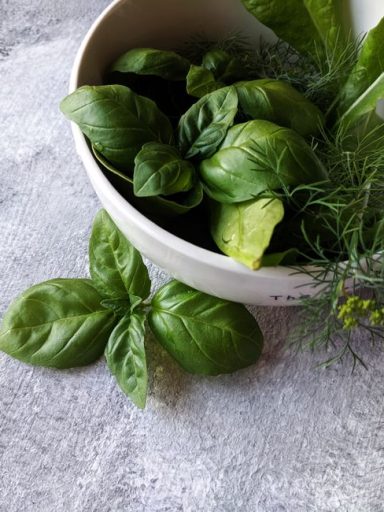
Basil, cilantro, parsley, mint, dill, tarragon, chervil, chives. Thin stems, high surface-to-mass ratio, fast water loss. Best kept hydrated, upright, and cold — except basil.
Rosemary, thyme, oregano, sage, marjoram, savory, bay. Lignified stems, waxy leaves, slow transpiration. Best kept dry, airtight and cold; excess humidity breeds mold.
The Exception That Ruins Every Fridge: Basil
Basil is a tropical herb and it is chilling-sensitive. Below roughly 50°F (10°C), its leaf tissue suffers chilling injury — the cells leak, enzymes called polyphenol oxidases brown the tissue, and you get the classic black, slimy basil leaf within a day.[2] Postharvest researchers at UC Davis recommend holding fresh basil in the 50–55°F (10–13°C) range for exactly this reason. In a home kitchen, that means a jar of water on the counter, out of direct sun, refreshed daily.
| Herb | Best storage method | Typical fridge life | Freezes well? |
|---|---|---|---|
| Basil | Stem in water, counter at 50–55°F (10–13°C) | 5–7 days (counter) | Not whole — excellent as oil or pesto cubes |
| Cilantro & parsley | Stems in 1 in (2.5 cm) water, loose bag tented over top | 7–10 days | Good, chopped in oil or water |
| Mint | Stems in water, bagged, refrigerated | 7–10 days | Good in ice cubes |
| Dill | Barely damp towel, airtight container | 5–7 days | Good, chopped |
| Tarragon & chervil | Dry paper towel, airtight container | 5–7 days | Fair — texture softens |
| Chives | Dry paper towel, airtight container | 5–7 days | Good when flash-frozen loose |
| Rosemary, thyme, oregano, sage | Rolled in dry paper towel, zip bag, crisper | 2–3 weeks | Excellent — freeze whole sprigs |
| Bay leaves (fresh) | Airtight container, cool dark spot | 3–4 weeks | Excellent |
Shelf-life ranges reflect typical home-refrigerator conditions; USDA’s FoodKeeper guidance is the baseline for the shorter end of each window.[3] Always discard herbs that are slimy, sour-smelling or visibly molded.
The 5 Storage Methods, Step by Step
Choose one method per herb type and execute it the same way every time. Consistency is what makes home herb storage predictable.
Method 1 — The Water Jar (Tender Herbs)
Method 2 — The Damp Roll (Tender Herbs, Chopped or Loose)
Method 3 — The Dry Wrap (Woody Herbs)
Method 4 — Airtight Containers for Chopped Herbs
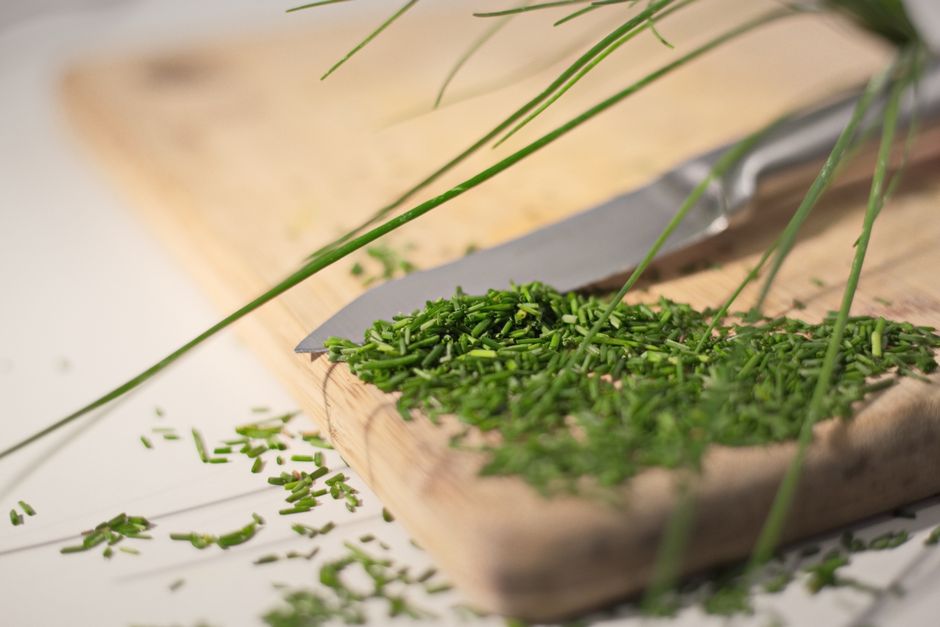
Once herbs are chopped, the clock moves much faster. Cutting ruptures cell walls and releases lipoxygenase enzymes that destroy the volatile terpenes and aldehydes responsible for aroma. Chopped herbs held at 40°F (4°C) or below are best used within 2–3 days.
Method 5 — Freezing (For Anything You Won’t Use in a Week)
Where Cut Herbs Go Wrong
Most spoiled bunches fail for one of six predictable reasons — and five of them happen in the first ten minutes.
Leaving cut herbs on the counter for a morning is not a neutral act. Transpiration continues at full rate, and a tender herb can lose 10–20% of its fresh weight in water within a few hours — that weight loss is the wilt you cannot reverse. If you can’t process them immediately, plunge the stems into a glass of water and refrigerate; that buys you the rest of the day.
Pro Techniques That Buy Extra Days
These are the moves restaurant prep cooks use when the walk-in is full and a case of herbs has to survive the week.
Layer herbs between two dry paper towels inside a zip bag, then place that bag inside a second zip bag with a folded dry towel at the bottom. The inner towel manages leaf-surface moisture; the outer towel absorbs any condensation the bag’s exterior picks up. Woody herbs stored this way routinely hold 18–21 days in a home fridge.
Blend 2 packed cups of chopped tender herbs with ¾ cup neutral oil and ½ teaspoon kosher salt, then freeze in a thin layer in a zip bag and break off shards as needed. Salt slows oxidative browning and the oil carries the fat-soluble aroma compounds that water would leave behind.
Every 18°F (10°C) drop in storage temperature roughly halves the rate of enzymatic and respiratory activity in plant tissue. Moving herbs from a 68°F (20°C) counter to a 38°F (3°C) shelf slows their metabolic clock by a factor of about four — which is precisely why the same bunch lasts two days on the counter and ten in the fridge.
Tender herbs that have wilted but not browned can often be rehydrated: trim ½ inch off the stems and stand them in ice water in the refrigerator for 30–60 minutes. The cold water is drawn up through the xylem and restores turgor. This works on parsley, cilantro and mint. It does not work on basil that has already blackened, and it never revives anything slimy.
Equipment You Actually Need
You do not need a dedicated herb keeper to store cut herbs well. Five inexpensive items cover every method in this guide.
Countertop “herb keepers” with a water reservoir and a hard plastic lid solve the humidity problem but ignore basil’s chilling sensitivity — they only help if they fit on a shelf at the right temperature. Thin produce bags from the grocery store are also a poor substitute for a real seal; they tear at the seams and let in dry refrigerator air.
FAQ
Should I wash herbs before storing them?
Wash only if you’re storing them upright in water or using them within 24 hours. For dry storage methods — the damp roll, the dry wrap, airtight containers — leave herbs unwashed and rinse them right before use. Moisture sealed against leaf tissue is the leading cause of mold and slime in stored herbs, and the volatile oils you’re trying to protect sit on the leaf surface, where a rinse can carry some of them away.
Can I store chopped herbs in a jar of water?
No. Once the leaves are chopped, the water-jar method stops working — there are no intact stems to draw water up. Chopped herbs need the opposite treatment: fully dry leaves, a paper towel to manage condensation, an airtight container, and refrigeration at 40°F (4°C) or below[1]. Plan to use them within 2–3 days.
How long do cut herbs actually last in the refrigerator?
Expect 7–10 days for tender herbs stored upright in water, 5–7 days for tender herbs stored in a damp roll or airtight container, and 2–3 weeks for woody herbs wrapped dry in a zip bag. Chopped herbs are the outlier at 2–3 days. USDA’s FoodKeeper guidance is a useful conservative baseline when you’re deciding whether something is still good.[3]
Why did my basil turn black in the fridge?
Chilling injury. Basil is a tropical species with no cold-acclimation mechanism, and below roughly 50°F (10°C) its cell membranes lose integrity. The leakage that follows lets polyphenol oxidase enzymes react with phenolic compounds, producing the brown-black discoloration and the characteristic slimy breakdown. UC Davis postharvest recommendations place basil’s optimal holding range at 50–55°F (10–13°C) — achievable on a countertop but not in a standard refrigerator.[2]
Do herbs freeze better in water or in oil?
Oil for anything that will be cooked — sauces, soups, roasted vegetables — because the fat-soluble aroma compounds disperse into the oil and the flavor carries into the dish. Water for herbs destined for blended drinks, cold sauces or stocks where oil would be unwelcome. Both approaches protect color and flavor far better than freezing herbs dry, which leaves them limp and grey once thawed.
Can I store different herbs together in one container?
Only if they belong to the same category. Woody herbs can share a dry wrap; tender herbs can share a water jar if their stems are similar in thickness. Never mix the two groups, and keep strongly aromatic herbs such as rosemary and sage separated from delicate ones like chervil and tarragon — the concentrated volatile oils migrate between leaves in a closed container.
Is it safe to eat herbs that have gone slightly limp?
Limp is fine — that’s water loss, and you can often reverse it with an ice-water soak. Slimy, sticky, sour-smelling or visibly fuzzy herbs are not fine; those are signs of microbial growth and the bunch should be discarded. Never try to salvage moldy herbs by picking off the visible mold, because fungal hyphae extend well beyond what you can see. For home-preserved herb products, the National Center for Home Food Preservation’s guidance on freezing and drying is the standard reference.[4]
Does drying fresh herbs preserve more flavor than freezing?
No — drying concentrates some oils but drives off the light, volatile compounds that define fresh herb character, which is why dried basil tastes nothing like fresh. Dehydrate at 95–115°F (35–46°C) for 2–6 hours if you’re drying, and keep in mind that dried herbs are roughly three times as potent by volume as fresh. Freezing preserves aroma far better; drying is the better choice for woody herbs you’ll use in long-cooked dishes.[4][5]
How do I stop herbs from freezing to the back wall of the fridge?
Move them forward. Refrigerator evaporator coils sit behind the rear wall, and the air immediately in front of that wall can run several degrees below your set temperature — cold enough to freeze leaf tissue and rupture cells. Store herbs in the middle of a shelf or in a crisper drawer set to high humidity rather than against the back panel.
- Sort herbs into tender (water-loving) and woody (dry-loving) categories before anything else — mismatching them is the root of most spoilage.
- Tender herbs go stem-down in 1 inch of water; woody herbs get rolled dry in a paper towel and sealed in a zip bag.
- Basil is chilling-sensitive and should never be refrigerated — hold it at 50–55°F (10–13°C) on the counter.
- Refrigerate everything else at 40°F (4°C) or below, away from ethylene-producing fruit.[1][2]
- Chopped herbs are a different problem entirely: dry them fully, seal airtight, and use within 72 hours.
- Freeze in oil or water for long-term storage; freeze woody herbs whole and dry, straight on a tray.
- U.S. Food and Drug Administration. “Refrigerator & Freezer Storage Chart.” fda.gov
- UC Davis Postharvest Technology Center. “Basil: Recommendations for Maintaining Postharvest Quality.” postharvest.ucdavis.edu
- USDA FoodKeeper / FoodSafety.gov. “Refrigeration and Food Safety.” foodsafety.gov
- National Center for Home Food Preservation. “Freezing Herbs” and “Drying Herbs.” nchfp.uga.edu
- Penn State Extension. “Preserving Herbs.” extension.psu.edu