A real Italian dinner does not arrive on one plate. It arrives as a sequence of small acts — a spritz, a folded pasta, a braised meat, a cool spoon of cream. These Italian dinner recipes trace that sequence across four regions and give you the exact ratios, temperatures, and techniques to host the table properly.
An authentic Italian dinner follows a loose but codified choreography: aperitivo, antipasto, primo, secondo with contorno, then dolce and a digestivo. The portions start small, grow only slightly, and never compete for the same space on the plate. The recipes below — an Aperol Spritz from Veneto, bruschetta and cacio e pepe from Lazio, hunter-style chicken from Tuscany, and panna cotta from Piedmont — teach the grammar of that tradition rather than another list of weeknight one-pan meals.
Why the Italian Dinner Is a Ritual, Not a One-Pan Plate
The most common misunderstanding outside Italy is the one-plate model: spaghetti with meatballs on the left, chicken parmesan on the right, garlic bread somewhere in between. That plate is an American invention, born from restaurant menus and immigrant resilience. In Italy, cena (dinner) is structured as a sequence, each course intended to be small, distinct, and gently cumulative. Even a fast weeknight dinner follows the logic: a soup or pasta, then a modest meat or egg course, then fruit — never everything stacked together.
The sequence Italians recognize — aperitivo, antipasto, primo, secondo, contorno, dolce, caffè, digestivo — was not invented in a rustic farmhouse. It was codified for the Italian middle class by Pellegrino Artusi in La Scienza in Cucina e l’Arte di Mangiare Bene, first published in 1891 [3]. Artusi drew on a courtly, French-inspired service and translated it into the domestic Italian kitchen. His organization of recipes — from antipasti through minestre, secondi, contorni, and dolci — gave the new nation a shared culinary vocabulary almost before it had a shared language [2].
What matters today is not that every dinner include six courses. Very few Italian homes serve a complete sequence on a Tuesday. What matters is the architecture: pasta is a course of its own, greens are not dumped onto the meat plate as an afterthought, and dessert, when present, is light enough to leave the table with energy for conversation. The best Italian dinner recipes follow that architecture even when you scale them down to two courses.
Cheat-Sheet: Ratios & Cooking Temperatures for Italian Dinner Recipes
Memorize the numbers below and you can improvise any of these recipes with confidence. The table is the distillation of everything in the four-region menu.
| Course | Critical Ratio | Key Temperature | Why It Works |
|---|---|---|---|
| Aperol Spritz | 3 Prosecco : 2 Aperol : 1 soda | Serve at ~6°C (43°F) | Cold keeps bitterness crisp and mutes alcohol burn. |
| Bruschetta | 5 tomatoes : 4 bread slices : 45 ml oil | Tomatoes at room temperature | Chilling suppresses the volatile aroma compounds in ripe tomatoes. |
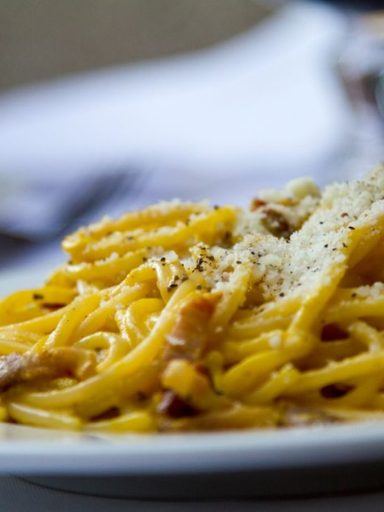
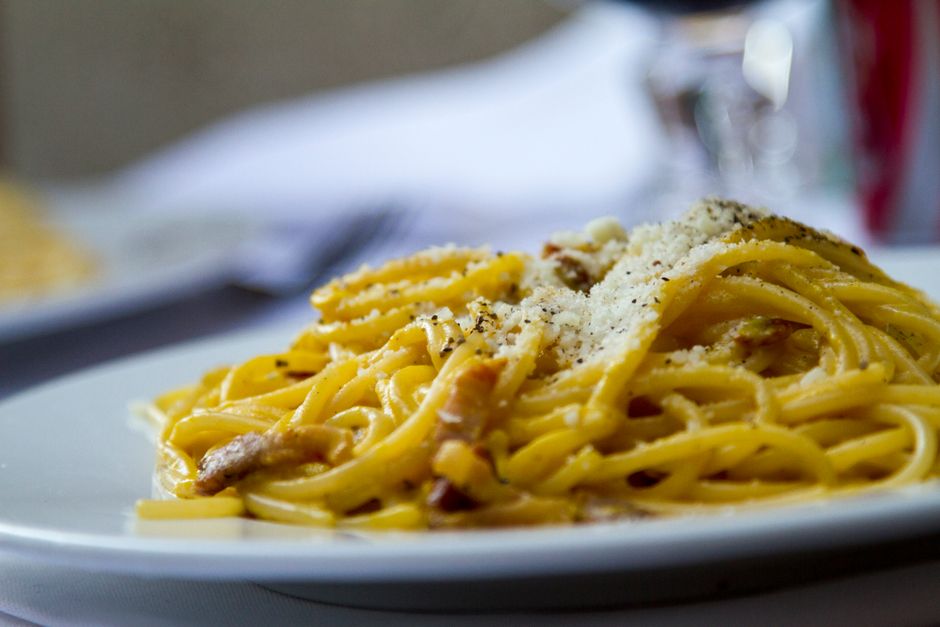
| Cacio e Pepe | 100 g pasta : 50 g Pecorino : 150 ml pasta water | Pasta water hot but not boiling when cheese is added | Amylose in the water stabilizes the cheese emulsion; excess heat makes caseins seize. |
| Pollo alla Cacciatora | 2 parts chicken to 1 part crushed tomato by volume | Braise at 85–90°C (185–195°F) internal | Collagen converts to gelatin while the meat stays moist; minimum safe doneness is 74°C / 165°F [1]. |
| Fagioli all’Uccelletto | 400 g beans : 120 ml passata : 45 ml oil | Simmer at 90°C (195°F) | A lazy, even simmer thickens the bean sauce without breaking the skins. |
| Panna Cotta | 7 g gelatin : 500 ml dairy liquid | Heat to 80°C (175°F); chill below 4°C (40°F) | Boiling weakens gelatin and creates a grainy dairy texture. |
Six Mistakes That Ruin an Italian Dinner
Italian dinner recipes fail more often from bad timing and false shortcuts than from missing ingredients. These are the errors I see most in home kitchens.
Pairing, Sequencing & Leftovers the Italian Way
Wine by Course
- Aperitivo: Keep the Aperol Spritz, or pour a chilled Valdobbiadene Prosecco Extra Dry at about 6°C.
- Cacio e Pepe: A mineral white such as Frascati Superiore or a young Orvieto Classico cuts through the Pecorino’s richness. If you prefer red, a light Cesanese del Piglio drinks beautifully in Rome.
- Pollo alla Cacciatora and beans: Serve a Chianti Classico at 16–18°C (60–65°F); Sangiovese’s cherry acidity matches both the tomato and the sage.
- Panna cotta: A cool glass of Moscato d’Asti, no more than 5.5% alcohol, is the traditional Piedmontese close.
Sequencing Rules
Serve the pasta course before the meat course, always. The Italians do this because pasta prepares the palate and the stomach for meat rather than competing with it. When you serve the second course, put the chicken on one plate and the beans on a separate plate or a shared bowl; modern casual Italian tables do allow both on one plate, but the sauce should still be allowed to exist as a coherent main dish rather than a topping for everything.
Storing the Leftovers
- Cacio e pepe: Best eaten the moment it is made. If forced, reheat gently in a pan with a spoonful of water and a little extra Pecorino — but expect a firmer texture.
- Pollo alla cacciatora: Refrigerate up to 3 days in an airtight container; it improves overnight. Freeze for up to 3 months without the bones and defrost slowly in the refrigerator.
- Fagioli all’uccelletto: Refrigerate up to 4 days. They also freeze well and taste exceptional spooned over grilled bread the next day.
- Panna cotta: Keep in ramekins, covered, for up to 3 days. Unmold only when ready to serve.
Italian Dinner Recipes: FAQ
What is the difference between an Italian dinner and an Italian-American dinner?
Italian-American dinner culture tends to collapse courses: pasta becomes a side dish, meat is draped over spaghetti, and only one plate carries everything. In Italy, most dinner recipes keep courses separate — a pasta course, then a meat course, then vegetables. This does not make Italian-American food “wrong.” It grew out of Southern Italian immigrant cooking in America, where abundant ingredients met the need for a single sustaining plate. They are related but distinct traditions; one places architecture first, and the other places abundance first.