Both arrive in the same refrigerated carton, both get poured into coffee, and both whip into snow-white clouds. But the exact milk-fat percentage stamped into each product changes how they simmer, set, and hold their shape — and choosing the wrong one can quietly undermine a sauce, a ganache, or a piped dessert.
The entire gap between these two creams is fat. Under U.S. labeling standards, heavy cream must contain at least 36% milk fat, while whipping cream (often labeled “light whipping cream”) falls between 30% and 35% [1]. That small spread makes heavy cream richer, more stable when whipped, and more resistant to curdling in hot acidic sauces. Whipping cream whips up faster into a lighter, airier foam — but that foam also softens and weeps more quickly. Unless a recipe explicitly demands whipping cream for a delicate texture, heavy cream is the safer default.
Heavy Cream vs. Whipping Cream: At a Glance
Before diving into behavior, here’s the quick visual cheat sheet you’d want while standing in the dairy aisle.
Milk fat: At least 36%; most retail brands fall between 36% and 40% [1].
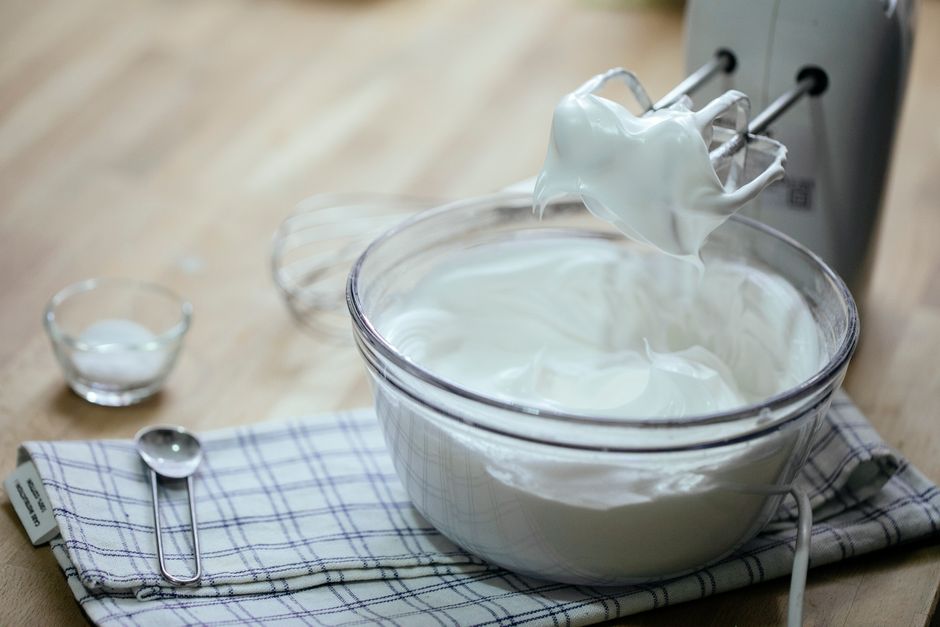
Whipped texture: Dense, glossy, spoon-stiff; holds piped shapes and resists weeping.
Strongest uses: Pan sauces, cream soups, ganache, pastry cream, buttercream, frostings, and any cream that must simmer or reduce.
Milk fat: 30% to just under 36% (typically 30–35%) [1].
Whipped texture: Soft, billowy, quick-melting; lovely for cloud-like toppings but not sharp piping.
Strongest uses: Light whipped-cream toppings, mousses, chilled trifles, milkshakes, and dishes where cream is folded in rather than boiled.
The labels heavy cream and heavy whipping cream are legally interchangeable in the U.S. — both refer to cream with no less than 36% milk fat. The word “heavy” is doing the regulatory lifting; “whipping” merely describes its most famous job.
Heavy Cream: The Richer Workhorse
Think of heavy cream as the default behind most professional pastry and sauce work. Its higher fat content creates a thicker liquid with more viscosity before you even touch a whisk. The fat also acts as a protective buffer: it dilutes the watery phase where milk proteins float, and fat globules physically interfere with the protein-to-protein bonds that cause curdling [2].
- Whips stiff: Heavy cream produces firm, stable peaks that hold their shape on a piping bag for hours.
- Simmers safely: It can be added to tomato sauces, wine reductions, and braising liquids with less risk of splitting — especially if you temper it first.
- Thickens fast: Because it contains less water, it reaches a nappe-coating consistency after less simmering time.
- Sets velvety: Custards, panna cottas, and pastry creams gain a silkier mouthfeel from the extra dairy fat.
There’s a structural reason for that behavior. When cream is beaten, milk-fat globules begin to partially coalesce — they stick together without fully merging — and arrange themselves around air bubbles, creating a semi-rigid lattice. A system with 36–40% fat simply has more building material for that lattice, which translates into a stronger foam and a thicker final emulsion [2].
Cream’s casein and whey proteins coagulate when exposed to high heat and acid, just like milk. With heavy cream, there is less free water and a denser population of fat globules, so the proteins are literally crowded away from each other. This is why a splash of heavy cream can rescue a tomato-wine pan sauce that a splash of milk would have curdled.
Whipping Cream: The Lighter Aerator
Whipping cream, technically “light whipping cream” under U.S. rules, contains 30–35% milk fat [1]. That leaves slightly more water, slightly more lactose, and a more exposed milk-protein network. For a foam that you intend to eat within the hour, that lightness can be exactly right.
- Lighter chantilly: Whipped whipping cream feels airy and delicate on the tongue — a style many people prefer over dense, buttercream-like heaps.
- Faster to aerate: Because the thinner aqueous phase incorporates air more readily, it can reach soft peaks quickly on a cold whisk.
- Lower flavor mask: Its cleaner dairy profile lets fruit purées and liqueurs come through more clearly in mousses.
- Less heat tolerance: The extra water means added stability risk when boiled, reduced, or combined with acidic ingredients.
For pastry chefs, whipping cream is a tool of restraint. It’s the right choice when you want whipped cream to disappear into a dessert rather than dominate it. Fold it into a delicate mousse or pile it over berries, and its ephemeral texture becomes an asset. Ask it to hold stiff rosettes on a sheet cake for an afternoon, and the foam’s softer structure becomes a liability.
Lower-fat whipping cream has a narrower window between soft peaks and grainy, broken butter. It can go from elegant to over-whipped in just a few turns of the mixer at the end. Heavy cream is more forgiving: its richer structure gives you a bit more reaction time.
Head-to-Head Performance Table
Here is how the two creams behave across the cooking and baking tasks where the difference actually matters.
| Recipe Task | Heavy Cream (36–40%) | Whipping Cream (30–35%) |
|---|---|---|
| Whipped topping for piping | Holds stiff peaks, sharp edges, and refrigerated shape for hours. | Best kept at soft-to-medium peaks; quickly turns slack and loses definition. |
| Whipped topping for serving immediately | Rich, creamy, almost custard-like. | Light, billowy, melts more elegantly on the tongue. |
| Tomato or wine pan sauce | Resists curdling, emulsifies into a glossy sauce. | Requires gentle heat, tempering, and reduced simmering; still may separate. |
| Cream soup thickening | A small pour thickens and enriches quickly. | Works but needs more simmering or a starch liaison for the same body. |
| Ganache and truffles | Produces a luxurious, glossy emulsion; adjust ratios for firmness. | Makes a slightly lighter ganache; expect a different set and mouthfeel. |
| Mousse and trifles | Could make the final texture too heavy; use only when recipe specifies. | Ideal for airy folds where cream should lighten rather than weigh down. |
| Ice cream base | More fat equals a richer, slower-melting scoop. | Lighter, icier if churned quickly; can still work in lower-fat formulas. |
| Flavor | Sweet, full, almost nutty when simmered. | Clean and delicate with less coating sensation. |
Fat is insurance. The more milk fat a cream contains, the more stable it is when whipped, the more gently it behaves under heat, and the more luxury it contributes to a finished dish.
— WorldDishly Culinary Team
Chef’s Verdict: Which Should You Buy?
For most home kitchens, heavy cream is the better default. It whips more reliably, pipes cleanly, enriches soups and sauces without curdling, and produces a more luxurious result across a wider range of recipes. Whipping cream earns its place only when a recipe specifically asks for it — or when you want a deliberately light, evanescent whipped texture that will be served immediately.
Buy Heavy Cream When…
- A recipe simply says “cream” or “heavy cream.”
- You are making ganache, buttercream, panna cotta, pastry cream, or a cream-based pasta sauce.
- You need whipped cream that will hold for an event or hold its shape on a cake.
- The cream will be boiled, reduced, or combined with lemon, wine, or tomatoes.
Buy Whipping Cream When…
- A recipe deliberately specifies “whipping cream” or “light whipping cream.”
- You’re folding cream into a mousse and want the lightest possible result.
- You are serving whipped cream immediately over dessert, coffee, or hot chocolate.
- You want to cut back slightly on richness without leaving dairy behind.
If a recipe calls for heavy cream and you only have whipping cream, keep heat gentle and avoid aggressive boiling. For sauces, you can whisk in 1 tablespoon of unsalted butter per cup of whipping cream before simmering to nudge the fat content closer. For whipped desserts meant to be served quickly, just enjoy the lighter texture — there’s no need to fix anything.
Cream Labels Around the World
U.S. labeling rules are the basis of this article, but recipe writers on other continents are working from different baseline creams. This is one reason why an American recipe swapped into a British kitchen can produce confusing results.
| Market | Closest Match to U.S. Heavy Cream | Closest Match to U.S. Whipping Cream |
|---|---|---|
| United States | Heavy cream / heavy whipping cream (≥36%) | Whipping cream / light whipping cream (30–35%) |
| United Kingdom | Whipping cream (~35%) or double cream (48%) depending on richness needed | Whipping cream (~35%) |
| Australia / New Zealand | Thickened cream (~35% with thickeners) | Pure cream (~35–40%) or “light” whipping cream where available |
| France | Crème entière (30% minimum, often 30–40%) | Crème liquide entière at 30%+ is commonly used for whipping |
The takeaway: if you are adapting recipes across borders, pay attention to the cream’s stated fat percentage, not just its translated name. A British double cream at 48% is much richer than American heavy cream and will yield an aggressively thick sauce or an incredibly rich whipped cream if used cup-for-cup.
Frequently Asked Questions
What is the difference between heavy cream and heavy whipping cream?
Under FDA standards, nothing. The names “heavy cream” and “heavy whipping cream” both describe cream with no less than 36% milk fat, and manufacturers use the labels interchangeably depending on their marketing and packaging style [1].
Can I substitute whipping cream for heavy cream in a sauce?
You can, but you need to manage expectations. Whipping cream contains more water, so the sauce will be thinner and will require longer simmering to reduce — which raises the risk of curdling, especially if the sauce contains tomatoes or wine. Add the cream over low heat, whisk it in gradually, and avoid letting it boil aggressively. Stirring in a tablespoon of butter per cup of cream before adding it will bring the fat level closer to heavy cream and improve stability.
Which cream whips faster — heavy cream or whipping cream?
Counterintuitively, heavy cream usually reaches firm, spoon-stiff peaks more quickly and reliably with a stand mixer. The lower-fat whipping cream can seem easier to aerate at first, but its weaker fat lattice has a harder time turning air bubbles into a rigid, stable peak [2]. Whipping cream also travels through the “over-whipped” zone faster, leaving less margin for error. Temperature matters more than brand: chill the bowl and the cream, and only assemble the beater attachment in the final moments to avoid warming the cream during setup.
Why did my whipping cream curdle in my tomato pasta sauce?
Cream’s proteins coagulate when they meet acid and high heat, and whipping cream has less fat to shield that protein network. A lower fat percentage means more free water and less physical interference from fat globules [2]. To rescue the situation, pull the pan off the heat, whisk in a splash of cold heavy cream (or a little butter) to re-emulsify, and strain if needed. Going forward, warm the cream gently in a separate saucepan before streaming it into an acidic sauce at the very end of cooking, then stop heating almost immediately.
Can I use whipping cream instead of heavy cream for homemade ice cream?
Yes, but the result will be less rich and may freeze harder. Heavy cream’s higher fat content gives ice cream a softer, creamier scoopable texture at freezer temperatures because fat prevents large ice crystals from forming as readily. If you only have whipping cream, consider replacing some of the whole milk with additional whipping cream to keep the total fat percentage closer to the original formula.
Is heavy cream the same as double cream?
No. Heavy cream contains at least 36% milk fat, while British double cream typically contains 48% milk fat — a noticeably larger fat load. Substituting double cream for heavy cream yields a thicker sauce, a heavier whipped cream, and a more luxurious mouthfeel, but it can overwhelm a delicately balanced recipe. In a pinch, you can use double cream and slightly reduce the butter or fat elsewhere in the recipe.
- Heavy cream and whipping cream are both pasteurized dairy creams; the legal distinction in the U.S. is milk fat: heavy cream has at least 36%, whipping cream has 30–35% [1].
- Heavy cream whips into stiffer, more stable peaks and holds up far better in hot, acidic sauces because fat globules physically separate the milk proteins that would otherwise coagulate [2].
- Whipping cream is best where lightness matters: soft dessert clouds, mousses, and toppings served immediately.
- “Heavy cream” and “heavy whipping cream” on a label mean the same FDA-defined product — do not let the longer label confuse you.
- When a recipe just says “cream,” buy heavy cream. It is the more versatile and forgiving ingredient across both sweet and savory cooking.
- U.S. Food and Drug Administration. 21 CFR § 131.150 — Cream. Code of Federal Regulations. Accessed September 2026. ecfr.gov.
- McGee, Harold. On Food and Cooking: The Science and Lore of the Kitchen. Scribner, 2004. See chapters on milk and cream for foam formation, emulsion stability, and protein coagulation.