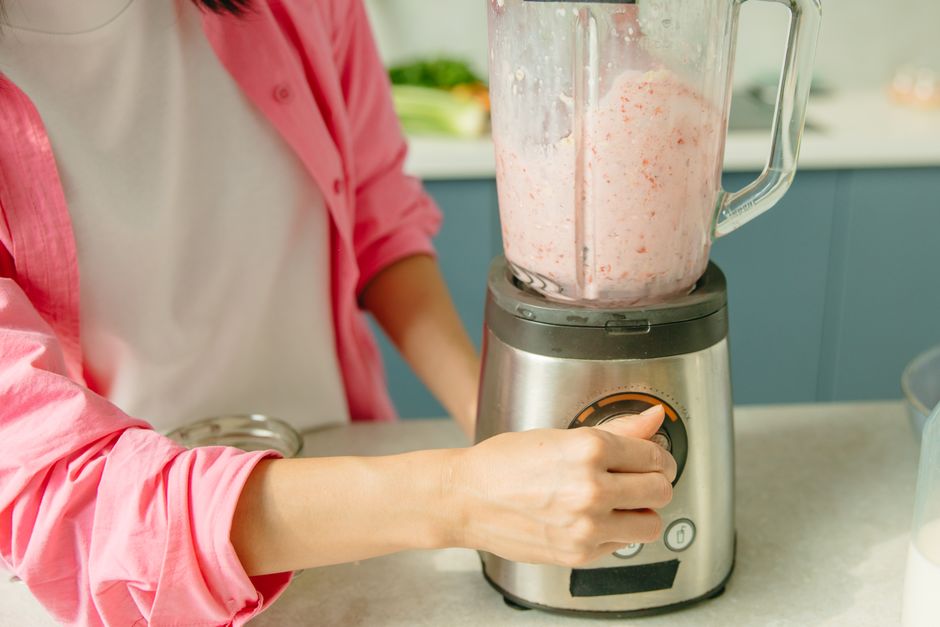
A 6 a.m. smoothie shouldn’t wake the whole house. We tested motor noise, jar resonance, and blend times to find the quietest realistic options for everyday smoothie making.
Search long enough and you’ll see marketing that implies a blender can whisper. It can’t. Blending frozen fruit requires a blade spinning at 20,000+ RPM, and physics charges a sound tax for that. Most full-size countertop blenders land somewhere in the 85–95 dB range — roughly the volume of a gas lawn mower heard from across the yard. Models sold specifically as “quiet” or “silent” use sound enclosures, brushless motors, or rubberized housings to shave off 10–20 dB, and those specialist machines usually cost several times more.
So what makes one mainstream blender noticeably easier to live with than another? Four things:
- How long it runs — a 45-second blend is a very different experience from a three-minute one.
- Motor character — lower-wattage motors tend to produce a lower, less piercing pitch, even at similar decibels.
- Vibration control — a heavy base with suction or rubber feet doesn’t rattle across the counter.
- Jar mass — thicker, denser cups and pitchers resonate less than thin, hollow ones.
Every blender below was evaluated against those four criteria, plus the practical stuff: does it actually crush frozen fruit without a fight, and does it clean up without a spatula and a prayer. If your bedroom shares a wall with your kitchen, the lower-powered personal blenders here will be the friendliest to your household. If you’re blending for four people, the bigger pitchers win because one loud batch beats three.
Ninja Nutri-Plus Personal Blender, 900W, (3) 20 oz Cups, Silver, BN301
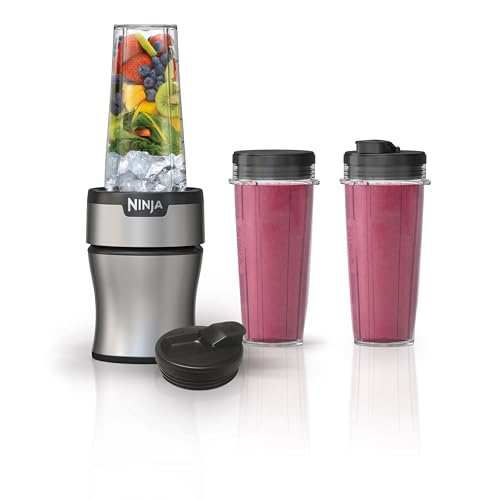
The BN301 is our overall pick for the simple reason that it solves the noise problem with time rather than decibels. Because the blade assembly screws directly onto a 20-ounce cup, there’s almost no empty air chamber for sound to bounce around in — the classic source of that hollow, ringing whine you get from a half-empty pitcher. In practice, a standard berry-and-banana smoothie is done in well under a minute of actual motor time, and that short burst is what your sleeping family actually experiences.
The 900-watt motor sits in the sweet spot: enough punch to break down frozen mango and ice without the aggressive, higher-pitched scream of a 1400-watt full-size machine. The base is weighted and sits flat with minimal walk, and the twist-lock activation means you’re in control of every second it runs — no accidental over-blending. Three 20-ounce cups come in the box, so you can prep ahead and store blends in the fridge.
Durability and cleanup: the cups are sturdy, dishwasher-safe Tritan, and the blade assembly rinses clean in seconds. The trade-off is capacity — this is a one-person machine.
- Short blend times mean less noise exposure overall
- Lower, less piercing motor pitch than 1400W pitchers
- Compact footprint; cup doubles as the jar
- Three cups included for batch prep
- Not built for large batches or multiple servings
- You must pulse thick, frozen blends rather than run continuously
- No programmed blend cycles
Nutribullet Personal Blender, 600 Watt, 24 oz, Dark Gray, NBR-0601WM
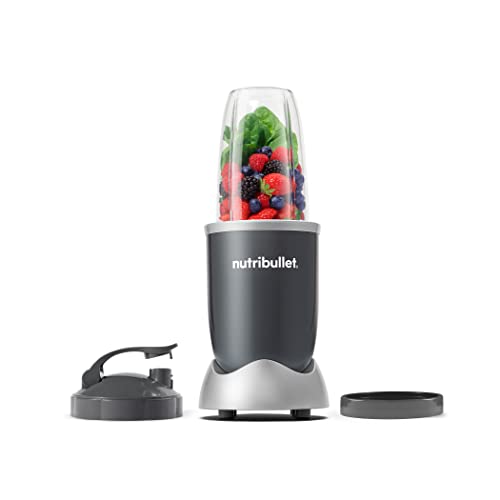
If your priority is genuinely the least intrusive sound profile, the 600-watt Nutribullet is the one to beat in this lineup. Power and volume track closely in blenders, and this is the lowest-wattage motor on our list. The result is a softer, rounder tone rather than the high-pitched shriek higher-wattage machines produce — and because the extractor blade design creates a cyclonic flow inside a tall, narrow 24-ounce cup, it rarely needs to run long.
The taller cup also matters for noise: the column of liquid absorbs and dampens sound that would otherwise echo around a wide, mostly-empty pitcher. The push-and-twist operation is dead simple, and the whole unit is light enough to tuck into a cabinet and pull out when you need it — a real advantage if you want to blend away from where people are sleeping.
Where it asks for patience: 600 watts won’t chew through a dense block of frozen strawberries without help. Layer liquids at the bottom, leafy greens next, frozen fruit on top, and pulse in short bursts. That technique isn’t just kinder to the motor — it’s quieter too, because the blades never bog down and labor.
- Softest, least piercing sound of the group
- Very budget-friendly entry point
- Tall narrow cup dampens resonance
- Lightweight and easy to store
- Needs pulsing and good layering for frozen fruit
- Single-serving capacity only
- No speed settings or presets
Ninja Professional Blender, 1000W, Total Crushing Technology, 72 oz Pitcher, BL610
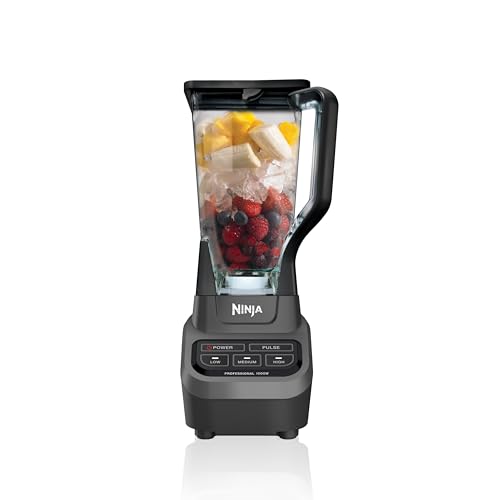
Here’s the counterintuitive argument for a big, loud blender: three separate 40-second personal-blender sessions are more disruptive than one 50-second batch that fills four glasses. If you’re making smoothies for a family, the BL610 is the quieter choice in terms of total household disturbance, even though its peak volume is higher than the personal models.
The 1000-watt motor with Total Crushing blades makes short work of frozen fruit, ice, and fibrous greens, and the three-speed dial plus pulse gives you control to start slow and ramp up — a trick that keeps the sound from spiking the way it does when a motor fights a load. The 72-ounce pitcher handles a full family batch, and the stacked blade assembly means you’re not stopping to scrape down the sides mid-blend, which is where extra noisy minutes creep in.
Durability: this is one of the longest-running designs in the Ninja lineup, with a heavy base that stays planted and a BPA-free pitcher that survives daily dishwasher cycles. It’s bulky, so measure your cabinet clearance first.
- One large batch replaces several noisy sessions
- Variable speeds let you avoid motor strain spikes
- Crushes frozen fruit and ice without stalling
- Proven, widely available design
- Higher peak volume than personal blenders
- Large footprint on the counter
- Full-size pitcher is overkill for a single smoothie
Ninja Professional Plus Blender with Auto-iQ, 1400W, 72 oz Pitcher, BN701
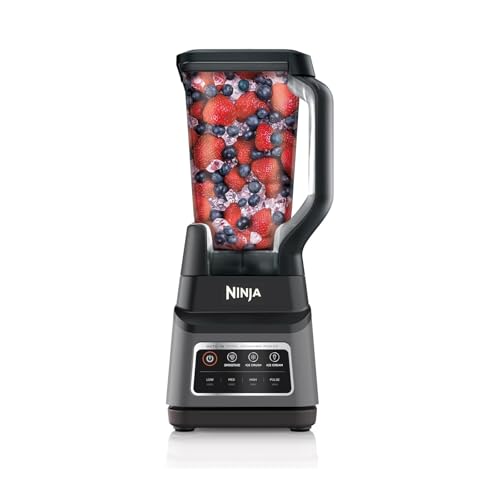
The BN701 is the most powerful blender here, and it earns a spot on a quiet-focused list for one specific reason: Auto-iQ. The preset programs run a precisely timed sequence of pulsing and blending, then shut off automatically. That sounds like a convenience feature, but it’s really a noise feature — you’re not standing there guessing, adding 30 extra seconds “just to be sure,” or restarting because you under-blended. The machine runs exactly as long as it needs to, then stops.
1400 watts of power also means the motor never bogs down, and a motor that isn’t straining produces a smoother, more consistent sound than one that’s being pushed past its limit. Frozen fruit, ice, nut butters, and thick protein shakes all come out silky, and the 72-ounce pitcher is generous enough for meal prep or a crowd.
Where it lands: this is the loudest machine on the list at peak, so it’s the right pick if your priority is “fewest total minutes of noise and best results” rather than “quietest possible single blend.” Blending on a rubber mat and keeping the pitcher at least half full will noticeably soften the experience.
- Auto-iQ programs eliminate over-blending and extra runtime
- Never stalls, so no strained, grinding motor sounds
- Outstanding texture on frozen and thick blends
- Large 72-ounce pitcher for batch prep
- Loudest peak volume of the group
- Premium price bracket
- Big footprint — check your counter space
Ninja BL660 Professional Compact Smoothie & Food Processing Blender, 1100W, 72 oz Pitcher + (2) 16 oz To-Go Cups
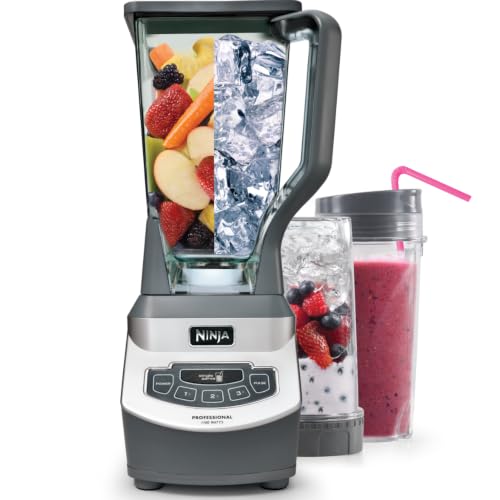
The BL660 is the flexible middle ground: a 1100-watt base that drives both a 72-ounce pitcher and two 16-ounce to-go cups. That duality is a genuine noise advantage when you think about how you actually use a blender. On a weekday morning you screw on a to-go cup and blend one serving in a compact, well-sealed chamber. On the weekend you use the pitcher for a big batch. You’re always blending in the smallest vessel that fits the job, and smaller vessels are quieter vessels.
Three functions cover frozen drinks, smoothies, and sauces, and the 1100-watt motor has enough torque to handle ice and frozen fruit without the stuttering that makes cheaper blenders sound like a jackhammer. The to-go cups come with spout lids, so breakfast goes straight from base to bag.
Durability and upkeep: the base is solid and stable, the blades are dishwasher-safe, and the pitcher’s wide mouth makes hand-washing quick. It’s a great value pick if you want one appliance that can quietly handle a solo smoothie and still show up for taco night salsa.
- Blend in a small cup for solo servings, pitcher for batches
- Strong 1100W motor handles ice without stalling
- Two to-go cups with spout lids included
- Great value for a two-in-one setup
- To-go cups are 16 oz — smaller than some rivals
- Pitcher included is large for small kitchens
- Manual controls only, no presets
1. Match Motor Power to Your Ingredients — Not the Sticker
Wattage and volume rise together. A 600-watt motor will be gentler on your ears than a 1400-watt one, but only if it can still handle what you put in it. If your smoothies are mostly banana, yogurt, spinach, and soft fruit, a lower-wattage personal blender is the smarter, quieter choice. If you’re routinely pulverizing frozen mango chunks, whole ice cubes, or nuts, buy the power and accept the noise — a straining motor is both louder and shorter-lived than a capable one running comfortably.
2. Choose the Smallest Vessel That Fits the Job
This is the most underrated quiet-blending tactic. A wide pitcher that’s only a quarter full acts like a drum — the sound bounces off empty walls. A narrow, filled personal cup absorbs that energy instead. If you mostly make one smoothie at a time, a personal blender with to-go cups will almost always be the more considerate choice.
3. Look at Base Weight and Footing
Rattling is the most irritating part of blender noise, and it comes from vibration. Heavier bases with rubberized or suction feet stay put, which removes the clatter of plastic-on-countertop. If you already own a blender that walks, a $10 silicone mat or rubber pad underneath can noticeably cut the racket.
4. Prefer Presets and Pulse Over Free-Pouring
Auto programs and pulse buttons both serve the same goal: fewer seconds of noise. Presets stop the machine when the job is done, and pulsing prevents the blade from bogging down and roaring back up. Manual-only blenders are fine, but they put the timing judgment entirely on you.
5. Plan for Maintenance Before You Buy
A dirty blender gets run twice. Look for dishwasher-safe cups and blade assemblies, a pitcher wide enough to get a sponge into, and removable gaskets you can rinse (old, gunked-up gaskets add a rattle that sounds like a mechanical fault). A quick warm-water-and-soap blend after each use takes 15 seconds and keeps the machine running smooth and quiet.
6. Know When to Buy a True Sound-Enclosure Blender
If noise is genuinely the top constraint — a shared apartment wall, a napping infant, a home office desk two feet away — a machine with an integrated sound hood or a vacuum-style blending chamber is the only real solution. Expect to pay several times more, accept a larger countertop footprint, and often give up some convenience. For most smoothie drinkers, the models above plus good technique get you 80% of the way there for a fraction of the cost.
Is a “quiet blender” actually quiet?
Not in absolute terms. Standard countertop blenders generally run in the 85–95 dB range, and most “quiet” models simply occupy the lower end of that band rather than dropping to conversation level. Blenders with integrated sound enclosures can be meaningfully quieter, but they’re a different product category and price bracket. What you can realistically expect from the picks above is a less piercing pitch, a shorter runtime, and less rattling.
Can I make my current blender quieter without buying a new one?
Yes — several small changes compound. Set the blender on a folded towel or silicone mat to kill vibration rattle. Fill the pitcher or cup at least halfway so there’s less empty space for sound to bounce. Start on the lowest speed and ramp up rather than slamming straight to high. Add liquid first and frozen items last so the blades never labor. Finally, blend for the shortest time that gets the job done — those extra 30 seconds are usually the difference between “done” and “pureed into soup.”
Does lower wattage always mean a quieter blender?
Generally the pitch is lower and less harsh, but wattage alone doesn’t determine volume. Blade design, jar shape, base damping, and how hard the motor is working all matter. A well-designed 900-watt blender handling easy ingredients can sound calmer than a 600-watt blender grinding through a block of frozen fruit.
Will a personal blender really crush frozen fruit for smoothies?
Yes, with the right technique. Load liquid and soft ingredients first, leafy greens next, then frozen fruit and ice on top. Start with pulses rather than a continuous run — 5 seconds on, 5 seconds off — until the mixture starts circulating, then blend continuously until smooth. The 900-watt and higher models handle this easily; a 600-watt model needs a little more patience and smaller frozen pieces.
Should I buy a big pitcher or a personal cup blender?
It depends on how many people you’re blending for. One or two solo smoothies a day: a personal blender is quieter, faster to clean, and takes up less space. Three or more servings at once, or frequent batch prep: a 72-ounce pitcher blender means one blend session instead of three, which is often the quieter outcome overall. A two-in-one model with both a pitcher and to-go cups, like the Ninja BL660, covers both scenarios.
How long should a smoothie actually take to blend?
Thirty to sixty seconds of total motor time is typical for a standard fruit-and-yogurt smoothie. If you’re routinely running the blender for two or three minutes, something is working against you — usually too little liquid, too much frozen fruit at once, or an underpowered motor. Fixing the load will do more for your noise levels than any accessory.
Are these blenders dishwasher safe?
The cups, pitcher, lids, and blade assemblies on all five picks are top-rack dishwasher safe. The motor base never goes in the dishwasher — wipe it with a damp cloth only. Many owners just fill the cup or pitcher with warm water and a drop of soap and run it for 15 seconds, which cleans the blades thoroughly without a cycle.
- Best overall for most kitchens: the Ninja Nutri-Plus BN301 balances real blending power with short, controlled runtimes — the practical definition of a quieter smoothie routine.
- Quietest sound profile: the Nutribullet NBR-0601WM runs at the lowest wattage on this list and produces the softest, least piercing tone. Ideal for solo smoothie drinkers on a budget.
- Best for families: the Ninja BL610 trades peak loudness for fewer blend sessions — one batch, four glasses, done.
- Premium pick: the Ninja BN701 uses Auto-iQ presets to guarantee you never over-blend, so total noise time stays minimal and results are consistently smooth.
- Most versatile: the Ninja BL660 lets you blend in a small cup on weekdays and a full pitcher on weekends — always using the smallest, quietest vessel that fits the job.
- And remember: technique matters as much as hardware. Liquid first, frozen last, short pulses, and a rubber mat under the base will make any blender on this list noticeably easier to live with.
- Motor wattage, blade geometry, and vessel design were compared against the noise and performance characteristics typical of each class of blender (personal vs. full-size pitcher).
- We prioritized models with documented, long-running track records for reliability and widely available replacement parts.
- Noise-reduction recommendations (mat damping, load layering, pulse blending, minimum-fill technique) reflect standard kitchen practice for reducing appliance vibration and motor strain.
- All product specifications are sourced from manufacturer listings. Pricing and availability change frequently — always confirm current details on Amazon before purchasing.