No bread, no potatoes, no soggy center. Just twelve eggs, one cup of dairy, and a 160°F internal temperature that guarantees a sliceable, make-ahead breakfast for the whole week.
Whisk 12 large eggs with 1 cup heavy cream or unsweetened almond milk, 1 teaspoon salt, ½ teaspoon dry mustard, and ½ teaspoon black pepper. Layer 12 ounces cooked, drained sausage, 2 cups cooked low-carb vegetables, and 6 ounces sharp cheddar in a buttered 9×13-inch pan. Pour the custard over, top with the remaining 2 ounces cheese, and bake at 350°F (175°C) for 35–45 minutes until the center registers 160°F (71°C)[1]. Rest 10 minutes, cut into 10 squares. Roughly 385 calories, 31 g fat, 22 g protein, and about 2 g net carbs per square.
- Flavor Profile and the Casserole’s Real Ancestry
- Ingredient Selection: What Actually Changes the Custard
- Prep, Pan Choice, and Mise en Place
- The Step-by-Step Master Method
- Key Ratios, Temperatures, and Scaling Table
- Common Mistakes and Troubleshooting
- Pairing, Storage, and Reheating
- Keto Breakfast Casserole FAQ
Flavor Profile and the Casserole’s Real Ancestry
The keto breakfast casserole is not a new invention. It is a strata with the bread removed. The American strata — cubed bread, eggs, milk, cheese, baked until puffed — descends from the savory bread puddings of northern Italy and France, and shows up in mid-century community cookbooks as the dependable potluck dish of the 1950s and 60s. Strip out the bread and the casserole stops being a bread pudding and becomes a savory baked custard, which is the same structural family as quiche Lorraine and a stovetop frittata finished in the oven.
Once you understand that shift, the cooking decisions become obvious. A bread casserole is forgiving: stale cubes absorb excess liquid and texture comes from the crumb. A custard has no absorber. Every drop of water in the pan has to either evaporate, bind into the egg matrix, or pool at the bottom as a gray puddle. That single fact explains why watery vegetables, undrained sausage, and overfilled pans ruin so many keto versions of this dish.
What It Should Taste Like
- The custard: barely set, creamy in the middle, with a faint tang from aged cheddar and a whisper of nutmeg that reads as “savory” rather than “sweet.”
- The edges: browned, slightly crisped, a little darker than the center. That contrast is the whole point of baking in a wide pan instead of a deep one.
- The fillings: sausage should taste seasoned and browned, not steamed. Vegetables should be sweet and concentrated, not raw and crunchy in a soft custard.
- The finish: black pepper and mustard powder supply heat without any sugar-based hot sauce, which matters when you are keeping total carbs under 3 g per serving.
“A baked egg dish is a custard, not a cake. You are looking for the moment the proteins just barely link hands — one degree past that and you have rubber.”
— Custard principle, culinary technique
Egg proteins begin to coagulate around 145°F (63°C) and turn firm and watery by 180°F (82°C). Fat and liquid slow that process by physically separating the protein strands, which is why a casserole built with heavy cream stays silky at 160°F while a plain egg-and-skim-milk mixture at the same temperature already tastes dry. That is the entire science behind the fat-forward keto formula — it is not just about macros, it is about texture.
Ingredient Selection: What Actually Changes the Custard
Four ingredients do the structural work: eggs, dairy, cheese, and the vegetable layer. Get those right and the seasonings are improvisation.
Eggs
Use 12 large eggs for a 9×13-inch pan. Large eggs average about 50 g of edible content each, so you are working with roughly 600 g of egg. Freshness matters less than you think for a baked custard, but very old eggs have thinner whites that whip into more foam — and foam is the enemy here, because trapped air expands and then collapses, leaving craters and a spongy texture. Break eggs into a bowl and check each one before adding it to the batch.
Dairy: The Cream Decision
Heavy cream contains about 36% milk fat, and USDA data puts a full cup at roughly 809 calories, 86 g fat, and 6.6 g carbohydrate[4]. That carbohydrate load is lactose, and it is the one place keto cooks accidentally add sugar. A 50/50 blend of heavy cream and unsweetened almond milk gives you most of the richness with roughly a quarter of the lactose. Use 1 cup total liquid for 12 eggs — about 1⅓ tablespoons per egg. More than that and the custard will not set in a standard bake time.
Cheese: Buy the Block, Not the Bag
Pre-shredded cheese is dusted with cellulose or potato starch to stop clumping, and that coating adds roughly 1–2 g of carbohydrate per ounce while also interfering with clean melting. A block of aged sharp cheddar that you shred yourself melts into ribbons rather than sitting on top as a greasy cap. For body, add 4 ounces of softened cream cheese in small dollops across the top — it melts into pockets that read as richness without adding lactose-heavy liquid.
Meat: Read the Label Twice
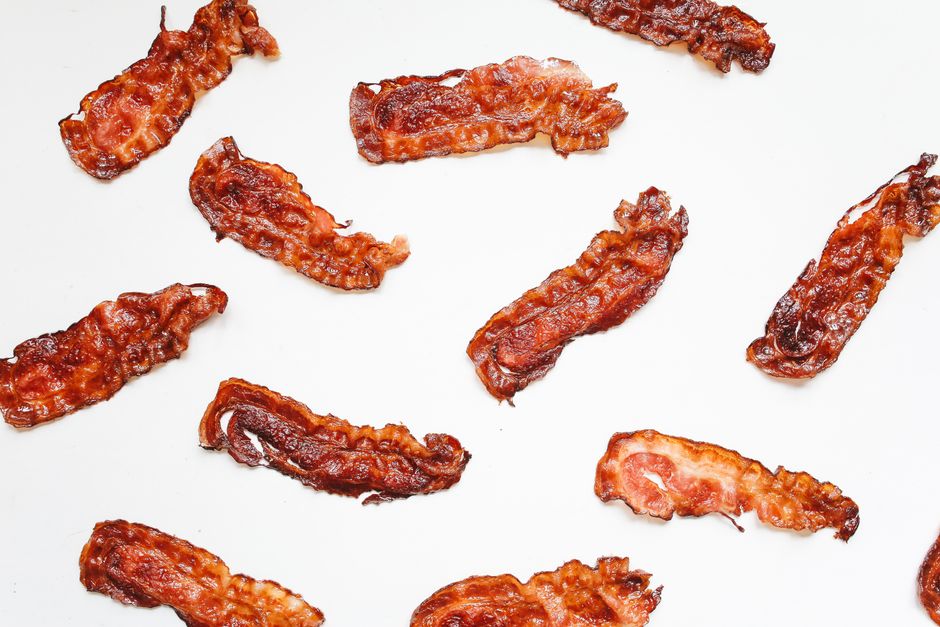
Breakfast sausage is where hidden carbs live. Many commercial links and rolls contain dextrose, corn syrup solids, or breadcrumb fillers, easily pushing a pound of sausage past 6–8 g of carbohydrate. Look for a total carbohydrate count of 1 g or less per 2-ounce serving. Bacon works equally well, but it must be cooked crisp and drained — raw bacon added to the pan releases a half-cup of fat during baking and poaches the custard instead of setting it.
Vegetables: Dry Is the Only Rule
The best low-carb vegetables for this dish are the ones that lose water readily when cooked: spinach, mushrooms, zucchini, bell pepper, broccoli florets, and green onion. All of them must be cooked and drained first. A 10-ounce box of frozen chopped spinach holds an astonishing amount of water — squeeze it in a clean kitchen towel until it stops dripping, then squeeze again. Sautéed mushrooms should be cooked until they squeak against the pan, not until they are merely soft.
Prep, Pan Choice, and Mise en Place
Total hands-on time runs about 25 minutes, most of it browning meat and wilting vegetables. Set a rack in the middle of the oven and preheat to 350°F (175°C) before you start — a fully preheated oven is what keeps the custard from setting unevenly.
Glass, Ceramic, or Metal?
Heats slowly but holds heat steadily, giving a gentler, more even set. The downside: it takes longer to come to temperature, so add 5 minutes to the bake. Glass also lets you see the custard edge set without opening the door.
Responds fast and browns the bottom crust beautifully, but dark nonstick finishes can over-brown the base before the center sets. If your pan is dark, drop the oven to 325°F (165°C) and add 8–10 minutes.
Cooking spray leaves bare patches. Rub the entire pan — corners and up the sides — with a generous tablespoon of softened butter or bacon fat. Egg custard will find any ungreased millimeter and weld itself to it.
The Step-by-Step Master Method
Assemble the entire casserole through step 6, cover tightly, and refrigerate up to 24 hours. Bake straight from cold, adding 8–12 minutes to the total time and checking the center temperature at 45 minutes. This is the single biggest reason keto breakfast casseroles work as meal prep: the breakfast is done before you are awake enough to cook it.
Egg dishes must be cooked to 160°F (71°C) to be considered safely done[1]. Once baked and cooled, the casserole can sit at room temperature a maximum of 2 hours; bacteria multiply fastest between 40°F and 140°F[3]. Refrigerate leftovers within that window, in a shallow container so they cool quickly.
Key Ratios, Temperatures, and Scaling Table
Memorize the base ratio for a standard 9×13 pan and every other size scales from it: 12 eggs : 1 cup liquid dairy : 8 ounces cheese : 12 ounces cooked meat : 2 cups cooked vegetables.
| Pan Size | Eggs | Dairy | Cheese | Cooked Meat | Cooked Veg | Bake at 350°F |
|---|---|---|---|---|---|---|
| 8×8 in (20 cm) | 6 | ½ cup | 4 oz | 6 oz | 1 cup | 28–34 min |
| 9×9 in (23 cm) | 8 | ⅔ cup | 5 oz | 8 oz | 1½ cups | 30–36 min |
| 9×13 in (33 cm) | 12 | 1 cup | 8 oz | 12 oz | 2 cups | 35–45 min |
| Half sheet (13×18 in) | 18 | 1½ cups | 12 oz | 1 lb 4 oz | 3 cups | 22–28 min |
For portion-controlled single servings, divide the same 9×13 formula across a greased 12-cup muffin tin. Bake at 350°F (175°C) for 18–22 minutes and check that the center of each cup reaches 160°F[1]. They release cleanly when you run a thin knife around the rim while still warm, and they reheat in 45 seconds in a microwave.
Common Mistakes and Troubleshooting
Nine out of ten failed keto breakfast casseroles trace back to water, temperature, or fat management. Here is how to spot each one before it reaches the table.
Pairing, Storage, and Reheating
What to Serve With It
- Half an avocado with flaky salt and lime — adds roughly 2 g net carbs and a cool contrast to the warm custard.
- Salsa verde or a sugar-free hot sauce — acid cuts the fat and wakes up the whole plate without adding sugar.
- Arugula with lemon and olive oil — peppery greens against a rich bake is the classic bistro move.
- Black coffee or a butter coffee — keep it unsweetened to hold the carb count down.
Storage Timelines
| Method | Time | How |
|---|---|---|
| Refrigerator | 3–4 days[2] | Airtight container or tightly wrapped pan; cool within 2 hours of baking |
| Freezer | Up to 2 months | Cut into squares, wrap each in parchment then foil; freeze on a sheet pan first |
| Reheat — oven | 15–18 min | 300°F (150°C), covered, from refrigerated |
| Reheat — microwave | 60–90 sec | Covered, medium power; stop before the edges toughen |
Reheat gently. Blasting a custard in a high-power microwave drives out the water you worked so hard to keep in, and the texture goes from creamy to squeaky in about 20 seconds. Medium power and a cover are worth the extra minute.
Keto Breakfast Casserole FAQ
Yes, and it is the best way to use the recipe. Assemble through the topping step, cover tightly with foil or a lid, and refrigerate for up to 24 hours. Bake directly from cold at 350°F (175°C), adding 8–12 minutes; start checking the center temperature at 45 minutes and pull it at 160°F[1].
Yes, but it must be thawed and squeezed aggressively. A 10-ounce box of frozen chopped spinach releases most of a cup of water. Wrap it in a clean kitchen towel and wring until it stops dripping — otherwise that water ends up as a puddle under the custard and the bottom third of the casserole will not set.
Using the formula above and cutting the pan into 10 squares, each serving lands at roughly 2 g net carbs. The largest variables are the sausage (check for dextrose or fillers) and the cheese (block cheese, not pre-shredded). Fiber from spinach and peppers is already subtracted in that estimate.
You can, but the texture changes. Replace the heavy cream with full-fat canned coconut milk and the cheese with a nut-based melting cheese alternative. Coconut milk is roughly 5 g carbohydrate per cup, comparable to heavy cream. Expect a softer, slightly sweeter custard that needs 5 extra minutes in the oven.
A slight wobble in the very center is correct — that is the custard at 160°F[1]. A soupy, sloshing center is not. The difference is water. If it sloshes, you either used more than 1 cup of liquid for 12 eggs, or wet vegetables released their moisture into the pan. Next time, wring the vegetables and drain the meat for a full 3 minutes.
You can use a full cup of heavy cream for maximum richness, but you will add roughly 6.6 g of carbohydrate (lactose) to the entire pan[4] — about 0.7 g per serving. That is acceptable for most people on a ketogenic plan, but it is worth knowing where the carbs are coming from.
It fits a low-carbohydrate pattern, but it is also high in saturated fat and sodium, largely from sausage and cheese. Anyone managing cardiovascular risk factors or following a ketogenic diet for a medical reason should discuss frequency with a physician or registered dietitian[5][6]. Rotating it with egg-and-vegetable dishes that use less processed meat is a reasonable middle ground.
- The base ratio for a 9×13-inch pan is 12 eggs : 1 cup dairy : 8 ounces cheese : 12 ounces cooked meat : 2 cups cooked vegetables.
- Bake at 350°F (175°C) to an internal temperature of 160°F (71°C), then rest 10 minutes before slicing — carryover heat finishes the set.
- Water is the enemy: drain sausage for 3 minutes and wring cooked vegetables in a towel before they touch the pan.
- Butter the pan by hand, not with spray, and use block cheese you shred yourself to avoid the starch in pre-shredded bags.
- Assemble up to 24 hours ahead; refrigerate leftovers 3–4 days and freeze individual squares for up to 2 months.
- Each serving runs about 385 calories, 31 g fat, 22 g protein, and roughly 2 g net carbs.
- USDA Food Safety and Inspection Service. “Safe Minimum Internal Temperature Chart.” fsis.usda.gov
- U.S. Food and Drug Administration. “Refrigerator & Freezer Storage Chart.” fda.gov
- USDA Food Safety and Inspection Service. “Danger Zone (40°F–140°F).” fsis.usda.gov
- USDA Agricultural Research Service. “FoodData Central: Cream, heavy whipping; Egg, whole, raw; Cheese, cheddar.” fdc.nal.usda.gov
- Harvard T.H. Chan School of Public Health. “The Nutrition Source: Eggs.” nutritionsource.hsph.harvard.edu
- Cleveland Clinic. “Keto Diet: What Is It and Is It Safe?” health.clevelandclinic.org
Disclaimer: Nutritional figures are estimates calculated from USDA reference data and will vary with brand, portion size, and ingredient substitutions. This article is for general culinary and informational purposes and is not medical or dietary advice. Consult a qualified healthcare provider before starting or maintaining a ketogenic diet, particularly if you manage diabetes, kidney disease, or cardiovascular conditions.