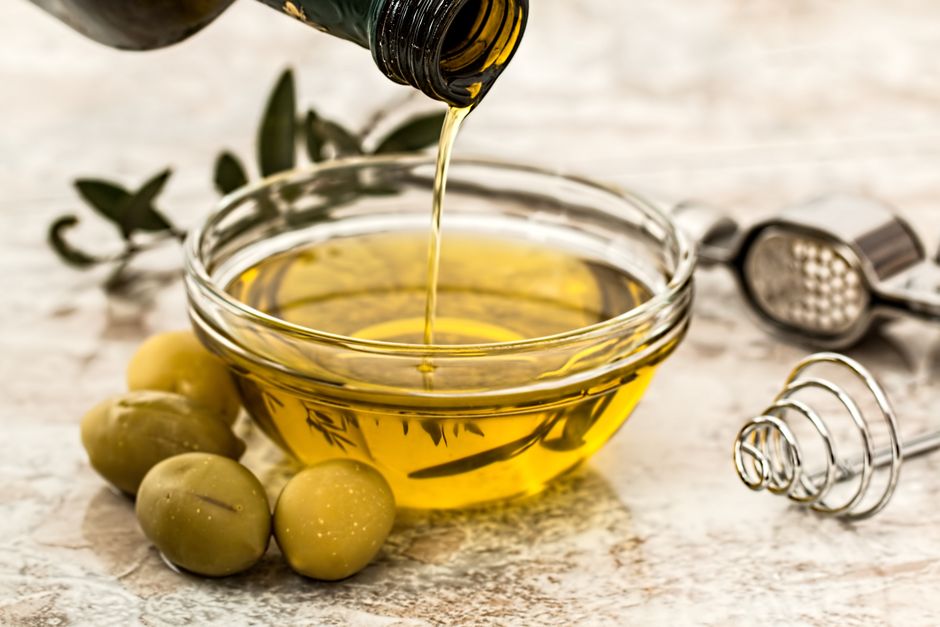
Extra virgin olive oil does three jobs in a vinaigrette — it carries fat, it delivers flavor, and it builds body. Here are eight substitutes that cover each job, with exact ratios, blending percentages, and the storage pitfalls nobody warns you about.
Cold-pressed avocado oil is the closest 1:1 swap — mild, buttery, and it lets acid and herbs lead. For a creamy dressing without oil, use tahini or full-fat Greek yogurt. If you only want to dial back EVOO’s pepperiness, blend it 50/50 with grapeseed or sunflower oil. Whichever fat you choose, hold the classic 3:1 oil-to-acid ratio and add 1 tsp Dijon mustard per 2 tbsp of oil to keep the emulsion from splitting.
Cold-pressed avocado, walnut, hazelnut, toasted sesame. These mimic EVOO’s fruitiness and viscosity. Use alone or blend 1:3 with a neutral oil.
Tahini, Greek yogurt, mayonnaise, Dijon. These replace fat with emulsified body — the dressing clings to leaves instead of pooling at the bottom.
What EVOO Actually Does in a Dressing
Before swapping anything, separate the three things a bottle of extra virgin olive oil contributes. Most substitutes nail one or two and fail the third.
1. It supplies the fat phase
A vinaigrette is a temporary emulsion: tiny droplets of oil suspended in vinegar and water. Oil isn’t decoration — it’s the continuous phase that dissolves fat-soluble flavor compounds from herbs, garlic, and citrus zest. Strip the fat out entirely and those flavors have nowhere to sit. About 73% of EVOO’s weight is oleic acid, a monounsaturated fat that stays liquid at refrigerator temperatures down to roughly 4°C (39°F).[2]
2. It provides flavor and bitterness
EVOO is legally defined by chemistry, not marketing. Under EU marketing standards, extra virgin olive oil must have a free acidity of no more than 0.8 g per 100 g and zero sensory defects, with fruitiness present.[1] The peppery catch at the back of your throat comes from phenolic compounds — oleocanthal and hydroxytyrosol — which is exactly the flavor some people want to remove from a delicate herb dressing.
3. It builds viscosity and cling
EVOO is thicker than refined seed oils at room temperature, so a vinaigrette made with it coats leaves in a film rather than beading up. Swap it for a thin, neutral oil and you’ll notice the dressing reads lighter and more watery even at the same ratio.
People swap oils but keep the same ratio. Neutral oils like grapeseed and sunflower are lighter-bodied, so a 3:1 vinaigrette made with them tastes thinner than the EVOO version. Nudge toward 2.5:1 or add 1 tsp of honey or mustard for body.
The 8 Best Substitutes, by Role
Each entry below lists the swap ratio (relative to 1 part EVOO), the flavor shift, and the one thing that goes wrong if you use it blindly.
1. Cold-Pressed Avocado Oil — Closest 1:1 Match
Buttery, faintly grassy, and nearly as viscous as EVOO. Use 1:1 with no other changes to your recipe. Refined avocado oil is fully neutral; cold-pressed (unrefined) keeps a mild green note that suits citrus and herb dressings. Heat stability is excellent either way, which matters if you’re also using the bottle for searing.[5]
Caveat: avocado oil has an authenticity problem. A UC Davis Olive Center study published in Food Control found that the majority of commercially tested avocado oils were either rancid, mixed with other oils, or both — so buy from a producer that lists a harvest date and a single country of origin.[6]
2. Grapeseed Oil — Cleanest Flavor, Thinnest Body
Use 1:1. Grapeseed oil is the quietest option on this list: it lets sherry vinegar, lemon, and shallots read at full volume. Its downside is oxidative fragility — it’s roughly 70% linoleic acid, a polyunsaturated fat that turns rancid faster than olive oil. Buy small bottles and finish within about three months of opening.
3. Sunflower and Safflower Oil — Budget Workhorses
Use 1:1. Standard sunflower and safflower oils are neutral and inexpensive. If your store carries high-oleic versions, choose those — the elevated monounsaturated content makes them noticeably more shelf-stable and gives a slightly richer mouthfeel closer to EVOO.
4. Toasted Sesame Oil — Flavor Bomb, Never Use Alone
Blend, don’t substitute. Use 1 part toasted sesame to 3 parts neutral oil. Straight toasted sesame oil in a vinaigrette tastes like a mistake — it’s intensely aromatic and slightly bitter in volume. Blended at 25%, it makes a superb Asian-style dressing with rice vinegar, soy, ginger, and a pinch of sugar. Unrefined sesame oil has a low smoke point, but for cold dressing that’s irrelevant.
5. Walnut and Hazelnut Oils — Nutty, Delicate, Expensive
Use 1:1, but treat them as a finishing ingredient. Cold-pressed walnut oil is high in alpha-linolenic acid, an omega-3 fat that oxidizes quickly; it can turn bitter within two to three months of opening. Store it in the refrigerator door, not above the stove. Both oils pair beautifully with apple cider vinegar, Dijon, and a little maple — the classic winter salad trio.
6. Full-Fat Greek Yogurt — Creamy, No Emulsion Required
Replace the oil outright. Whisk 1 cup full-fat Greek yogurt + 2 tbsp lemon juice + 1 tsp Dijon + ½ tsp salt + 1 tbsp water to thin. Because yogurt is already an emulsion of butterfat in water, there’s nothing to break — the dressing holds for days. Fat content matters: 0% yogurt gives a chalky, acidic result, while 5–10% fat reads creamy.
7. Tahini — Vegan Cream Without Dairy
Use ¼ cup tahini + ¼ cup ice water + 3 tbsp lemon juice + 1 small grated garlic clove + salt. Whisk the tahini with lemon first — it will seize and turn stiff — then add cold water a spoonful at a time until it loosens into a pourable cream. This is the single best oil-free substitute for dressings that need to cling to sturdy greens like kale.
8. Mayonnaise — The Shortcut Emulsifier
Use 1 tbsp mayonnaise per 1 tbsp EVOO removed, then thin with vinegar or water. Mayonnaise is a pre-built emulsion of oil and egg lecithin, so it stabilizes a dressing instantly and adds richness without any olive flavor. It’s also the fastest fix when a vinaigrette has already broken.
If you like EVOO but find it overpowering a delicate dressing, don’t abandon it — cut it. Blend 50% EVOO with 50% grapeseed or sunflower oil. You keep the phenolics, viscosity, and fruitiness at half strength, and the cost per batch drops too.
Coconut oil solidifies below about 24°C (75°F) and will turn your dressing into flecks of white fat in the refrigerator. Butter and ghee harden below roughly 20°C and won’t emulsify cold. MCT oil is thin, flavorless, and doesn’t carry fat-soluble aromatics well. Save all three for warm applications.
Head-to-Head Comparison Table
Ratios below are calculated against ¼ cup (60 ml) of extra virgin olive oil in a standard vinaigrette.
| Substitute | Swap Amount | Flavor Direction | Emulsion Help | Fridge Behavior |
|---|---|---|---|---|
| Cold-pressed avocado oil | ¼ cup (1:1) | Buttery, mild green | Neutral — add mustard | Stays liquid |
| Grapeseed oil | ¼ cup (1:1) | Clean, near-invisible | Neutral — add mustard | Stays liquid |
| Sunflower / safflower | ¼ cup (1:1) | Neutral, faintly sweet | Neutral — add mustard | Stays liquid |
| Toasted sesame oil | 1 tbsp + 3 tbsp neutral | Toasty, intense, nutty | Neutral — add mustard | Stays liquid |
| Walnut / hazelnut oil | ¼ cup (1:1) | Nutty, faintly bitter | Neutral — add mustard | Stays liquid; oxidizes fast |
| Greek yogurt (full-fat) | 1 cup + 2 tbsp acid | Tart, dairy-forward | Self-emulsified | Thickens further |
| Tahini | ¼ cup + ¼ cup water | Nutty, sesame-bitter | Self-emulsified | Thickens; loosen with water |
| Mayonnaise | 2 tbsp + thin with vinegar | Rich, neutral, eggy | Strong stabilizer | Thickens slightly |
Chef’s Verdict: Which One to Pick
For the closest match to EVOO: cold-pressed avocado oil, 1:1. Same body, similar color, and it won’t fight your vinegar.
For a bright, herb-forward vinaigrette: grapeseed oil, 1:1, plus 1 tsp Dijon. This is the combination professional kitchens use when they want the acid and shallots to be the story.
For creamy dressings with no oil at all: tahini for vegan and kale-friendly applications; full-fat Greek yogurt when you want tang and protein.
For Asian-style dressings: 1 part toasted sesame blended into 3 parts neutral oil. Undiluted sesame oil is a flavoring, not a base.
Rebuilding the Dressing: Ratios and Technique
Swapping the fat is only half the job. Change the oil’s viscosity or remove it entirely and you have to rebuild the structure. Work through these steps in order.
Fats don’t just add richness — they carry flavor. Many aroma compounds in herbs, citrus zest, and garlic are fat-soluble and won’t dissolve in vinegar alone. That’s why an oil-free dressing can taste sharp but flat: the acid is loud and the aromatics never make it to your palate.
Storage, Rancidity, and Food Safety
Homemade dressings are perishable in ways bottled versions aren’t, and one specific homemade dressing — garlic in oil — has a documented botulism risk.
If your dressing contains coconut oil, butter, or a high-stearic fat and turns solid in the fridge, stand the jar in a bowl of warm tap water for 5 minutes and shake. Never microwave a sealed glass jar of dressing.
Frequently Asked Questions
What is the closest 1:1 substitute for extra virgin olive oil in a dressing?
Cold-pressed avocado oil. It matches EVOO’s viscosity and butteriness closely enough that most tasters won’t identify the swap in a blind test, and it stays liquid in the refrigerator. Refined avocado oil works too but reads flatter, so add a teaspoon of Dijon or a squeeze of lemon zest to restore dimension.
Can I use butter or coconut oil instead?
Not in a cold dressing. Coconut oil solidifies below roughly 24°C (75°F) and butter below about 20°C, so both turn a refrigerated vinaigrette into a grainy, semi-solid paste that won’t coat leaves evenly. Ghee behaves similarly once chilled. Reserve all three for warm pan sauces and melted dressings served immediately.
Is vegetable oil a good substitute for olive oil in salad dressing?
Functionally, yes — soybean-based vegetable oil is neutral, inexpensive, and swaps 1:1. The trade-off is flavor: you lose the fruity, peppery notes that make an olive-oil vinaigrette taste like more than oil and vinegar. It’s the right call when the dressing’s flavor comes from something else, like toasted sesame, herbs, or citrus.
Can I make a dressing with no oil at all?
Yes. Whisk ¼ cup tahini with 3 tbsp lemon juice and ⅓ cup ice water for a pourable, clinging dressing, or use full-fat Greek yogurt thinned with vinegar. Both are already emulsified, so they never split. Expect a sharper, less rounded flavor profile — a half-teaspoon of honey or maple restores some of the roundness that fat normally provides.
Why does my vinaigrette keep separating?
Almost always because there’s no emulsifier holding the droplets apart. Add 1 tsp Dijon mustard, 1 tsp honey, or 1 egg yolk per ⅓ cup of oil, and add the oil slowly while whisking rather than pouring it in at once. Even a properly made vinaigrette will separate after a day in the fridge — that’s normal. Shake it and let it warm for 10 minutes before serving.
Does the 3:1 oil-to-vinegar ratio change with a substitute?
Only slightly. With thinner, neutral oils like grapeseed or sunflower, shift toward 2.5:1 for a dressing with more body. With strongly flavored oils like toasted sesame or walnut, keep the full 3:1 but use them as a blend rather than a straight replacement. Creamy bases like yogurt and tahini don’t use the ratio at all — they’re built on acid, water, and salt instead.
How long does homemade dressing last in the fridge?
Vinaigrettes with fresh garlic, shallot, or herbs: 5–7 days. Plain oil-and-vinegar mixtures: up to 2 weeks. Yogurt- and tahini-based dressings: 4–5 days. Any dressing containing raw garlic in oil should be refrigerated and used within 3–4 days because of the botulism risk associated with anaerobic oil environments.[7]
- Best 1:1 swap: cold-pressed avocado oil — closest match in body, color, and mild flavor.
- Best for bright vinaigrettes: grapeseed oil at 1:1, with a teaspoon of Dijon added for structure.
- Best oil-free options: tahini loosened with ice water, or full-fat Greek yogurt thinned with lemon.
- Blend, don’t replace: toasted sesame oil at 25% of the total oil volume; walnut and hazelnut at 1:1 as finishing oils.
- Keep the ratio: 3:1 oil to acid, dropping to 2.5:1 for thinner neutral oils.
- Never store raw garlic in oil at room temperature — refrigerate and use within 3–4 days.
- European Commission, Commission Implementing Regulation (EU) No 29/2012 on marketing standards for olive oil — definitions and quality parameters for the “extra virgin” category, including the 0.8 g per 100 g free acidity limit.
- USDA FoodData Central, Oil, olive, extra virgin — fatty acid profile and micronutrient composition per 100 g.
- UC Davis Olive Center, research publications on olive oil quality, phenolic content, and sensory evaluation.
- McGee, H. On Food and Cooking: The Science and Lore of the Kitchen (Scribner) — emulsions, surface-active molecules, and the role of mustard mucilage and egg lecithin.
- Codex Alimentarius, Standard for Named Vegetable Oils (CXS 210-1999) — identity and quality characteristics for avocado, grapeseed, sunflower, safflower, and sesame oils.
- Wang, S. et al., “Quality and authenticity of commercial avocado oil,” Food Control (UC Davis Olive Center, 2020) — findings on rancidity and adulteration rates in retail avocado oils.
- U.S. Centers for Disease Control and Prevention and U.S. Food and Drug Administration — guidance on botulism risk associated with garlic and herbs stored in oil.