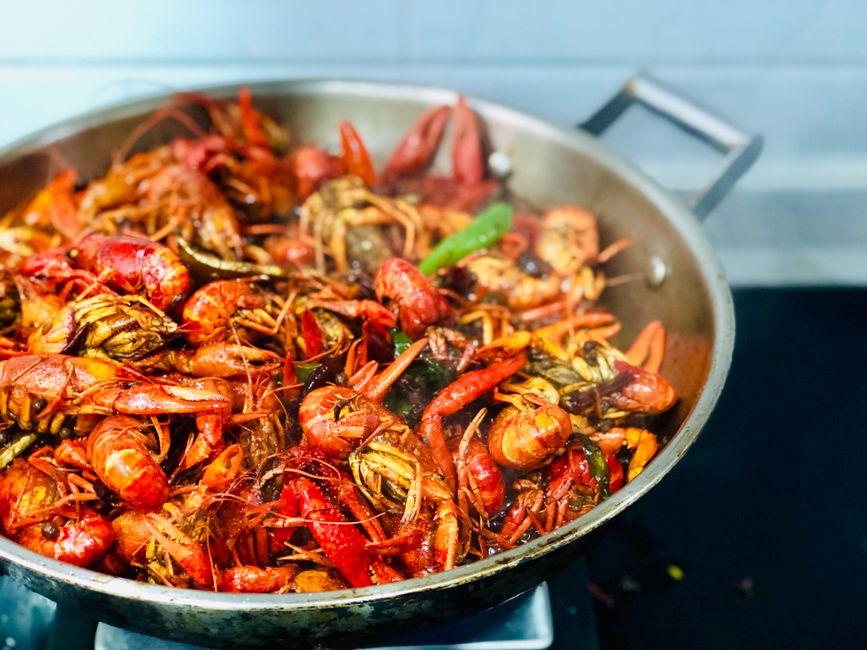
Two cuisines, one state, and about a thousand internet arguments. Here’s the actual line between Cajun and Creole cooking — the roux, the tomatoes, the geography — and where the loudest Reddit claims hold up under a chef’s eye.
Cajun is rural, Acadian-descended south Louisiana cooking: one pot, dark oil-based roux, smoked pork, cayenne, and no tomatoes in the gumbo. Creole is urban New Orleans cooking: a French-Spanish-African-Caribbean hybrid built on butter, cream, tomatoes, and classical French sauces. Most Reddit fights about the two aren’t really about ingredients — they’re about geography, class history, and whether “Cajun” on a menu means a place or a seasoning shaker.
Cajun vs Creole at a Glance
Strip away the folklore and the two cuisines diverge on four structural points: where they were cooked, who cooked them, what fat went into the roux, and whether tomato was allowed near the pot. Everything else — the trinity, the rice, the seafood — overlaps more than Reddit usually admits.
Home base: the bayous, prairies, and rice country around Lafayette, Eunice, Breaux Bridge, and LaPlace.
Fat of choice: oil, lard, or bacon drippings — fats that survive a 45-minute dark roux.
Signature move: one pot, big roux, everything cooked together so flavors stack instead of layer.
Tomato policy: generally absent from gumbos and étouffée.
Home base: New Orleans — the French Quarter, Treme, and the surrounding city wards.
Fat of choice: butter and cream, backed by the French sauce tradition.
Signature move: layered sauces, separate cooking of components, plate-up precision.
Tomato policy: welcome in gumbo, shrimp Creole, and sauce piquante.
Why This Argument Never Dies (Especially on Reddit)
On r/AskCulinary, r/NewOrleans, and r/CajunFood, the same threads resurface every few months: does real gumbo have tomatoes? Is étouffée supposed to be red? Is “Cajun” just a spice blend? The confusion isn’t random. It’s the residue of three centuries of migration, then a 1970s marketing boom that flattened two distinct cuisines into one shelf-stable label.
French-speaking Acadians were deported from what is now Nova Scotia and New Brunswick beginning in 1755, in an expulsion known as Le Grand Dérangement. Many eventually reached south Louisiana, where they built self-sufficient farm-and-bayou cooking around what they could raise, catch, and smoke.[4]
New Orleans, meanwhile, was a port city that had passed between France and Spain, absorbed Caribbean and West African cooking through the slave trade and the Haitian diaspora, and developed a free Black and mixed-race middle class with its own kitchens, own cooks, and own restaurant culture.
By the twentieth century, Louisiana law punished schoolchildren for speaking French, and “Cajun” carried a stigma. That reversed hard: the 1970s French-language revival, Paul Prudhomme’s K-Paul’s opening in 1979, and the blackened redfish craze of 1980 turned Cajun into a national brand — and a marketing word that could be printed on any jar, anywhere.[5]
Cajun is country. Creole is city. Everything else people argue about on Reddit is a footnote to that one line.
— The shorthand most Louisiana cooks reach for first
How Cajun Cooking Behaves in the Kitchen
Cajun food is engineered for a household that cooked once, in one pot, for a lot of people. That constraint produces a specific technical fingerprint.
The roux is the whole dish
A Cajun roux is equal parts flour and oil by weight, cooked past the color of milk chocolate and into the range of dark mahogany or brick. That takes 45 minutes to an hour of near-constant stirring over medium to medium-low heat. Butter is a poor tool here — it starts scorching well before the flour reaches the color a Cajun gumbo wants, which is exactly why Cajun country uses oil, lard, or bacon fat and Creole kitchens use butter for lighter roux.
Smoke, heat, and no tomato
Cajun country seasons with smoked pork rather than fresh: andouille from LaPlace, tasso, smoked sausage, and ham hocks, plus a cayenne-forward heat that hits the back of the throat rather than the front of the tongue. Tomato is usually absent — not forbidden, just not part of the household vocabulary for gumbo and étouffée.
What a Cajun pantry actually holds
- Andouille — Louisiana’s version is coarse-ground, heavily smoked pork. French andouille is an offal sausage and a completely different product.
- Tasso — intensely seasoned smoked pork shoulder, used as a seasoning meat, not a main.
- Filé powder — ground sassafras leaf, a Choctaw thickening technique, stirred in off the heat.
- Rice — long-grain, cooked separately, and always the bed rather than an ingredient.
- Boudin — pork, rice, and liver in a casing; the state legislature designated Scott, Louisiana, the boudin capital.
How Creole Cooking Behaves in the Kitchen
Creole kitchens had access to city markets, imported ingredients, and professional cooks trained in the French brigade system. The result is a cuisine that layers rather than stacks.
Sauce architecture comes first
Where Cajun cooking throws everything into one vessel, Creole cooking treats each component as its own project — seafood poached separately, sauce built on its own, rice molded and plated. Roux still appears, but often lighter, and butter frequently replaces oil. The classical French mother sauces hang over the whole tradition: hollandaise, béarnaise, remoulade, sauce piquante.
Tomato earns its place
Creole gumbo typically includes tomato and okra alongside its roux. Shrimp Creole is essentially a tomato-and-trinity braise. Sauce piquante is a tomato-based, roux-thickened sauce with a vinegar bite. None of this is a corruption of Cajun food — it’s a separate lineage that developed in parallel.
The Creole tomato is a real, regulated thing
“Creole tomato” isn’t a variety so much as a Louisiana growing standard: field-grown in the state, harvested in late spring and early summer, and sold at peak ripeness with high water content and low acidity. The Louisiana Department of Agriculture maintains the marketing order that governs the label, which is why a Creole tomato tastes noticeably softer and sweeter than a gas-ripened supermarket slicer.[5]
If a recipe calls for butter, cream, tomato, and finishing the sauce on its own, you’re cooking Creole. If it calls for a dark oil roux, smoked sausage, and one pot from start to finish, you’re cooking Cajun. The ingredients tell you the tradition faster than the name on the menu does.
Head-to-Head: Gumbo, Jambalaya, Étouffée and More
The same dish names appear on both sides of the line, but the versions differ in ways you can taste in the first bite. Here’s how the classics split.
| Dish | Cajun Version | Creole Version |
|---|---|---|
| Gumbo | Very dark oil roux, no tomato, chicken and andouille or smoked sausage; filé added at the table | Lighter butter-based roux with tomato and okra; seafood-forward, sometimes a “gumbo z’herbes” with greens |
| Jambalaya | Brown “Cajun” style — everything cooked together, no tomato, rustic and smoky | Red “Creole” style — tomato base, ingredients often cooked separately and folded in |
| Crawfish étouffée | Roux-based, blond-to-medium, no tomato; often just called crawfish stew in Cajun country | Tomato-tinted, butter-rich, saucier — closer to a shellfish braise |
| Dirty rice | Chicken livers and giblets, no tomato, heavy on pepper | Similar but frequently lighter, sometimes with tomato and more aromatics |
| Remoulade | Darker, redder, more rustic; horseradish and paprika forward | Mayonnaise and Creole mustard base, pale green-gold, refined and sharp |
| Blackened fish | A 1980 restaurant technique from K-Paul’s in New Orleans, not a traditional bayou method | Same — credit belongs to Chef Paul Prudhomme’s kitchen, not Cajun country households |
Filé is ground sassafras leaf, and its thickening power comes from mucilage — long-chain polysaccharides that swell in liquid. Heat them too long and they tighten into ropes and strings instead of a smooth body. Stir filé into a gumbo after the pot is off the burner, or into each bowl at the table.[6]
Seven Reddit Debates, Adjudicated
These are the claims that keep driving long, genuinely entertaining threads across cooking and Louisiana subreddits. Here’s how each one holds up.[7]
True for Cajun gumbo, false as a universal rule. Creole gumbo in New Orleans has used tomato and okra for well over a century, and both traditions are legitimate. The confusion comes from treating one regional style as the definitive one.
They’ve converged in restaurants, especially outside Louisiana, where one kitchen may serve both. At home, the split is still real: butter versus oil, tomato versus no tomato, one pot versus composed plates.
It was popularized by Paul Prudhomme at K-Paul’s in New Orleans around 1980. The technique is a hybrid of Cajun seasoning and a very hot cast-iron sear, and it was invented for a restaurant, not a bayou kitchen. Demand was so intense it helped push red drum into commercial collapse, and Louisiana banned commercial harvest of the species in 1986.
“Cajun” has no protected status in the United States — no PDO, no AOP, no enforced definition. Restaurant chains sell “Cajun chicken pasta” that has no relationship to Louisiana cooking at all. Read the ingredients, not the label.
Creole cooking descends from a separate urban lineage with Spanish, West African, Caribbean, German, and Italian threads, plus trained French sauce work. Reducing it to “Cajun plus tomato” erases the entire New Orleans kitchen tradition.
For Cajun gumbo, yes — that’s the definition. Creole kitchens also use blonde and peanut-butter-colored roux, and a dark roux thickens less than a light one, so the darkness is about flavor, not body.
This is the one Reddit claim that’s genuinely risky. Bacteria multiply fast between 40°F and 140°F — the USDA danger zone — and the safe window before refrigeration is two hours.[1] Gumbo does taste better the next day, but it needs to get cold fast in a shallow container, not sit out warm.
Chef’s Verdict
The Cajun-versus-Creole question has a clean answer once you stop looking for a winner. They’re two answers to two different problems: a rural household cooking one large meal from what it could raise, and a port city cooking with a market full of imports and a French-trained brigade.
Choose Cajun when you want deep, smoky, one-pot intensity: dark oil roux, andouille or tasso, cayenne heat, rice on the side, no tomato. Choose Creole when you want a composed, sauce-driven plate: butter roux, tomato, seafood, and a finished sauce you can taste on its own. And ignore anyone on Reddit — or anywhere else — who insists only one of them is the real thing. Both are real, and they’ve been borrowing from each other for two hundred years.
FAQ: Cajun vs Creole, Answered Straight
What’s the single biggest difference between Cajun and Creole food?
Geography and fat. Cajun cooking grew out of rural Acadian households and uses oil-based dark roux, smoked pork, and no tomato. Creole cooking grew out of urban New Orleans and uses butter, cream, tomato, and classical French sauce technique. If you had to compress it to one sentence: Cajun is country, Creole is city.
Does authentic gumbo have tomatoes in it?
Both answers are correct depending on which tradition you’re cooking. Cajun gumbo — the version from Lafayette, Eunice, and the bayou parishes — does not use tomato. Creole gumbo in New Orleans traditionally does, along with okra. Neither is a mistake.
Is jambalaya Cajun or Creole?
Both, with different colors. Cajun jambalaya is brown — no tomato, everything cooked together in one pot. Creole jambalaya is red — tomato-based, often with components cooked separately. Outside Louisiana, restaurants frequently serve red jambalaya and label it Cajun, which is where a lot of the confusion starts.
What is the holy trinity, and is it the same for both cuisines?
Onion, celery, and green bell pepper — roughly two parts onion to one part each of the other two. It’s shared by both Cajun and Creole cooking, and it substitutes for the French mirepoix of onion, carrot, and celery. Add garlic and Louisiana cooks sometimes call it “the pope.”
Why do Cajun recipes use oil instead of butter for roux?
Because a Cajun roux cooks for 45 minutes to an hour. Butter’s milk solids scorch well before flour reaches that deep brick color, so the roux turns bitter before it turns right. Neutral oil, lard, or bacon drippings hold up to the heat and let the flour brown all the way through.
Is “Cajun seasoning” an actual Louisiana thing?
Cajun and Creole seasoning blends are genuine Louisiana products — Tony Chachere’s, created in Opelousas in 1972, is the best-known example. The catch is that the blends are salt-heavy, so a jarred seasoning is a shortcut, not a substitute for building a roux and seasoning your own pot with cayenne, black pepper, and garlic.
Can I make one pot that satisfies both camps?
You can, but pick a lane on the two variables that matter most: tomato and fat. A dark oil roux with no tomato reads Cajun; a butter roux with tomato reads Creole. Splitting the difference — butter roux cooked dark, plus a can of tomatoes — usually gets you a muddy pot that neither tradition would claim.
- Cajun equals rural, Acadian-descended, oil-roux, smoked-pork, one-pot cooking; Creole equals urban New Orleans, butter, cream, tomato, and classical French sauce work.
- The single worst Reddit myth is that only one version of gumbo is authentic — Cajun and Creole gumbo are two separate, equally legitimate lineages.
- Blackened redfish is a 1980 restaurant technique from New Orleans, not a traditional Cajun household method.
- Darker roux means more flavor but less thickening power, which is why Cajun gumbos often finish with filé or okra.
- Filé powder must be added off the heat or it turns stringy and ropey.
- Cool gumbo and rice within two hours, refrigerate for no more than 3 to 4 days, and reheat to 165°F (74°C).[1][2]
- USDA Food Safety and Inspection Service, “Danger Zone (40 °F–140 °F)” — fsis.usda.gov
- USDA Food Safety and Inspection Service, “Leftovers and Food Safety” — fsis.usda.gov
- U.S. Centers for Disease Control and Prevention, Food Safety portal — cdc.gov
- National Park Service, “The Acadians” (Acadia National Park, history and culture) — nps.gov
- Louisiana Office of Tourism / Explore Louisiana, Cajun and Creole cultural and culinary heritage — explorelouisiana.com
- Harold McGee, On Food and Cooking: The Science and Lore of the Kitchen, revised edition (Scribner, 2004) — starch behavior in roux and mucilage thickening in filé.
- Community discussion threads on r/AskCulinary and r/NewOrleans — reddit.com/r/AskCulinary and reddit.com/r/NewOrleans