
Soft herbs and woody herbs spoil for opposite reasons — treat them the same and one of them always turns to slime. Here’s the exact temperature, moisture and packaging routine for each.
Never wash herbs before storing them — surface water is the single biggest cause of black, slimy leaves. Divide your herbs into two families. Soft herbs (parsley, cilantro, dill, mint, chives, tarragon) want to be treated like a bouquet: stems in 1–2 inches of water or wrapped in a barely damp paper towel, then sealed in a zip bag in the crisper drawer at 34–40°F. Woody herbs (rosemary, thyme, oregano, sage) want the opposite — dry, loosely wrapped, and never sealed in a wet bag, because they rot before they wilt. Basil is the exception that proves the rule: it blackens below about 50°F, so keep it on the counter at room temperature.
- Why Fresh Herbs Collapse in the Fridge
- The 60-Second Herb Triage Checklist
- Soft vs. Woody: Two Families, Two Rules
- Method 1 — The Bouquet Jar (Soft Herbs)
- Method 2 — The Barely-Damp Wrap (Woody Herbs)
- Method 3 — The Dry-Jar Vacuum Hack
- Method 4 — Freezing for the Long Haul
- Five Mistakes That Kill Herbs Overnight
- Pro Moves: Reviving and Rotating
- Equipment You Actually Need
- Herb-by-Herb Fridge Life Cheat Sheet
- Food Safety Warnings
- FAQ
Why Fresh Herbs Collapse in the Fridge
A bunch of parsley is a living, respiring plant. It is still burning through its own sugars, still losing water through its leaves, and still running the enzyme systems that break down chlorophyll. Refrigeration slows all three processes but never stops them. What actually kills your herbs is choosing the wrong enemy to fight.
Two failure modes compete. Water loss makes leaves limp, brittle and grey — the herb equivalent of freezer burn. Free water sitting on leaf surfaces feeds bacteria and yeast, breaking tissue down into the black, translucent slime that smells like pond water. Every storage method is a trade-off between keeping humidity high enough to prevent wilting and keeping actual liquid off the leaves.
Temperature matters more than most cooks realize. A fridge running at 45°F instead of 37°F can cut herb shelf life roughly in half, because respiration rate roughly doubles with every 18°F rise. And chilling injury is real for a handful of species: basil, in particular, develops blackened, sunken patches on the leaves below roughly 50°F (10°C) because its cell membranes can’t maintain fluidity at low temperatures.[1]
Ethylene is the quiet third factor. Apples, bananas, avocados, tomatoes, peaches and melons release ethylene gas, which accelerates yellowing and leaf drop in sensitive greens. Leafy herbs such as cilantro, parsley and dill are ethylene-sensitive, so storing a cilantro bunch beside a ripening avocado is a two-day death sentence.[2]
Chlorophyll degradation and enzymatic browning are oxidative processes — they need oxygen and enzyme activity. Sealing herbs in an airtight container with a moisture barrier slows oxidation; leaving them wet in an open bag accelerates microbial growth. You are trying to hit the narrow window between the two.
The 60-Second Herb Triage Checklist
Run through this the moment you get home from the market. Herb quality drops fastest in the first 24 hours, so this is the highest-return minute in the entire process.
Soft vs. Woody: Two Families, Two Rules
The single most useful classification in herb storage is stem anatomy, because it predicts how the plant handles water.
Parsley, cilantro, dill, mint, basil, tarragon, chives, chervil, lovage.
Thin, flexible, high-water stems. These herbs wilt fast and rehydrate well. They respond to a cut stem in water and high ambient humidity — the bouquet treatment.
Rosemary, thyme, oregano, sage, marjoram, savory, bay.
Lignified, stiff stems and low-moisture, waxy leaves. They resist wilting for days but rot quickly in trapped moisture. They want air, not water.
| Factor | Soft Herbs | Woody Herbs |
|---|---|---|
| Stem-in-water method | Excellent — 2–3 weeks | Poor — stems mold in 3–4 days |
| Damp paper towel wrap | Good — keep it barely damp | Acceptable only if nearly dry |
| Airtight sealed bag | Only with a dry barrier layer | Avoid unless fully dry |
| Crisper humidity setting | High | Low |
| Freezing performance | Good as a purée or oil paste | Good whole — retains oils well |
| Primary spoilage risk | Water loss, then bacterial slime | Mold and stem rot |
Method 1 — The Bouquet Jar (Best for Soft Herbs)
This is the highest-performing refrigerator method for parsley, cilantro, dill, mint and tarragon, and it consistently delivers two to three weeks in a properly cold fridge.[3]
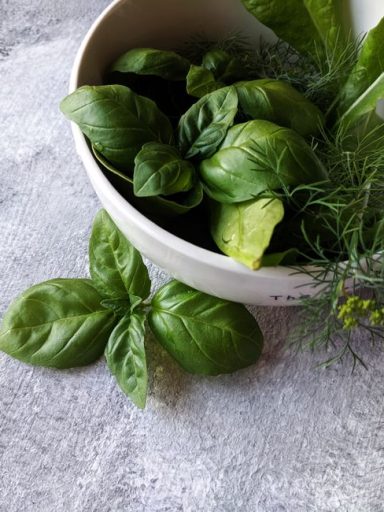
Basil must never go in the fridge, water jar or not. Below roughly 50°F, basil leaves develop blackened, water-soaked patches within 24–48 hours — classic chilling injury that no amount of drying will fix.[1] Keep basil in a jar of water on the counter, loosely covered, away from direct sun, and change the water daily. It will hold 5–7 days.
Method 2 — The Barely-Damp Wrap (Best for Woody Herbs and Chives)
Rosemary, thyme, oregano, sage and chives have a different failure profile: they rarely wilt before they mold. This method gives them just enough humidity to stay supple without creating a wet microclimate.
For delicate woody herbs like thyme and savory, lay the sprigs in a single layer in a shallow container, cover with a sheet of paper towel, and top with a second inverted container. This creates a breathable mini-terrarium that keeps thyme fresh 3–4 weeks — notably longer than a bag alone.
Method 3 — The Dry-Jar Vacuum Hack
If you want the longest possible fridge life without water, this is the workhorse method. It works on both families, provided the herbs go in bone-dry.
Method 4 — Freezing for the Long Haul
Freezing changes texture irreversibly. Ice crystals rupture cell walls, so thawed herbs go limp and dark — fine for cooked dishes, useless as a garnish. Freeze them in a form that hides the damage.
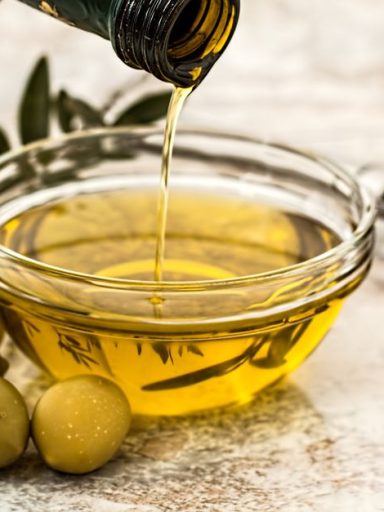
The herb-oil cube
Chop the herbs finely, pack them into ice cube trays about two-thirds full, and top each well with olive oil, melted butter, or a neutral oil. Freeze solid, then transfer the cubes to a labeled freezer bag. Use within 3–4 months for best flavor.[4] Drop a cube straight into a hot pan for instant herb base.
Whole-leaf freezing for woody herbs
Rosemary, thyme, oregano and sage freeze well whole because their leaves are low-moisture and oily. Strip the leaves, spread them on a sheet pan until frozen solid, then bag them. They’ll keep 4–6 months and can be crumbled straight from frozen into a braise.[5]
The blanch-and-purée method
For soft herbs you want to keep bright green — basil, parsley, cilantro — blanch for 10 seconds in boiling water, shock in ice water, then blend with a little oil. Blanching deactivates the enzymes that turn purées brown, preserving vivid color for months.[4]
Chives and chervil lose nearly all their structure and aroma after freezing — they’re best used fresh or dried. Mint freezes acceptably in oil but turns black in water alone.
Five Mistakes That Kill Herbs Overnight
Pro Moves: Reviving and Rotating
Rescue wilted-but-clean herbs with an ice bath. Trim the stems, submerge the bunch in ice water for 15–20 minutes, then spin dry and use immediately. Plasmolyzed cells that have lost water but not ruptured will reabsorb it through the stem and leaf surfaces. This works on parsley, cilantro, mint and dill; it does not work on anything already slimy or brown.
Rotate in a water-change schedule. Pair your jar herbs with a twice-weekly water change and you build a habit rather than a chore. Wednesday and Sunday, rinse the jar, re-trim a quarter inch, refill with cold water.
Freeze the near-end herbs deliberately. On day 10, whatever you haven’t used is your best freezer candidate. Chopping and freezing a slightly tired bunch of parsley into oil cubes beats watching it dissolve into sludge on day 14.
“Herbs are cut flowers that you happen to eat. Treat them like a florist would — clean cut, clean water, cool spot, no crowding — and they’ll behave accordingly.”
Equipment You Actually Need
Herb-by-Herb Fridge Life Cheat Sheet
Realistic days under ideal handling — properly cold fridge, correct method, no ethylene neighbors.
| Herb | Best Method | Expected Fridge Life | Note |
|---|---|---|---|
| Parsley (flat or curly) | Bouquet jar, stems in water | 2–3 weeks | Re-trim and change water every 2 days |
| Cilantro | Bouquet jar, stems in water | 2–3 weeks | Ethylene-sensitive; keep away from fruit |
| Dill | Bouquet jar or barely-damp wrap | 1–2 weeks | Feathery fronds dry out fast |
| Mint | Bouquet jar, loosely covered | 1–3 weeks | Stems root easily in the jar — a bonus |
| Tarragon | Bouquet jar | 1–2 weeks | Bruises and blackens if crowded |
| Chives | Barely-damp paper towel, loose bag | 1–2 weeks | Never freeze if you want texture |
| Thyme | Dry wrap or loaf-pan terrarium | 2–4 weeks | One of the longest keepers |
| Rosemary | Dry wrap, loosely bagged | 2–3 weeks | Retains oils well when frozen whole |
| Oregano | Dry wrap, low-humidity crisper | 1–2 weeks | Mold is the main risk, not wilting |
| Sage | Dry wrap, loosely bagged | 1–2 weeks | Leaves dry beautifully for long storage |
| Basil | Counter jar, room temperature | 5–7 days | Refrigeration causes chilling injury[1] |
| Chervil | Bouquet jar, covered | 1 week | Use fast; the most fragile of the soft herbs |
Food Safety Warnings
Frequently Asked Questions
Should I wash herbs before putting them in the fridge?
No. Washing introduces free water to leaf surfaces, which is the primary driver of bacterial slime and mold. Store herbs dry, then rinse and spin them immediately before use. The only exception is if you’re prepping herbs for a specific dish within the next two days — in that case, wash, dry thoroughly with a salad spinner plus a towel, and refrigerate in a paper-towel-lined container.
Why does my basil turn black in the refrigerator?
That’s chilling injury, not spoilage. Basil’s cell membranes lose fluidity below roughly 50°F (10°C), causing leakage of cellular contents and the characteristic blackened, water-soaked patches.[1] It happens in 24–48 hours and is irreversible. Keep basil in a jar of water on the counter, loosely covered, and change the water daily.
Does the paper towel in the bag actually do anything?
Yes — it’s a humidity buffer, not a drying agent. Herbs sealed in a bag release water vapor as they respire; that vapor condenses on the cold plastic and drips back onto the leaves. A paper towel absorbs the condensation before it can pool, keeping humidity high but liquid off the surface. Replace it whenever it feels damp, typically every 3–5 days.
How long do fresh herbs last in the fridge, realistically?
Under good handling, soft herbs stored in a water jar last 2–3 weeks, and woody herbs stored dry last 1–3 weeks — general refrigerator-storage guidance places fresh herbs in the 1–2 week range, with the tender leafy types spoiling first.[3] The variable that matters most is your actual fridge temperature. At 45°F instead of 37°F, expect roughly half those times.
Can I store different herbs together in one container?
Only if they’re in the same family and equally healthy. Mold spreads fast between touching leaves, and strong aromatics like rosemary, sage and mint will scent-bomb more delicate herbs like parsley and chervil. Keep jars separate and keep soft and woody herbs apart.
Is a plastic bag or a glass jar better?
Glass is better for the dry-jar method because it doesn’t retain odors, doesn’t stain, and lets you see condensation forming. Plastic zip bags are better for the barely-damp wrap, because you can squeeze out excess air and adjust the seal to allow airflow. Match the container to the method rather than picking a universal winner.
My herbs are limp but not slimy. Can I save them?
Usually, yes. Trim the stem ends, submerge the whole bunch in ice water for 15–20 minutes, then spin or pat dry and use the same day. Rehydration through an open xylem works well on parsley, cilantro, mint and dill. It fails on anything that has turned translucent, brown, or sour-smelling — those are past the point where water helps.
Is it worth wrapping herbs in a damp towel in the crisper?
For chives, dill and delicate soft herbs, yes — the towel keeps the leaves plump in the dry drawer environment. For rosemary, thyme and oregano, no — they mold within days. The single most common failure is wringing the towel out insufficiently. It should be damp to the touch and produce no drips when you squeeze it.
Does drying preserve herbs as well as freezing?
They preserve different things. Drying concentrates flavor in oil-rich woody herbs — thyme, oregano, rosemary and sage dry exceptionally well and reconstitute in cooked applications. Drying is a poor fit for soft herbs like basil, parsley and cilantro, whose bright volatile compounds degrade during the drying process. For those, freeze in oil instead.[4]
- Never wash herbs before refrigerating — surface moisture is the leading cause of slime and mold.
- Split by stem type: soft herbs get the bouquet-jar or damp-wrap treatment, woody herbs get stored dry and loose.
- Keep your fridge between 34–40°F (1–4°C); a few degrees warmer can halve shelf life.[7]
- Basil is the one herb that must stay out of the refrigerator entirely — chilling injury blackens it within two days.
- Change jar water and re-trim stems every two days to push soft herbs past the two-week mark.
- Freeze near-end herbs as oil cubes or blanched purées to convert waste into a usable cooking base.
- UC Davis Postharvest Technology Center — chilling injury thresholds and ethylene sensitivity in leafy herbs and basil.
- Penn State Extension — ethylene gas effects on stored fruits and vegetables; separation and ventilation guidance.
- USDA FoodKeeper / FoodSafety.gov — refrigerated storage times for fresh herbs and fresh vegetables.
- National Center for Home Food Preservation — freezing and drying herbs, including blanching for color retention.
- University of Illinois Extension — preserving culinary herbs by freezing whole and in purée form.
- USDA Food Safety and Inspection Service — food safety guidance on moldy foods and refrigeration of perishables.
- U.S. Food and Drug Administration — Refrigerator & Freezer Storage Chart; 40°F / 4°C cold-holding threshold.