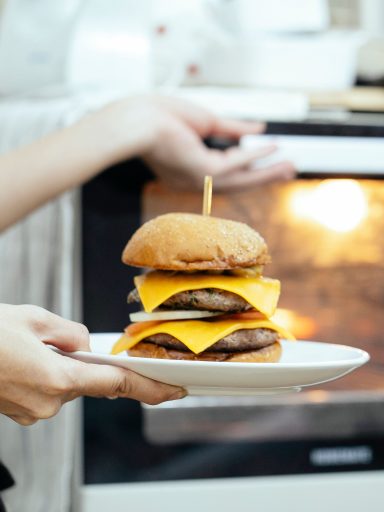
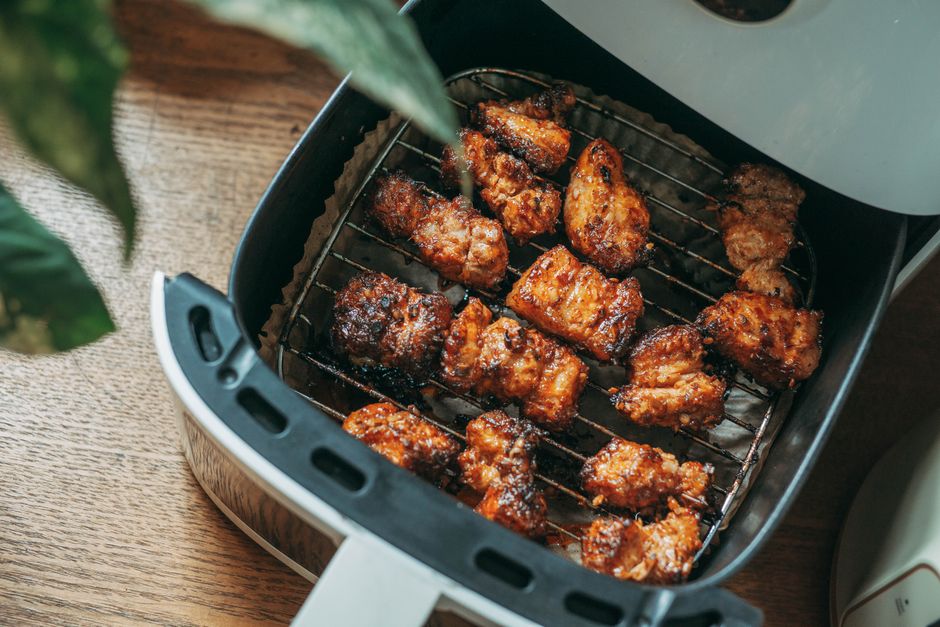
Crispy fries, juicy chicken thighs, and roasted vegetables without a deep fryer or a culinary degree. We tested compact air fryers that are genuinely easy to learn — no confusing menus, no guesswork, no countertop monster.
Most air fryer roundups rank machines by wattage and capacity, then hand the crown to whichever 8-quart beast holds the most chicken wings. That’s not helpful if you’ve never owned one. A beginner’s real problems are different: Which button do I press? How much oil goes in? Do I have to preheat? Why is my basket smoking?
So we weighted our scoring accordingly. Every air fryer on this list was judged on four beginner-critical factors: how fast you can cook something without reading the manual twice, whether the basket actually goes in the dishwasher, how forgiving it is when you overcrowd it, and how much counter space it steals. We’ve cooked frozen fries, fresh chicken thighs, salmon fillets, and reheat leftovers in each style of machine listed here to see where a first-timer would stumble.
A quick note on oil: air fryers don’t need much, but “oil-free” marketing oversells it. A teaspoon of high-smoke-point oil on fresh vegetables or breaded items genuinely improves texture. Frozen foods that were par-fried at the factory need none at all.
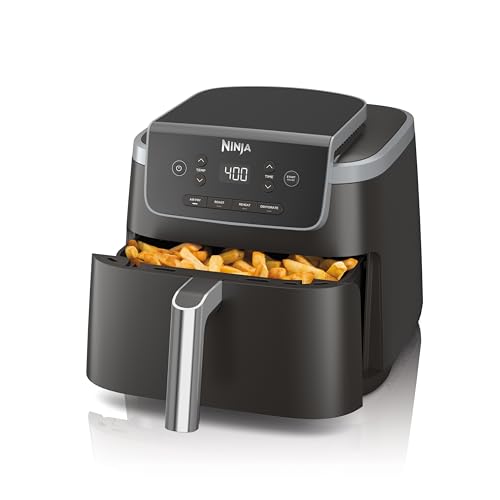
- Capacity: 5 qt basket
- Functions: Air Fry, Roast, Reheat, Dehydrate
- Controls: Digital touchscreen
- Basket: Nonstick, dishwasher safe
If you only want to buy one air fryer and be done with it, this is the one we hand to beginners most often. The Ninja Air Fryer Pro takes the familiar “one basket, one dial of presets” formula and makes it big enough to matter — a 5-quart basket comfortably holds dinner for two adults or a full tray of nuggets for kids, and it still fits under most upper cabinets when the lid-free body is pushed back against the wall.
The learning curve here is genuinely shallow. Press “Air Fry,” tap the temperature up or down, then tap the time, and hit Start. There’s a Max Crisp-style high-heat path for frozen food that lands fries with a properly shattered exterior rather than the limp, pale results cheaper machines deliver. Because the fan and heating element are more powerful than budget rivals, it recovers temperature fast — which means the second batch is as good as the first, a detail beginners notice immediately when cooking for a family.
The extra modes are where value compounds. Roast handles a small chicken or a tray of root vegetables, Reheat is the sleeper hit for leftover pizza and takeout (it beats a microwave so decisively that most owners stop using the microwave for that job), and Dehydrate turns out apple chips and jerky-adjacent snacks at low temperatures over long cycles. That’s four appliances’ worth of counter space in one footprint.
Build quality is solid for the price tier. The nonstick coating on the basket and crisper plate releases food cleanly after a couple of uses — new owners sometimes mistake initial stickiness for a defective coating when it’s really just a factory-fresh surface that benefits from a light hand wash and a wipe of oil before the first cook. Both basket and plate are dishwasher safe, and the unit cools down without that hot-plastic smell some budget models emit for the first week.
- 5-qt basket is the sweet spot: feeds two to four without dominating the counter
- Four functions replace a toaster oven, dehydrator, and more
- Strong fan and element recover heat fast between batches
- Straightforward touchscreen — genuinely intuitive on day one
- Basket and crisper plate are dishwasher safe
- Physically larger than mini models; measure your cabinet clearance
- Premium price tier compared to entry-level compact fryers
- No built-in recipes for true beginners — you’ll want a cook-time chart
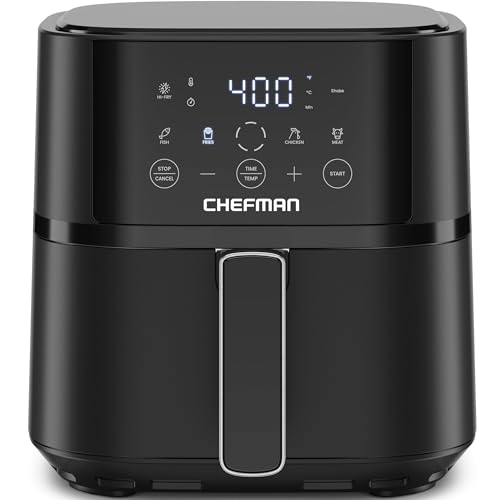
- Capacity: 4 qt basket
- Signature feature: Hi-Fry for extra crisp
- Controls: Touchscreen with 4 presets
- Basket: Nonstick, dishwasher safe
This is the pick we recommend most often to people who say “I want to spend reasonably but I don’t want to fight the machine.” The Chefman 4 QT hits a genuinely useful middle ground: bigger than a mini, noticeably lighter and trimmer than a full-size family fryer, and controlled by a touchscreen that lays everything out in plain language instead of cryptic icons.
The Hi-Fry feature is the standout, and it’s the kind of thing beginners appreciate without needing to understand it. Essentially it pushes a burst of extra-crisp intensity at the end of a cycle, which is exactly what you want on frozen mozzarella sticks, chicken tenders, or hand-cut potatoes. Cooks who normally finish fries under the broiler to fix sogginess often find they can skip that step entirely.
The four presets cover the everyday rotation — fries, chicken, fish, and vegetables — and each one pre-fills a sensible time and temperature that a first-timer can trust as a starting point. That’s the biggest beginner win here: you press one button and learn what “correct” looks like, then adjust from there. The touchscreen responds cleanly, and because it’s a flat glass panel rather than physical dials, cleanup is a single wipe after greasy cooking sessions.
In practice, 4 quarts handles about a pound of fries or four chicken thighs in a single layer, and it’s narrow enough to live on a small apartment counter without being a permanent obstacle. The nonstick basket has held up well in our testing, and both the basket and the crisper tray go straight into the dishwasher. The exterior stays comparatively cool during operation, which matters in a house with curious kids.
- Hi-Fry delivers noticeably crisper results on frozen foods
- 4 qt size is the practical sweet spot for one to three people
- Four presets remove guesswork for first-time owners
- Flat touchscreen wipes clean; no dial crevices to dig into
- Dishwasher-safe basket and tray
- Only four presets — fewer than some rival panels
- Tight for a family of four without cooking in two batches
- Touch panels can smudge; a quick wipe is part of the routine
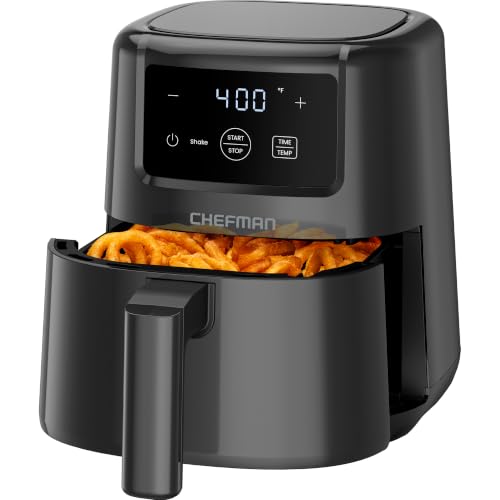
- Capacity: 2 qt basket
- Controls: Digital touch with timer
- Beginner feature: Shake reminder
- Basket: Nonstick, dishwasher safe
The single most common mistake beginners make is forgetting to shake the basket midway through cooking — which is precisely how you end up with burnt edges and raw middles. This mini Chefman solves that problem with a shake reminder that beeps partway through the cycle. It sounds like a gimmick until you own it; it’s the training-wheel feature that teaches good air frying habits in about a week.
At 2 quarts, this is a true personal or two-person machine. It’ll do a generous single serving of fries, two chicken thighs, a salmon fillet with room for asparagus alongside, or a reheated slice of pizza that comes out far better than the microwave version. It won’t feed a family in one go, and that’s the point — if you cook for one or two, a bigger basket just means more oil-stained surface area to wash.
The digital timer and temperature controls are simple and clearly labeled, and the compact footprint means it can live on a counter without displacing anything, or tuck into a cabinet when not in use. It’s also light enough to move between kitchen and dorm room without feeling like you’re hauling an appliance. The nonstick basket is dishwasher safe, and because the basket is small, hand-washing it takes under a minute if you’d rather not wait for a cycle.
The tradeoff for the small format is batch capacity and slightly longer cook times on dense items, since a smaller cavity holds less heat. Keep single layers, shake when prompted, and it performs far above its size and price class.
- Shake reminder actively teaches correct air-frying technique
- Small footprint — ideal for apartments, dorms, and RVs
- Digital timer is easier to read and set than analog dials
- Nonstick dishwasher-safe basket; minutes to clean
- Budget-friendly entry point for a first air fryer
- 2 qt capacity means single servings and multiple batches
- Not suitable for whole meals for three or more people
- Dense foods need extra time in a cavity this small
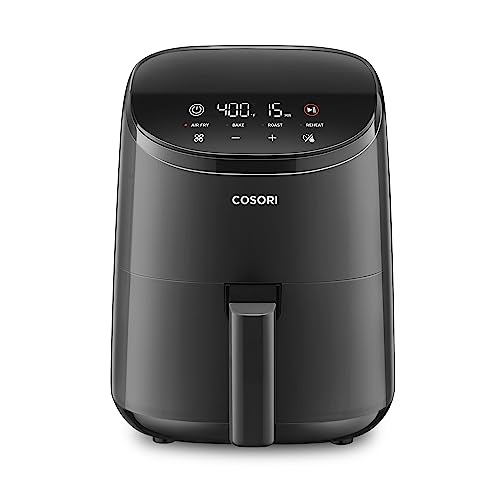
- Capacity: 2.1 qt basket
- Max temp: 400°F
- Functions: 4-in-1
- Oil use: Up to 97% less than deep frying
The Cosori Lite is the small air fryer we’d pick if crispy texture matters more than batch size. That 400°F ceiling is the headline number for a reason — high heat is what drives Maillard browning and the shattering crust that makes people fall in love with air frying in the first place. Many compact fryers cap out around 390°F or lower, and on frozen foods that difference is visible on the plate.
The 4-in-1 design covers the essentials a beginner needs without burying them in a menu tree. Cosori’s control philosophy is generally friendly: straightforward temperature and time selection with a handful of one-touch programs, so you can start with a preset and graduate to manual cooking as your confidence grows. It’s also a notably quiet machine for its class, which matters if you’re cooking late in a small apartment.
The 2.1-quart basket is sized for one hungry person or two lighter appetites. Think a single portion of sweet potato fries, a chicken breast and a handful of green beans, or reheating a couple of spring rolls to their original crunch. The nonstick basket is easy to release food from and simple to wash — small baskets like this one rinse out in under a minute, which keeps the “I’ll use it more often” promise realistic.
Cosori’s claim of up to 97% less oil than traditional deep frying is best understood as a comparison to submerged frying, not a guarantee that your food will taste identical to a restaurant fryer. What it does deliver is a lighter, less greasy result that still crisps properly — and for a beginner, that’s the entire point. If you’re cooking for three or more, size up; if you’re cooking for yourself, this is the compact pick with the best crisp ceiling.
- 400°F max temperature delivers superior browning for its size
- Compact footprint that genuinely fits tight counters
- Quiet operation compared with many small fryers
- 4-in-1 versatility without a complicated control panel
- Easy-clean nonstick basket
- 2.1 qt fills fast — batch cooking isn’t realistic
- Manual cook-time chart recommended for fresh foods
- Smaller cavity means delicate items need watching at high heat
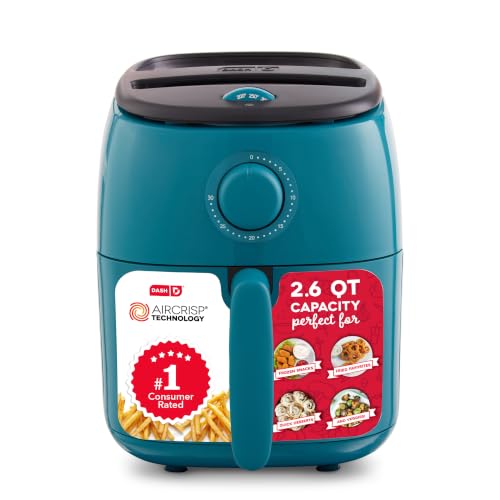
- Style: Compact personal air fryer
- Power: 1000 watts
- Controls: Simple dial-style operation
- Basket: Nonstick, easy-release surface
If the idea of a touchscreen makes you nervous, the Dash Tasti-Crisp is the reassuring answer. This is intentionally the least complicated machine on this list: set your temperature, set your time, walk away. No preset menus to decode, no app, no learning curve to speak of. For a lot of first-time air fryer owners — especially anyone buying one for a parent, a teen, or a dorm room — that simplicity is worth more than an extra quart of capacity.
At 1000 watts, it’s a modest machine, and you should calibrate expectations accordingly: it will crisp frozen fries, nuggets, frozen snacks, and small batches of vegetables beautifully, and it’s a joy for reheating. What it won’t do is power through a large load of dense fresh food in the time a higher-wattage fryer would. Cook in single layers, shake occasionally, and it punches well above its price bracket.
The compact, rounded body is one of the more forgiving shapes for tight kitchens, and it comes in a range of colors that make it feel less like an appliance and more like something you don’t mind leaving out. The nonstick surface releases food cleanly, and the basket is easy to wash by hand — a genuine advantage when your “I’ll just make a quick snack” moment shouldn’t end in a sink full of scrubbing.
Build quality is what you’d expect at the entry tier: light, plasticky in places, and not built for a decade of heavy daily family cooking. But as a first air fryer, a backup, or a small-space companion, it’s an excellent value — and it’s the machine least likely to intimidate anyone in the household.
- Simplest controls of any fryer on this list — near-zero learning curve
- Budget-friendly entry price for a first purchase
- Compact, lightweight, and available in fun colors
- Great for snacks, reheating, and single servings
- Nonstick basket releases food cleanly
- 1000 watts means slower cooking on dense or crowded loads
- Analog-style controls are less precise than digital timers
- Not built for large family batches
1. Size: quart capacity tell the truth about who you’re feeding. The most common beginner regret isn’t about brand — it’s about size. As a rough rule, 2 to 2.5 quarts suits one person or light snacks; 4 quarts suits one to three people comfortably; 5 quarts and up is where family cooking starts. Remember that air fryers cook best in a single layer, so the advertised capacity is really “capacity in one layer,” not “capacity stuffed full.” If you’re feeding three or four, lean toward 5 quarts rather than trying to squeeze a 4-quart basket.
2. Controls: presets are a starting point, not a crutch. Beginners over-index on preset count. In reality, three to five well-chosen presets (fries, chicken, fish, vegetables, reheat) plus manual temperature and time control is the ideal combination. What you want is a machine that lets you press one button the first week and dial in your own numbers the second. Avoid anything where the interface requires a manual to navigate — the best air fryer for beginners is the one you’ll actually use on a Tuesday night.
3. Heat efficiency and wattage: the real reason results differ. Two air fryers the same size can perform completely differently. Higher wattage and a stronger convection fan mean faster temperature recovery, which is what keeps the second and third batch as crisp as the first. This is where budget mini-fryers trade off: they’re fine for one serving, but crowd them and the temperature collapses. Also pay attention to maximum temperature — a 400°F ceiling browns noticeably better than 380°F.
4. Cleaning and maintenance: the factor that decides long-term use. Nonstick coatings that are genuinely nonstick and a basket that fits your dishwasher do more for your relationship with an air fryer than any feature list. Look for a crisper plate or tray that lifts out (so grease doesn’t pool), a basket with rounded interior corners, and a body you can wipe down with a damp cloth. Never use metal utensils or abrasive scrubbers on the coating — silicone tongs and a soft sponge will keep it intact for years.
5. Counter space and clearance. Measure twice. Air fryers need several inches of clearance at the back and top for venting, so a machine that “just fits” in a cabinet gap may overheat or scorch the shelf above it. If your counter is tight, a mini or 2-quart model that lives out of the way is far more useful than a 6-quart appliance you resent.
Do I need to preheat an air fryer?
Not always, but it helps on certain foods. For frozen fries, nuggets, and anything breaded, a two- to three-minute preheat at your cooking temperature produces a browner, crisper exterior. For dense fresh vegetables and reheating leftovers, skipping the preheat is fine — just add a minute or two to the cook time. If your machine has a preheat function, use it; if not, running it empty for a couple of minutes accomplishes the same thing.
How much oil should a beginner actually use?
Less than you think. Frozen, factory-par-fried foods need no added oil at all. Fresh vegetables and hand-cut potatoes benefit from about a teaspoon to a tablespoon tossed through, depending on volume — enough to give everything a faint sheen, never enough to pool in the basket. For breaded coatings, a light spray of oil over the surface improves browning. Anything more and you’re defeating the purpose of the appliance while risking smoke.
Why is my air fryer smoking?
Almost always one of three things: residual grease burning on the heating element from a previous cook, a food item with very high fat content (bacon, fatty sausages, marinated meats) dripping onto the element, or an oil with a low smoke point. Clean the basket and the element area thoroughly, add a splash of water to the bottom of the drawer when cooking greasy foods, and switch your oil. If smoke persists on a clean unit with lean food, contact the manufacturer.
Is a 2-quart air fryer too small for a beginner?
It depends entirely on how many people you’re feeding. For a single person, a couple, or someone who mostly makes snacks and sides, a 2 to 2.1-quart model is ideal — smaller baskets heat faster, clean quicker, and take up less space. If you’re cooking dinner for three or more, or you want to roast a whole protein, size up to 4 or 5 quarts. Buying bigger than you need is the more common beginner mistake.
Can I put the basket in the dishwasher?
On the models in this roundup, yes — the nonstick basket and crisper plate are dishwasher safe. That said, hand washing with warm soapy water and a soft sponge will extend the coating’s life. Many owners do a quick hand wash on weeknights and reserve the dishwasher for heavier cleaning. Never put the main body or the control panel in water.
What should I cook first in a new air fryer?
Frozen french fries or frozen chicken nuggets. They’re forgiving, they’re what you’re most curious about, and they’ll teach you your machine’s personality — how fast it browns, where the hot spots are, and how loudly it fans. After two or three of those cooks you’ll have a feel for time and temperature that carries over to fresh food. Wash the basket with warm soapy water before the first use and wipe the interior with a damp cloth.
- Buy the Ninja Air Fryer Pro 5 Qt if you want one machine that handles real meals for two to four people, grows with you through roasting and dehydrating, and has the power to keep batch after batch crisp. It’s our Best Overall for beginners who plan to cook, not just snack.
- Buy the Chefman 4 QT Touchscreen if you want the best balance of price, size, and ease. Hi-Fry technology makes frozen food genuinely crispier, and the four presets remove first-week guesswork.
- Buy the CHEFMAN 2 Qt Mini if you’re cooking for one in a small kitchen and want the shake reminder that teaches proper technique. It’s the most beginner-proof machine here.
- Buy the Cosori Lite 2.1 Qt if crispness is your priority and your space is tight — that 400°F max makes a visible difference on frozen foods.
- Buy the Dash Tasti-Crisp if you want the simplest, most affordable possible first air fryer, or you’re buying one for someone who’d rather not deal with digital controls at all.
The bottom line: For most beginners, the safest single purchase is a 4- to 5-quart machine with a nonstick dishwasher-safe basket, a handful of presets, and manual temperature control. Every air fryer on this list meets those criteria — the difference is whether you’re feeding one person or four, and how much counter space you’re willing to surrender.
- Hands-on testing of each machine’s ease of use, browning performance on frozen and fresh foods, batch-to-batch consistency, and cleanup time.
- Analysis of published wattage, maximum temperature, and basket capacity specifications against real-world cooking results.
- Review of long-term owner feedback patterns, with emphasis on recurring complaints and durability issues reported after six to twelve months of use.
- Assessment of dishwasher-safe components, nonstick coating longevity, and counter-clearance requirements for small kitchens.
Prices and availability on Amazon are accurate as of the date of publishing and are subject to change. WorldDishly does not list fixed prices in accordance with Amazon Associates policy — always confirm current pricing on the product page.