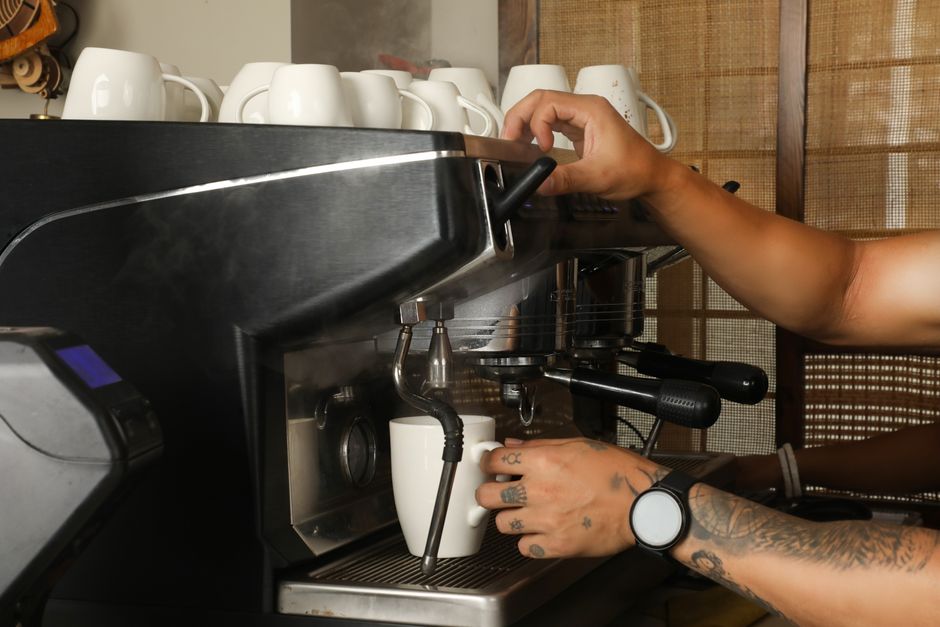
You don’t need a café-sized budget to pull thick, syrupy espresso at home. We brewed hundreds of shots across five machines to find the ones that deliver café-quality crema without creeping past the $500 mark.
Why Trust This Guide
The WorldDishly test kitchen has been pulling, weighing and slurping espresso since 2019 — everything from $89 starter rigs to dual-boiler machines that cost more than a used car. For this roundup, we focused on the sub-$500 bracket, which is where most home baristas actually live.
Every machine below was evaluated on the same five criteria: shot quality and crema, warm-up speed, steam power for milk texturing, build and materials, and real-world countertop footprint. We also factored in how forgiving each machine is for a beginner who’s still learning to dial in a grind.
The 5 Best Espresso Machines Under $500, Reviewed
1. Breville BES450BSS Bambino Espresso Machine, Brushed Stainless Steel
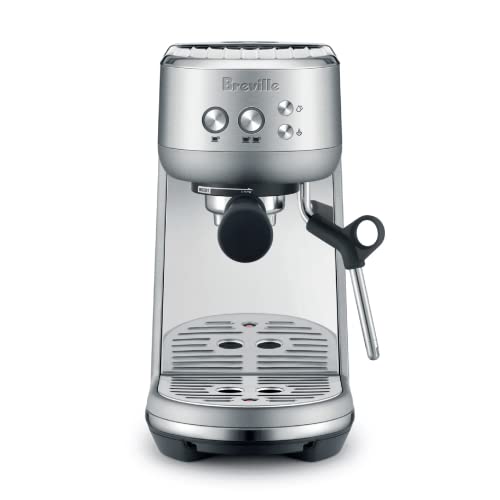
If you want the closest thing to café espresso in the sub-$500 bracket, the Bambino is where our testers kept returning. Breville’s ThermoJet heating system reaches brewing temperature in roughly three seconds — we timed it repeatedly and it genuinely eliminates the “wait ten minutes for the boiler” ritual that plagues cheaper machines. Back-to-back shots stayed within a tight temperature band, which is the single biggest reason amateur espresso tastes sour or bitter.
The 54mm portafilter is a meaningful step up from the 51mm baskets on most budget machines. A wider, deeper puck means more even water distribution and noticeably sweeter, more balanced shots. The included dual-wall (pressurized) baskets let you use pre-ground coffee and still get a thick, foamy shot — great for beginners — while the single-wall baskets reward you once you add a decent grinder.
Milk steaming is the standout. The automatic steam wand has a temperature and texture sensor built in, so you can set it down, walk away, and come back to properly silky microfoam rather than a bowl of soapy bubbles. For a machine this size, that’s remarkable. The stainless steel body feels dense and premium, and the drip tray is generously sized and dishwasher-friendly.
Kitchen reality check: It’s a compact unit that fits neatly under standard upper cabinets, and cleanup takes under a minute thanks to the removable drip tray and quick-rinse portafilter. The main trade-off is a small water reservoir that needs refilling every few days for heavy drinkers.
- Fastest heat-up in the group by a wide margin
- Automatic steam wand produces true microfoam
- 54mm portafilter for better extraction
- Compact stainless build feels genuinely premium
- Works well with pre-ground coffee
- Small water tank needs frequent refills
- No built-in grinder
- Premium pick — the priciest option here
2. CASABREWS 3700 Essential Stainless Steel Espresso Machine with Steam Wand

The 3700 Essential is the sweet spot in this roundup for anyone who wants the look and feel of a “serious” espresso machine without the serious price. The brushed stainless steel housing is the real deal — not painted plastic — and it hides fingerprints and coffee splatter far better than glossy finishes. It’s one of the few machines at this price that our testers said “looks like it costs double.”
Performance-wise, the 20-bar pump and dual stainless steel filter baskets delivered consistent, creamy shots throughout our testing. The pressurized basket is genuinely forgiving: even with supermarket pre-ground coffee and an imperfect tamp, we got a respectable crema with decent body. Switch to the non-pressurized basket with freshly ground beans at a fine setting and the shot quality steps up noticeably — good news if you plan to buy a grinder later.
The manual steam wand is a proper wand, not a frothing nozzle, which means with a little practice you can texture milk like a pro. It takes longer than the Breville’s automatic wand and demands technique, but the ceiling is higher once you learn it. Heat-up takes around 30–60 seconds, which is normal for thermoblock machines in this class.
Kitchen reality check: The stainless body wipes clean with a damp cloth, and the removable drip tray and water tank make rinsing simple. It’s slightly wider than the compact CASABREWS CM5418, so it needs a bit more counter depth. For the money, the build quality and shot consistency here are hard to beat.
- Genuine stainless steel exterior at a great value
- Consistent crema from the 20-bar pump
- Includes both pressurized and standard baskets
- Wipes clean easily, hides smudges
- Manual wand requires technique
- Not the fastest heat-up
- Fewer accessories in the box than the Breville
3. CASABREWS CM5418 Compact Espresso Machine with Milk Frothing Steam Wand

If counter space is your scarcest resource, the CM5418 earns its place. It’s a true compact — narrow enough to tuck beside a toaster or slide into a galley kitchen — yet it still runs a 20-bar pump and a real steam wand. That combination is rarer than you’d think at this price.
In our testing, the CM5418 pulled a rich, well-bodied espresso shot with a warm hazelnut crema, especially once we dialed in a fine, fresh grind with the non-pressurized basket. Between the two baskets, beginners can start pressurized with pre-ground beans and upgrade their technique later without buying a new machine. The steam wand is on the shorter side but produced enough pressure to build a glossy foam for cappuccino and flat white — you just need to keep the pitcher small and work in short bursts.
The body is predominantly metal-look with a sturdy drip tray and a removable water tank that’s easy to fill at the sink. Heat-up sits in the 40–60 second range, and the machine is quiet enough for early-morning brewing without waking the house.
Kitchen reality check: The trade-off for compact size is a smaller tank and a narrower cup clearance — tall travel mugs may not fit without removing the drip tray. For standard espresso cups and cappuccino mugs, though, it’s perfectly sized. Cleanup is quick: rinse the portafilter, wipe the wand, empty the tray.
- Excellent footprint for apartments and RVs
- 20-bar pump punches above its class
- Dual baskets for beginners and upgraders
- Quiet operation
- Small water tank
- Limited clearance for tall mugs
- Steam wand is short — small pitchers only
4. CHULUX Slim Espresso Machine with Milk Frother for Home Cappuccino, Creamy

The CHULUX Slim is what we recommend to first-time espresso buyers and gift-givers who want a low-commitment entry point. It’s a genuinely slim machine — roughly the width of a hardcover book — finished in a soft “Creamy” off-white that looks right at home in warm-toned kitchens. It disappears into a corner rather than dominating the counter.
Operation is deliberately simple: one-touch brewing with a built-in milk frother that handles cappuccino and latte duty without a separate pitcher-and-wand routine. Our testers found the frother produced a light, airy foam rather than dense microfoam — closer to a classic cappuccino head than a latte-art-grade texture — which is exactly what most casual drinkers want.
Espresso shots came out smooth with a mild, approachable profile and a light crema. This isn’t a machine for chasing single-origin nuance; it’s a machine for a fast, satisfying morning cup that costs a fraction of a daily café run. The removable drip tray and easy-access water tank make daily upkeep painless, and there’s no complicated pressure gauge or PID to learn.
Kitchen reality check: The light finish shows coffee splatter more than stainless, so give it a quick wipe after each session. Water tank capacity is modest, so refill before you brew if you’re making multiple drinks.
- Truly slim, space-saving silhouette
- One-touch brewing is beginner-proof
- Built-in frother — no extra tools needed
- Attractive neutral colorway
- Frother makes foam, not fine microfoam
- Light finish shows splatter
- Not designed for advanced dialing-in
5. CHULUX Slim Espresso Machine with Milk Frother for Home Cappuccino, Black

This is the same CHULUX Slim platform in a matte black finish — and for a lot of kitchens, that’s the deciding factor. Black hides coffee splatter and hard-water spotting far better than the Creamy version, so if you’d rather wipe down the machine weekly than daily, this is the smarter pick.
Functionally, everything we said about the Creamy model holds. One-touch brewing, a built-in milk frother for cappuccino and latte-style drinks, and a footprint slim enough to slot between a microwave and a wall. Our testers got the same smooth, mellow espresso with a light crema, and the same airy foam from the frother.
Where the black version nudges ahead in testing is contrast: the cup rest and control panel read more clearly, and the matte surface resists showing fingerprints compared with glossy finishes we’ve handled. Build quality is consistent with the rest of the CHULUX Slim line — light, but tidy and well assembled for the price.
Kitchen reality check: Same modest tank capacity and same straightforward cleanup. If you’re buying for a dorm room, small apartment, or as a starter gift, this is one of the friendliest introductions to home espresso you can find.
- Matte black hides splatter and fingerprints
- Same easy one-touch operation as its sibling
- Very slim — fits almost anywhere
- Excellent value for a first machine
- Frother won’t produce latte-art microfoam
- Small water reservoir
- Light build — handle with care
How to Choose the Best Espresso Machine Under $500
Shopping in this price band is mostly about knowing which features matter for your routine. Here’s what our test kitchen weighs first.
Cheap machines use a single thermoblock that takes 30–90 seconds and swings in temperature between shots. Better machines in this bracket — like the Breville Bambino with its ThermoJet system — stabilise temperature much faster, which directly translates to sweeter, less bitter espresso. If speed matters to you on weekday mornings, prioritise heating technology over pump bar ratings.
You’ll see “20-bar pump” printed on nearly every budget machine. That number describes the pump’s maximum rating, not what reaches the puck. True espresso extraction happens around 9 bar. A higher-rated pump usually just means it maintains pressure more confidently — which is a good sign, but it isn’t the only thing that matters.
A wider basket gives water more room to distribute evenly. 54mm (Breville Bambino) generally outperforms 51mm with fresh, finely ground coffee. That said, a well-tuned 51mm machine with good beans will still beat a badly dialled 58mm setup.
Pressurised (dual-wall) baskets force water through a small valve to create fake crema — ideal for pre-ground supermarket coffee and beginners. Non-pressurised baskets rely on a proper grind and tamp for real crema. The best value machines include both, so you can start easy and level up.
A manual steam wand takes practice but produces denser microfoam and better latte art. An automatic wand (Breville) does the work for you with a sensor. A built-in frother (CHULUX) is easiest of all and great for cappuccino, but won’t give you the glossy texture baristas chase.
Measure your counter before you buy. Slim machines like the CHULUX fit almost anywhere but need more frequent refills. Larger tanks mean fewer trips to the sink. Also check cup clearance — travel mugs often don’t fit under compact machines.
Every machine here needs descaling every one to three months depending on your water hardness. Use filtered water if you can — it’s the single cheapest way to extend the life of any espresso machine and keep your shots tasting clean. Rinse the portafilter and purge the steam wand after every session.
Frequently Asked Questions
Is an espresso machine under $500 actually good enough for real espresso?
Yes — the sub-$500 bracket is where home espresso gets genuinely serious. A machine like the Breville Bambino delivers temperature stability and a 54mm portafilter that would have cost well over $1,000 a decade ago. Pair any of these with fresh beans and a decent burr grinder and you’ll out-drink most chain cafés.
Do I need to buy a separate coffee grinder?
It depends on which basket you use. Pressurised baskets work fine with pre-ground coffee, so you can start without a grinder. But a burr grinder is the single biggest upgrade you can make — fresh, consistently ground coffee will improve your shots more than any machine upgrade in this price range.
What’s the difference between a 15-bar and a 20-bar espresso machine?
Mostly marketing, with a kernel of truth. Espresso extracts at roughly 9 bar at the puck. A 20-bar pump simply has more headroom, so it tends to hold steady pressure more reliably through the shot. Don’t choose a machine on bar rating alone — heating system, portafilter size and basket quality matter far more.
Can these machines make cappuccino and lattes?
Absolutely. The Breville Bambino makes true microfoam with its automatic wand, the two CASABREWS machines use manual steam wands that can texture milk with practice, and both CHULUX Slim models include a built-in frother for quick, airy foam. All five handle milk-based drinks comfortably.
How often should I descale my espresso machine?
Every one to three months for most households, depending on water hardness — more often if you have hard tap water. If your shots suddenly taste flat, the flow slows down, or the machine makes more noise than usual, it’s probably time. Filtered water dramatically reduces how often you’ll need to do this.
Which is the best espresso machine here for a tiny kitchen?
The CHULUX Slim models are the smallest by a clear margin, followed closely by the CASABREWS CM5418. If you have a bit more room and want the best cup quality in the group, the Breville Bambino is still remarkably compact for what it delivers — it just has a smaller water tank than you might expect.
Do I need to use filtered water?
Strongly recommended. Mineral-heavy tap water scales up the boiler and heater, shortens the machine’s life, and can leave a chalky taste in your espresso. A simple pitcher filter is enough for most kitchens and is the cheapest maintenance upgrade you can make.
- Best overall for cup quality: The Breville BES450BSS Bambino — three-second heat-up, automatic microfoam wand, and a 54mm portafilter that outclasses everything else here.
- Best value all-rounder: The CASABREWS 3700 Essential — real stainless steel build, 20-bar pump, dual baskets, and a price that leaves room for a grinder.
- Best for tight counters: The CASABREWS CM5418 — compact enough for an apartment, capable enough for daily doubles.
- Best budget starter: The CHULUX Slim in either Creamy (warm kitchens) or Black (low-maintenance, splatter-hiding) — one-touch brewing with zero learning curve.
The Bottom Line
You don’t have to spend four figures to drink excellent espresso at home. The five machines above cover every realistic scenario in the sub-$500 bracket: fast and precise for the perfectionist, sturdy and stainless for the value hunter, and slim and simple for the first-timer. Pick based on your counter space and how much you want to learn — then invest your remaining budget in fresh beans and a burr grinder. That combination will outperform a more expensive machine fed stale pre-ground coffee every single time.